You built it.
Now tune it without melting it.
Blower, bigger injectors, a cam, a turbo — the wrenching's done, but the tune is the part nobody hands you a manual for. TuneVault reads your VCM Editor tables, flags the lean cell or aggressive timing before you flash, and gives you the exact, conservative values — then verifies your datalog before boost.
See pricing →- Injector slopes & offsetmatched
DW 80 lb/hr high/low slope + offset-vs-voltage match published data
- MAF transfer curve300 g/s ceiling
Saturates ~300 g/s near redline — extend or blend speed-density
- Power enrichment (WOT)12.6 actual
Commanded 11.0 but log shows 12.6 up top — fuel shortfall
- Spark timing @ 8 psi−2 to −3°
3 high-load cells too aggressive for 93 octane — pull 2–3°
- Knock retard5° KR
4–5° KR appearing at 5200–5600 RPM under boost
- Wideband loggedverified
AEM wideband present in VCM Scanner channel list
Or just start typing — describe your car:
Designed by technicians who work with Ford, GM, Chrysler, BMW, Mercedes and HP Tuners platforms every day — not a generic AI wrapper.
For $39, you get
One complete guided tune for your car — start to verified.
- ✓Full tune audit of your VCM Editor tables
- ✓Screenshot review — we read every value
- ✓Datalog review (commanded vs delivered AFR, knock, trims)
- ✓Exact, copy-paste change list
- ✓Safety report with severity flags 🔴 / 🟠 / ✅
- ✓Risk score — know how safe it is before you flash
What TuneVault checks
A real tuner's safety checklist, run against your tables and logs — every time.
A supercharged 5.4, audited like a pro would
2005 Ford F-150 5.4L 3V · Roush M112 · air-to-water intercooler · DeatschWerks 80 lb/hr · BRISK 3VR14S · 93 octane. Here's what TuneVault reads and flags — straight from your VCM Editor tables and a VCM Scanner pull.
- Injector slopes & offsetmatched
DW 80 lb/hr high/low slope + offset-vs-voltage match published data
- MAF transfer curve300 g/s ceiling
Saturates ~300 g/s near redline — extend or blend speed-density
- Power enrichment (WOT)12.6 actual
Commanded 11.0 but log shows 12.6 up top — fuel shortfall
- Spark timing @ 8 psi−2 to −3°
3 high-load cells too aggressive for 93 octane — pull 2–3°
- Knock retard5° KR
4–5° KR appearing at 5200–5600 RPM under boost
- Wideband loggedverified
AEM wideband present in VCM Scanner channel list
| kPa | 1600 | 2400 | 3200 | 4000 | 4800 | 5600 |
|---|---|---|---|---|---|---|
| 40 | 22 | 21 | 20 | 19 | 18 | 17 |
| 60 | 20 | 19 | 18 | 17 | 16 | 15 |
| 80 | 17 | 16 | 15 | 14 | 13 | 12 |
| 100 | 15 | 14 | 14 | 15 | 16 | 16 |
Illustrative example. TuneVault shows the exact cells and conservative values for your car — and always tells you to verify fueling with a wideband before boost.
How it works with HP Tuners
Six steps inside your existing VCM Editor + VCM Scanner workflow. You stay in control of the flash.
Supported platforms
If you tune it through HP Tuners, TuneVault speaks its language.





For builders, tuners & shops
Same safety engine — whether it's your weekend project or your bay.
You did the work — blower, injectors, cam. TuneVault reads your tables and tells you exactly what to change so the build runs safe, not just loud.

You have HP Tuners and know your way around VCM Editor. Use TuneVault as a fast second set of eyes that catches the lean cell or aggressive timing before you flash.

Audit customer cars faster, document every change, and standardize a safety checklist across your techs. Records and the plan stay in one place.
What you need
TuneVault is the brain on top of the tools you already tune with.
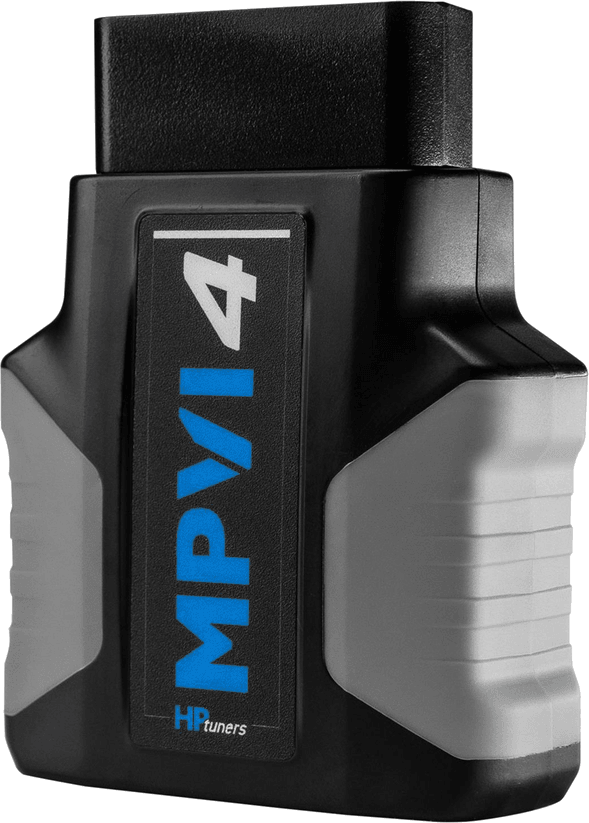
MPVI2, MPVI3 or MPVI4 interface to read, flash and datalog through the OBD-II port.
RequiredVCM Editor for the calibration + VCM Scanner for logging. You upload screenshots and logs.
 Required for boost
An AEM / Innovate / HP Tuners wideband logged in VCM Scanner — mandatory for any boost or WOT tuning.
Real-world use cases
The kinds of builds people bring to TuneVault every day.

Air-to-water IC, DeatschWerks 80 lb/hr injectors, BRISK 3VR14S plugs, 93 oct. TuneVault checks injector slopes, the MAF curve, WOT power enrichment, spark timing, knock retard and wideband AFR — and flags the lean top-end and 3 over-aggressive timing cells before a boost pull.

MAF-less speed-density, cammed idle hunting, drive-by-wire tip-in. Audits VE vs MAF agreement, idle stabilization, and the DTCs to disable for a clean swap.

Stock-ECU boost control on pump gas. Reads boost target vs actual trace, checks for creep/overshoot, and verifies fueling stays rich enough under load.
Dual injection, ~30% more fuel volume. Confirms AFR scales with ethanol content and injector duty has headroom before you lean on it.
What TuneVault will not do
Honesty is a safety feature. Here's where the line is.
- •TuneVault is a tuning copilot, not a replacement for a professional tuner. For high-boost, forced-induction, or unusual builds, a qualified human tuner is still valuable.
- •No tool can guarantee horsepower. Power depends on your hardware, fuel, altitude, and condition — anything promising a number is selling you something.
- •You are responsible for what you flash. You make the changes and write them to your ECU; the outcome is yours.
- •Commanded AFR is not delivered AFR. Always verify fueling with a wideband before boost, and keep timing conservative for pump gas.
- •Modifying emissions equipment may be restricted where you live. Know your local laws; off-road/competition use only where applicable.
Frequently asked questions
Does TuneVault replace a professional tuner?
No. It's a copilot that audits your tables, reads your datalogs, and gives exact, conservative changes — but you make the call and flash the car. For high-boost or unusual builds, a qualified human tuner is still valuable.
Will it guarantee a horsepower number?
No, and you should distrust anything that does. Power depends on your hardware, fuel, altitude and condition. TuneVault focuses on making your tune safe and your data sound — not on promising a dyno figure.
Do I need anything besides HP Tuners?
Your MPVI interface, VCM Suite, and a wideband for boost verification. You upload screenshots of your VCM Editor tables and your VCM Scanner logs — TuneVault reads them.
Can it read my actual tune file?
The .hpt is encrypted, so TuneVault works the way real tuners review each other's work — from your VCM Editor table screenshots and your datalogs. Vision reads the exact values.
How does it keep me safe?
Conservative-first timing and fueling, the seconds-vs-ms unit trap called out, and a hard rule: commanded AFR is not delivered AFR, so verify with a wideband before boost. It flags 🔴 critical / 🟠 caution before you flash.
Is it good for beginners?
Yes — it explains what each table does in plain English and walks you through the order that keeps engines alive (airflow → fuel → spark). It won't let you skip the wideband.
What platforms are supported?
Ford, GM and Dodge/Ram gas engines tuned through HP Tuners — LS, LT, Coyote, 5.4 3V, EcoBoost and HEMI — naturally aspirated, supercharged or turbo, on pump gas or E85.
Who is responsible for the result?
You are. TuneVault gives guidance; you make the changes and write them to your ECU. Always verify fueling with a wideband before boost.
Ready to dial it in?
Describe your car and upload a table — see the audit in seconds, before you pay anything.