You built it. Now tune it — without melting it.
Blower, injectors, cam, bigger turbo — the hard part's done. Here's exactly what you need to tune it yourself, safely, and where TuneVault fits in.
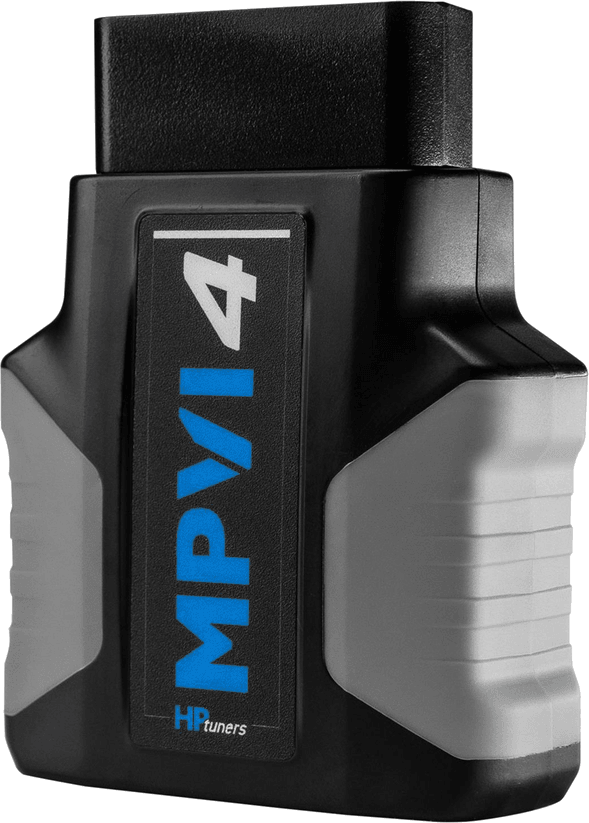
The interface that reads, flashes and datalogs your ECU through the OBD-II port. The one piece of hardware you can't tune without. Comes with credits to license your vehicle.
Get the MPVI3 ↗Credits license your interface to a specific car the first time you flash it. After that, re-flash that car as much as you want for free. Most MPVI3 bundles include enough to license one vehicle.
About credits ↗Non-negotiable for any boost or wide-open-throttle tuning. The factory narrowband can't tell you the truth under load — a wideband shows what your engine is actually burning.
Wideband options ↗The brain on top: reads your VCM Editor tables, audits them for safety, gives the exact conservative changes, and verifies your datalog before boost. Start free — pay when you tune.
Open the CopilotHardware links go to HP Tuners. TuneVault is an independent copilot — we're not affiliated with or endorsed by HP Tuners.
The complete DIY tuning on-ramp
Get the HP Tuners MPVI3 (with credits) plus TuneVault Pro — the hardware to read and flash your car, and the copilot to tell you exactly what to change. Everything a first-time tuner needs in one path.
- ✓MPVI3 interface + credits to license your car
- ✓TuneVault Pro — audits, change-lists & datalog verification
- ✓Guided, conservative-first, safety-checked tuning
- ✓Your whole garage saved with every change & result
Built for the builder who isn't a pro tuner
You did the wrenching. You've got real money in the build. But the tune is the part nobody hands you a manual for — and getting it wrong is how a great combo turns into a cracked piston on the first boost pull.
TuneVault is the safety net. It reads your VCM Editor tables the way an experienced tuner would, flags the lean cell or the aggressive timing before you flash, and gives you the exact, conservative values to set — with the reason and the unit trap called out. Then you log a pull and it tells you whether it's actually safe, or what to fix next.
You keep the wheel. You make every change and write it to your own ECU. TuneVault just makes sure you're not guessing — and always tells you to verify fueling with a wideband before boost.
- •TuneVault is a tuning copilot, not a replacement for a professional tuner. For high-boost, forced-induction, or unusual builds, a qualified human tuner is still valuable.
- •No tool can guarantee horsepower. Power depends on your hardware, fuel, altitude, and condition — anything promising a number is selling you something.
- •You are responsible for what you flash. You make the changes and write them to your ECU; the outcome is yours.
- •Commanded AFR is not delivered AFR. Always verify fueling with a wideband before boost, and keep timing conservative for pump gas.
- •Modifying emissions equipment may be restricted where you live. Know your local laws; off-road/competition use only where applicable.
Got the hardware? Start your first tune.
Describe your build and upload a table — see the audit free before you pay.
Open the Copilot — free