ECU Tuning Explained: Real Gains, Real Risks, and the Datalog Verification Loop
What ECU tuning actually changes, the power gains you can realistically expect, the failure modes that destroy engines, and the datalog verification loop that separates a safe tune from an expensive mistake.
By TuneVault
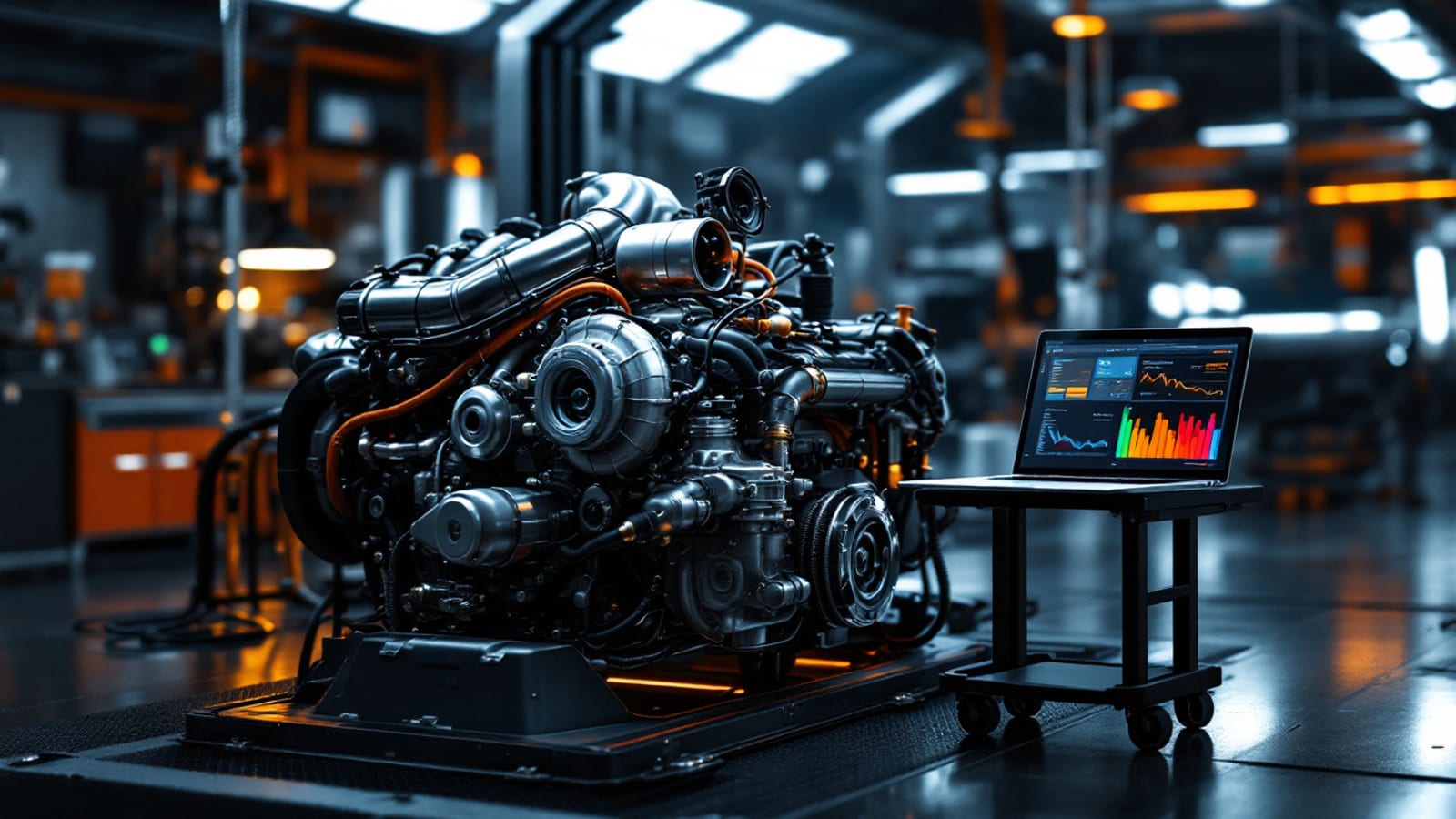
ECU tuning is one of the most misunderstood corners of car modification. To some owners it is free horsepower waiting to be unlocked; to others it is a guaranteed path to a grenaded engine. Both views are wrong. Tuning is simply editing the calibration tables your engine control unit (ECU) uses to decide how much fuel to inject, when to fire the spark, and how much boost or throttle to allow. Done with discipline and verified against real data, it is one of the highest-value modifications you can make. Done by pasting in a stranger's file and hoping, it is exactly as dangerous as the warnings suggest.
This article walks through what ECU tuning actually changes, the gains you can realistically expect, the failure modes that destroy engines, and the single most important habit that separates a safe tune from an expensive mistake: the datalog verification loop.
What ECU tuning actually changes
Your factory ECU ships with hundreds of calibration tables. The ones that matter most for performance are fuel (how much fuel to add at a given load and RPM, expressed as a target air-fuel ratio or lambda), spark timing (how many degrees before top-dead-center to fire the plug), and — on forced-induction cars — boost control (target manifold pressure and wastegate duty). Supporting tables tell the ECU how to interpret its sensors: mass airflow (MAF) scaling, injector flow and dead-time data, and torque models that modern drive-by-wire cars use to translate your pedal into an actual throttle opening.
Tuning means opening those tables in software such as HP Tuners' VCM Editor, changing values, and writing the modified calibration back to the vehicle. According to HP Tuners' documentation, VCM Editor reads a control module's flash memory, saves it in a proprietary file, and writes the finalized calibration back to the module — and it can write most VCM/PCMs in roughly 30 seconds. The editor flags every parameter you have changed by recoloring it, and shows the permitted range for any field when you hover over it, which is a deliberate guardrail against entering a value the ECU can't accept.
The factory calibration is not "weak" by accident. Automakers tune for the worst case: the lowest-octane fuel a customer might buy, the hottest climate, a 150,000-mile maintenance-neglected engine, and emissions regulations that demand the catalytic converter survive for years. That conservatism is exactly where tuning finds room — but it is also why the factory margins exist in the first place, and why erasing all of them at once is reckless.
The gains you can realistically expect
Honest expectations start with the engine's architecture. On a naturally aspirated engine, the factory already runs close to the mechanical and thermal ceiling, so calibration-only gains are modest — often single-digit to low-double-digit horsepower from optimizing spark and fuel and removing a conservative torque limit. The bigger naturally aspirated gains come from hardware (cams, heads, intake, exhaust) that a tune then has to be rewritten to support.
Forced-induction engines are a different story. Turbocharged and supercharged factory tunes deliberately leave boost and timing on the table, both for durability and to protect the warranty. That is why a conservative recalibration on a stock turbo car can return 15 to 30 percent more power at the wheels with appropriate fuel — without touching a single bolt. The air-fuel ratio target is central to extracting that power safely. As HP Tuners puts it in their tuning fundamentals, "Lambda (λ) is a universal constant that simplifies tuning across different fuels," which is why experienced tuners target lambda rather than a raw AFR number that shifts with fuel chemistry.
A realistic gain figure is one your tuner can show you on a before-and-after datalog or dyno chart for your car, on your fuel. A number quoted before anyone has seen your vehicle is marketing, not engineering. This is also where the industry's anti-fabrication discipline matters: a dyno graph from someone else's build tells you nothing about what your engine will make.
| Engine type | Realistic calibration-only gain | The limiting factor |
|---|---|---|
| Naturally aspirated, stock | Single-digit to low-double-digit horsepower | Factory already near the mechanical and thermal ceiling |
| Naturally aspirated with cams, heads, intake | Larger, but the tune is supporting the hardware | Airflow the parts provide, not the calibration |
| Turbocharged or supercharged, stock hardware | Commonly 15-30 percent at the wheels on appropriate fuel | Fuel octane, charge temperature and knock margin |
| Any engine, unverified file | Unknowable | Nobody logged it, so no figure is evidence |
The risks — and the physics behind them
The two failure modes that destroy engines during tuning are detonation and lean-out under load. Both come down to combustion going wrong, and both are preventable with the right monitoring.
Detonation (knock) happens when the air-fuel mixture ignites uncontrollably instead of burning in a smooth flame front initiated by the spark. The colliding pressure waves hammer the piston and rings. Industry references describe how, pushed too far, the higher temperatures of a lean or over-advanced tune can cause detonation, which can wear out bearings, crack cylinder heads, break piston rings, and in extreme cases bend or snap connecting rods. Knock is provoked by too much spark timing, too little fuel, too much heat, or fuel with too low an octane rating for the demand placed on it.
Lean-out under load is the fueling equivalent. The stoichiometric air-fuel ratio for gasoline is about 14.7:1, the chemically ideal mix where all fuel and oxygen are consumed. Under high load, engines deliberately run richer than stoichiometric — a slightly rich mixture both makes more power and runs cooler, helping resist knock. The danger is the reverse: if injectors, fuel pump, or fuel pressure can't keep up at wide-open throttle, the mixture goes dangerously lean exactly when cylinder pressures and temperatures are highest. A lean wide-open-throttle pull is one of the fastest ways to put a hole in a piston.
The third quieter risk is heat. Intake air temperature (IAT) rises with boost and with a heat-soaked engine bay, and hot air is more knock-prone. A tune that is perfectly safe on a 60-degree morning can knock on a 100-degree afternoon. This is why a responsible calibration is validated across conditions, not just on the one cool pull that produced the headline number.
The datalog verification loop
Here is the habit that separates safe tuners from the people who blow up engines: every change is verified against a datalog before it is trusted, and only one variable is changed at a time.
A datalog is a time-series recording of the engine's sensors captured while driving or during a dyno pull. The channels that matter most for safety are:
- Commanded versus actual AFR (or lambda) — is the engine getting the fuel the tune asked for?
- Knock retard / corrections — is the ECU pulling timing because it detected knock?
- Fuel pressure under load — is fueling holding up at wide-open throttle?
- Intake air temperature — is heat pushing the engine toward knock?
- MAF and short/long-term fuel trims — are the airflow and fueling models accurate?
The loop is deliberately boring: make one calibration change, log a controlled pull, read the log against those channels, then decide the next single change. If knock retard appears, you back off timing before adding more. If actual AFR drifts lean of commanded at high load, you fix fueling before chasing power. The discipline is what keeps the engine alive. A datalog is the only objective record of how the engine actually responded — everything else is opinion.
This is exactly the workflow TuneVault is built around. Instead of staring at a wall of channels and guessing which one matters, you can hand it your tables and your VCM Scanner logs and get a severity-flagged, plain-English read on what to change next — and, just as importantly, what not to touch yet.
Get the supporting data right before you chase power
A surprising amount of "my tune blew up my engine" comes not from aggressive spark or boost but from wrong supporting data. The ECU's fuel and spark decisions are only as good as the models it uses to understand its own hardware. Two of those models deserve special attention before you touch a single performance table.
The first is injector characterization. Every injector has a flow rate and a set of dead-time (latency) values that describe how long it actually stays open versus how long the ECU commanded it. When you install larger injectors and don't update this data, the ECU's idea of how much fuel it delivered no longer matches reality, and fuel trims and AFR targets drift — often lean exactly where it hurts. HP Tuners' VCM Editor exposes these as editable scalars and tables, and recoloring edited parameters so you can see at a glance what you've changed is a deliberate safeguard against forgetting one.
The second is airflow metering — MAF scaling on mass-airflow cars, or the volumetric-efficiency table on speed-density setups. If the ECU mismeasures airflow, every fuel calculation downstream inherits the error. Getting MAF or VE dialed in first means your fuel trims read near zero, and from that clean baseline a power-oriented change actually does what you intended instead of fighting a hidden offset. The order of operations is the lesson: characterize the hardware, verify fueling reads true, then optimize for power.
This is also where datalogs pull double duty. The same log that protects you from knock and lean-out is the tool you use to validate supporting data. If long-term fuel trims sit at plus-or-minus a few percent across the load range, your airflow model is honest. If they swing wildly with load, you have an airflow or injector problem to fix before anything else.
Canned tunes, flash tunes, and custom e-tunes
Not all "tunes" are the same product, and the differences matter for both safety and results.
A canned (off-the-shelf) tune is a pre-built calibration loaded onto a handheld flasher for a specific vehicle and modification combination. It is convenient and, for a stock or lightly modified car on known-good fuel, can be perfectly reasonable. Its weakness is that it was never built for your specific engine, fuel, altitude, or wear — it assumes you fit the average it was designed around. The mitigation is the same as everything else here: log the car after flashing a canned file and confirm the safety channels look healthy on your actual vehicle.
A custom tune is a calibration built or refined specifically for your car, either in person on a dyno or remotely as an e-tune. In an e-tune, you make a calibration change, drive a prescribed set of pulls, send the datalog to your tuner, and receive a revised file — the datalog verification loop, just performed collaboratively. The quality of an e-tune lives or dies on the quality of your datalogs, which is why learning to capture a clean, complete log is a skill worth developing regardless of who interprets it.
Where TuneVault fits is the middle ground many DIY tuners are stuck in: you can read tables and capture logs, but you are not sure which change is safe to make next. Rather than waiting days for a remote tuner or guessing on a forum thread, you get an immediate, sourced read on your tables and logs — with the safety channels weighted appropriately and the next single step spelled out.
Dyno tuning versus street tuning
A chassis dyno provides controlled, repeatable load and removes traffic, weather, and safety variables, which makes it the gold standard for aggressive builds. But a dyno is not magic; it is a controlled place to run the same verification loop. Plenty of safe, effective street tunes are refined entirely on public-road datalogs by watching the same channels across real driving conditions — arguably a better test of how the car behaves in the environment it actually lives in. The principle holds either way: log, read, change one thing, log again.
Is ECU tuning legal?
This is the part most "how to gain horsepower" articles skip, and it matters. On public roads in the United States, the Clean Air Act prohibits tampering with or disabling a vehicle's factory emissions controls. The EPA states that violators are subject to civil penalties up to tens of thousands of dollars per noncompliant vehicle, and enforcement is active: the agency finalized 172 civil enforcement cases from fiscal years 2020 through 2023, totaling $55.5 million in civil penalties. Major tuning companies have settled — COBB Tuning Products agreed to a multi-million-dollar civil penalty in 2024 for defeat-device violations.
In California, the bar is explicit: an aftermarket part or calibration must carry a CARB Executive Order (EO) to be street-legal. As the California Air Resources Board explains, a part shown not to increase emissions is granted an exemption to anti-tampering law, and each Executive Order has an assigned number that Smog Check and Referee stations can verify. An EO can make a part legal in all 50 states.
There is a safety dimension too. Federal law also prohibits knowingly making a vehicle's safety equipment inoperative, and the National Highway Traffic Safety Administration explains that under 49 U.S.C. § 30122 a manufacturer, distributor, dealer, or motor vehicle repair business may not knowingly make inoperative any device or element of design installed in compliance with a Federal motor vehicle safety standard. Calibration changes that affect drive-by-wire torque limiting, speed limiters, or stability-control behavior can intersect with that, which is another reason a thoughtful tune leaves safety systems intact.
The practical takeaway: emissions-compliant "tune-only" calibrations that leave catalytic converters and other controls intact are a legitimate path for street cars, and dedicated race vehicles used exclusively off public roads are treated differently. Know which category your vehicle falls in before you write a file. Tuning is an engineering decision and a legal one.
A safe first-tune checklist
If you are tuning your own car for the first time, the order of operations matters as much as the values you enter:
- Read and back up the stock calibration first. You cannot recover from a mistake without the factory file saved.
- Verify your supporting data is correct — injector flow and dead-time, MAF scaling — before touching spark or boost. A tune built on wrong fueling data is wrong everywhere.
- Establish a clean baseline datalog on the stock tune so you know what "normal" knock, trims, and fuel pressure look like.
- Change one thing, then log. Resist the urge to dial in timing, fuel, and boost in one shot.
- Read every safety channel on every log — knock, AFR-versus-commanded, fuel pressure, IAT — not just the power number.
- Validate across conditions. Hot day, cold day, low tank, full tank.
- Stay within your fuel's octane. The single most common cause of catastrophic damage is demanding more than the fuel can deliver.
None of this requires you to be a professional. It requires you to be patient and to trust data over hope.
The bottom line
ECU tuning is neither free horsepower nor a guaranteed disaster. It is calibration engineering: real, measurable gains are available — modest on naturally aspirated engines, substantial on forced-induction ones — and the risks are well understood and entirely manageable. Detonation and lean-out destroy engines only when nobody is watching the data. The owners who tune safely are not the ones with the most expensive equipment; they are the ones who run the verification loop every single time and refuse to trust a change they haven't logged.
That discipline is the whole game. Whether you do it on a dyno, on the street, or with a copilot reading your tables alongside you, the rule never changes: log it, read it, change one thing, log it again.
Frequently asked questions
How much horsepower does ECU tuning actually add?
It depends entirely on the engine. A naturally aspirated engine that already runs near its mechanical limits from the factory may gain only 5-15 horsepower from a calibration change. A turbocharged or supercharged engine, where the factory tune deliberately leaves boost and timing on the table, commonly gains 15-30 percent at the wheels with a conservative tune and supporting fuel. Any shop or file that promises a fixed number without seeing your car, fuel, and datalogs is guessing.
Can ECU tuning damage my engine?
Yes, if it is done carelessly. The most common failure modes are detonation from too much timing or a too-lean air-fuel ratio, and lean-out under load when fueling can't keep up. These can crack ring lands, hole pistons, and damage bearings. A properly verified tune monitors knock retard, commanded-versus-actual AFR, fuel pressure, and intake air temperature in datalogs before any aggressive change is trusted.
Is ECU tuning legal?
On public roads in the United States, modifying or disabling factory emissions controls violates the Clean Air Act, and the EPA can levy civil penalties per vehicle. California requires aftermarket parts and calibrations to carry a CARB Executive Order to be street-legal. Emissions-compliant 'tune-only' calibrations that leave catalytic converters and other controls intact exist, and dedicated race vehicles used solely off-road are treated differently. Confirm the legal status for your vehicle and state before tuning a street car.
What is a datalog and why does it matter?
A datalog is a time-series recording of sensor values — RPM, AFR, knock retard, fuel pressure, manifold pressure, intake air temperature and more — captured while you drive or make a dyno pull. It is the only objective evidence of how the engine actually responded to a tune. Tuning without datalogs is tuning blind; the log is what turns a guess into a measured, repeatable change.
How long does a first tune take?
Less time than the preparation around it. The editing itself is quick; what takes the day is reading the car, capturing baseline datalogs, making one change at a time and logging again after each. Budget an afternoon for a straightforward street calibration and expect a boosted or heavily modified car to need several sessions across different conditions before anyone should call it finished.
Do I need a dyno to tune safely?
No, but a dyno makes it easier and safer. A chassis dyno gives controlled, repeatable load and removes traffic and weather variables. Many street tunes are refined entirely on public-road datalogs by watching the same safety channels. The discipline — log, read, make one change, log again — matters more than the location.