Idle Control Tuning: Desired Idle, Airflow, and Spark Stabilisation Explained
Idle is not one setting, it is a control loop with three levers the computer pulls in a fixed order. What desired idle, idle airflow and idle spark actually do, why hunting and sag are different faults, and how to tune them without chasing your own corrections.
By TuneVault
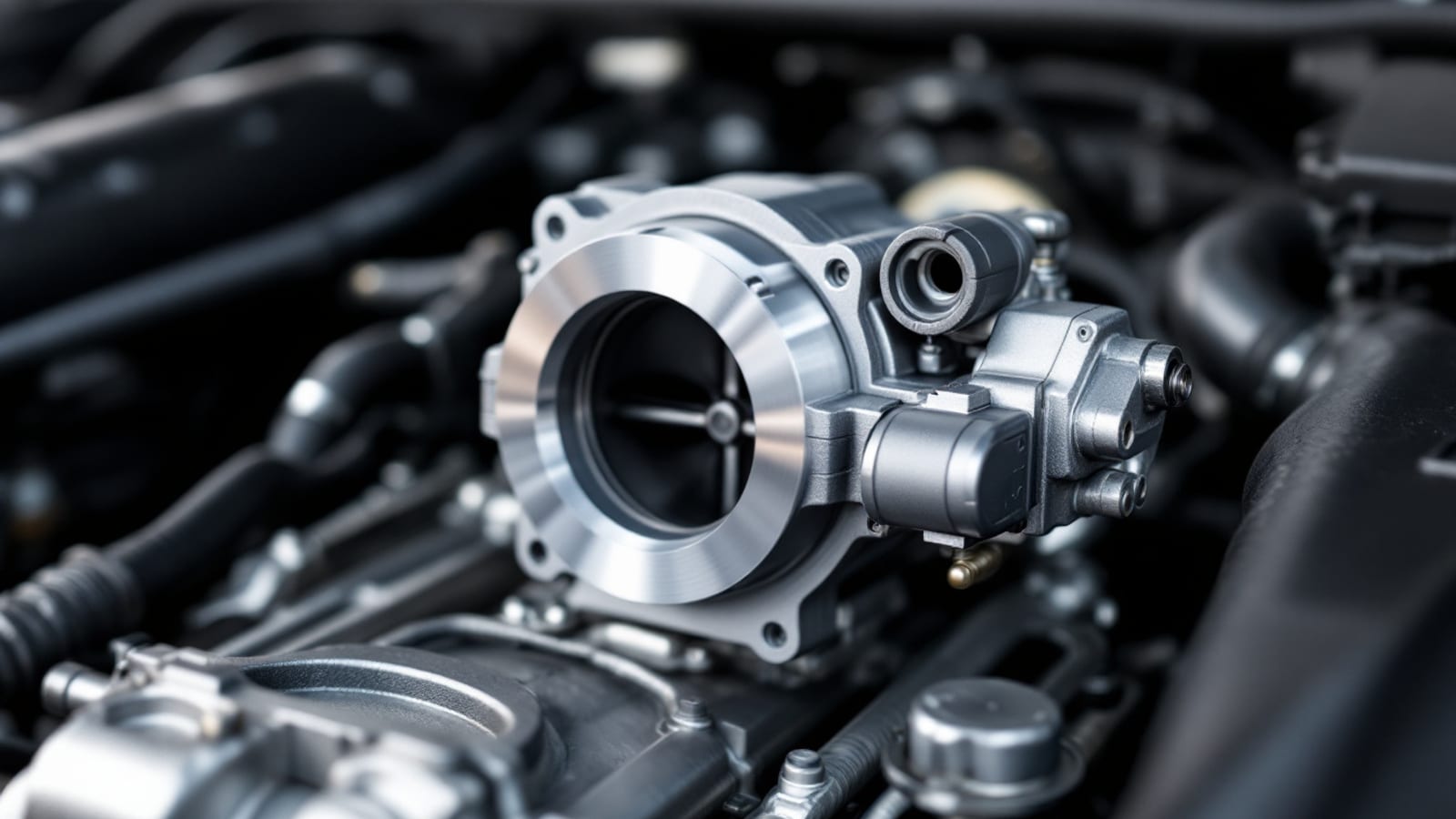
Idle is where the most tuning time gets wasted, because people treat it as a setting when it is a control loop. There is no single number that makes an engine idle well. There is a target, a set of levers the computer uses to chase it, and a fuel calculation underneath all of it — and if the fuel calculation is wrong, no amount of idle table editing will produce a stable result. It will only produce a differently unstable one.
This is the part of the calibration that most rewards understanding the mechanism before touching a value. As of September 2026 the structure below holds across the GM, Ford and Dodge platforms HP Tuners covers, even though the table names differ between them.
Three levers, pulled in order
When the engine is idling, the computer is continuously answering one question: is the engine turning at the speed I want it to?
The target comes from the desired idle table. This is not a single number. It is a schedule that varies with coolant temperature — higher when cold to speed warm-up and stabilise combustion — and it also shifts for drive versus neutral, for accessory loads, and often for a short period after startup. Everything else in the loop exists to hit whatever this table currently asks for.
Airflow is the primary lever. On an electronically throttled engine the computer holds the throttle plate slightly open at idle and moves it to control speed. On older cable-throttle engines an idle air control valve bypasses air around a closed plate. Either way the calibration holds a base airflow figure — how much air this engine needs at this temperature to idle at the target — plus a set of adders for known loads. Airflow is powerful but slow: air has to travel down a manifold, get burned, and produce torque, which takes several engine cycles.
Spark is the fast lever. Adding ignition advance raises torque almost instantly; retarding it lowers torque just as fast. So the calibration reserves a band of ignition authority purely for idle stabilisation, letting it make small corrections in a fraction of the time the throttle would take. This is why a healthy modern idle sits rock-steady on the tachometer — it is being actively held, not simply left alone.
Understanding the split matters because the two levers fail differently. Airflow errors produce a sustained offset: the idle sits at the wrong speed. Spark stabilisation errors produce movement: the idle wanders or oscillates around roughly the right speed.
The one thing to check before any idle table
Here is the single most useful piece of advice in this article: most idle complaints after a tune are fuelling complaints in disguise.
Idle is the lowest-airflow condition the engine ever runs in. It is the far corner of the VE table or the bottom of the MAF transfer function — the region hardest to calibrate accurately and the one most disturbed by a camshaft change, because cylinder filling at low speed with lots of valve overlap is genuinely difficult to model.
If the air model over-estimates airflow at idle, the computer commands too much fuel, the mixture goes rich, combustion quality falls and the engine slows. The idle controller sees a low speed and opens the throttle. More air means more fuel means richer still, but the extra air raises speed past target, so the controller closes the throttle and the engine falls back. That is a hunt, and no idle table in the file caused it.
Check fuel trims at idle before anything else. If short-term trim at idle is swinging more than a few percent, or long-term trim at idle sits well away from zero, close the VE or MAF correction loop first and re-evaluate. A surprising proportion of "idle tuning" jobs end the moment the fuelling is right. This is exactly the mechanism behind a rough idle after a camshaft swap — the cam invalidated the air model in the region idle lives in.
Reading the symptom
Idle faults have distinct signatures, and matching the signature to the lever saves days.
| Symptom | What it looks like | Most likely cause | What to fix first |
|---|---|---|---|
| Hunting or surging | Speed oscillates rhythmically around target | Fuelling error at idle load | Air model at low airflow, not idle tables |
| Steady but too low | Sits below target, never recovers | Base idle airflow too low for the build | Idle airflow by coolant temperature |
| Steady but too high | Sits above target, throttle seems stuck open | Airflow adder left in, or an unmetered air leak | Vacuum leak test, then airflow adders |
| Sag when a load engages | Dips as A/C or steering loads arrive | Load-anticipation airflow not adjusted | Accessory load airflow adders |
| Sag when shifting to drive | Dips or stalls entering gear | In-gear desired idle and airflow untuned | Drive-versus-neutral idle values |
| Wanders slightly, never settles | Small continuous drift, no rhythm | Spark stabilisation authority too narrow | Idle spark correction range |
| Rough but stable speed | Correct RPM, uneven combustion feel | Misfire or genuinely marginal cam idle | Mechanical check, then raise desired idle |
Note that only two of those rows are fixed by editing idle tables. The rest send you somewhere else, and that ratio matches what we see in real files.
Tuning it, in the right order
Step one: verify the engine can idle. Vacuum leaks, misfires, incorrect plug gap and a throttle body that has never been relearned after cleaning all produce idle symptoms that look calibration-shaped. If the engine has a genuine unmetered air leak, the airflow controller will be fighting it forever and you will be calibrating around a fault.
Step two: settle the fuelling. As above. Get trims at idle inside a few percent before touching a single idle table.
Step three: set a realistic target. A stock camshaft may idle happily at 550 RPM in gear. A large-overlap camshaft may need 850 or more before combustion becomes consistent enough to hold steady. Raising desired idle is not cheating — it is choosing an operating point the engine can actually sustain. Raise it in modest steps and stop as soon as the idle becomes stable rather than pushing higher for margin, because a high idle costs you brake feel, creep speed and fuel.
Step four: match base airflow to the target. With the target set, the base airflow table should be close enough that the closed-loop controller has only a small correction to make. You can see this in a log: if the controller is applying a large sustained correction to hold the target, the base table is wrong even though the idle looks fine. That matters because a controller working near the end of its authority has nothing left when a load arrives.
Step five: handle the loads. Air conditioning, power steering at lock, a heavy electrical load and the shift into drive are all predictable, and the calibration is supposed to add airflow before the load lands rather than reacting after. Test each one deliberately with a log running: engage the A/C, turn the wheel to the stop, put it in gear with the brake held. Any of them that produces a visible dip needs its adder increased.
Step six: check the fast lever. Only now is it worth looking at idle spark. If the idle is stable in all the tested conditions, leave it alone. If it wanders slightly and everything else is right, the spark correction authority may be too narrow to catch small disturbances.
Logging idle properly
Idle logs are short and specific. Record for a couple of minutes with the engine fully warm and capture:
- Engine speed and desired idle speed, so you can see error rather than absolute value
- Commanded and actual idle airflow, to see how hard the controller is working
- Idle spark correction, to see whether the fast lever is saturated
- Short-term and long-term fuel trims
- Wideband air-fuel ratio if fitted
- Manifold pressure, which reveals a leak as an unusually high idle vacuum reading
Then do it again in gear, with your foot firmly on the brake, because that is the condition most owners actually complain about and it is the one most people never test. A car that idles beautifully in park in the driveway and stalls entering a junction has an untuned in-gear branch, and no amount of neutral testing will find it.
The trap: calibrating the controller to hide a fault
The recurring failure mode in idle tuning is using the controller's authority to paper over something else. It works, briefly. Raise base airflow enough and an engine will idle despite a rich mixture. Widen spark authority enough and it will hold speed despite a marginal misfire.
The problem is that you have spent the controller's headroom on a fault. When a real disturbance arrives — a cold morning, the compressor cycling on, a hot restart — the controller has nothing left and the engine stalls. Cars that idle "fine except sometimes" are almost always in this state.
The discipline is simple: at the end of idle tuning, the closed-loop correction should be small in every tested condition. If it is large but the idle is stable, you have not finished, you have hidden something.
Where TuneVault fits
Idle is a good example of what a file review catches that a road test does not. The Copilot reads the desired idle, idle airflow and idle spark tables out of your VCM Editor file together with the air model, and flags the combinations that predict trouble — a stock idle target left behind an aggressive camshaft, load adders untouched on a build with much less low-speed torque than stock, in-gear values that were never separated from neutral. That review is part of the same $39 guided tune, and it is generally faster than discovering the in-gear branch is untuned at a busy junction. If you want the deeper background on the tables themselves first, the beginner's route through VCM Editor covers navigating to them.
The bottom line
Idle is a loop, not a setting. The computer has a target, a slow lever and a fast lever, and every idle complaint is either a wrong target, a lever with insufficient authority, or — most often — a fuelling error that the loop is visibly struggling against.
Check fuel trims at idle first. Set a target the engine can genuinely sustain. Get base airflow close enough that the controller barely has to work. Test every load condition, in gear, with a log running. Do it in that order and idle tuning becomes a twenty-minute job instead of the thing that quietly consumes a whole build.
Frequently asked questions
What controls idle speed on a modern engine?
A closed-loop system with three levers. A desired idle table sets the target speed for the current coolant temperature, gear and accessory load. An airflow controller opens or closes the throttle to hit that target. A spark stabilisation term trims ignition timing up and down for fast, small corrections that airflow is too slow to make. The three work together, and tuning one without understanding the others is why idle problems are so persistent.
Why does my idle hunt up and down after a tune?
Hunting is an oscillating control loop, and the usual cause is a fuelling error the idle controller is trying to compensate for. If the air model over-estimates airflow at idle, the mixture goes rich, the engine slows, the controller adds air, the engine speeds past target, the controller removes air, and the cycle repeats. Fix the fuelling at idle load first — hunting almost always disappears with it, without touching an idle table.
Should I raise the idle speed for a big camshaft?
Usually yes, modestly. A camshaft with significant overlap has poor cylinder filling and unstable combustion at low speed, so raising desired idle by a couple of hundred RPM often stabilises it far more effectively than any table edit. It is not a workaround — for that engine, a higher idle is genuinely the correct operating point. Raising it by a thousand RPM to hide a fuelling fault is a workaround.
What is idle spark stabilisation?
A term that adds or removes ignition timing to correct small idle speed errors much faster than the throttle can. Adding timing raises torque and speed almost immediately; removing it lowers them. The calibration usually reserves a band of authority for this, and it is why an idle can feel like it is being actively held rather than drifting. If that authority is too narrow the idle wanders; too wide and it can mask a real airflow problem.
Why does my idle drop when the air conditioning comes on?
Because the compressor loads the engine and the calibration is supposed to anticipate it by raising commanded airflow before the load arrives. That anticipation is a separate table from base idle airflow. If it was never adjusted for a build that changed the engine's low-speed torque, the pre-emptive airflow is too small and the engine sags before the closed-loop controller catches it.
Do I tune idle before or after the VE table?
After, always. Idle sits at the low-airflow corner of the air model, which is the hardest region to get right and the one most affected by camshaft changes. Tuning idle control on top of a wrong air model means you are calibrating the controller to compensate for a fuelling error, and every improvement you make to fuelling afterwards will break the idle again.
Why is the idle fine in neutral but poor in gear?
Because an automatic transmission in gear loads the engine through the torque converter, and the calibration keeps separate desired idle and airflow values for in-gear and neutral. Tuning only in the driveway, in park, calibrates one half of the system. Any idle work has to be verified in gear with the brake held, which is also where most real-world idle complaints actually occur.