Before You Pay for a Tune: The Mechanical Checklist That Saves a Wasted Weekend
A calibration can only optimise an engine that is already healthy. The nine checks worth doing before you book, what each one costs in time, and how to tell whether you need a tuner or a mechanic first.
By TuneVault
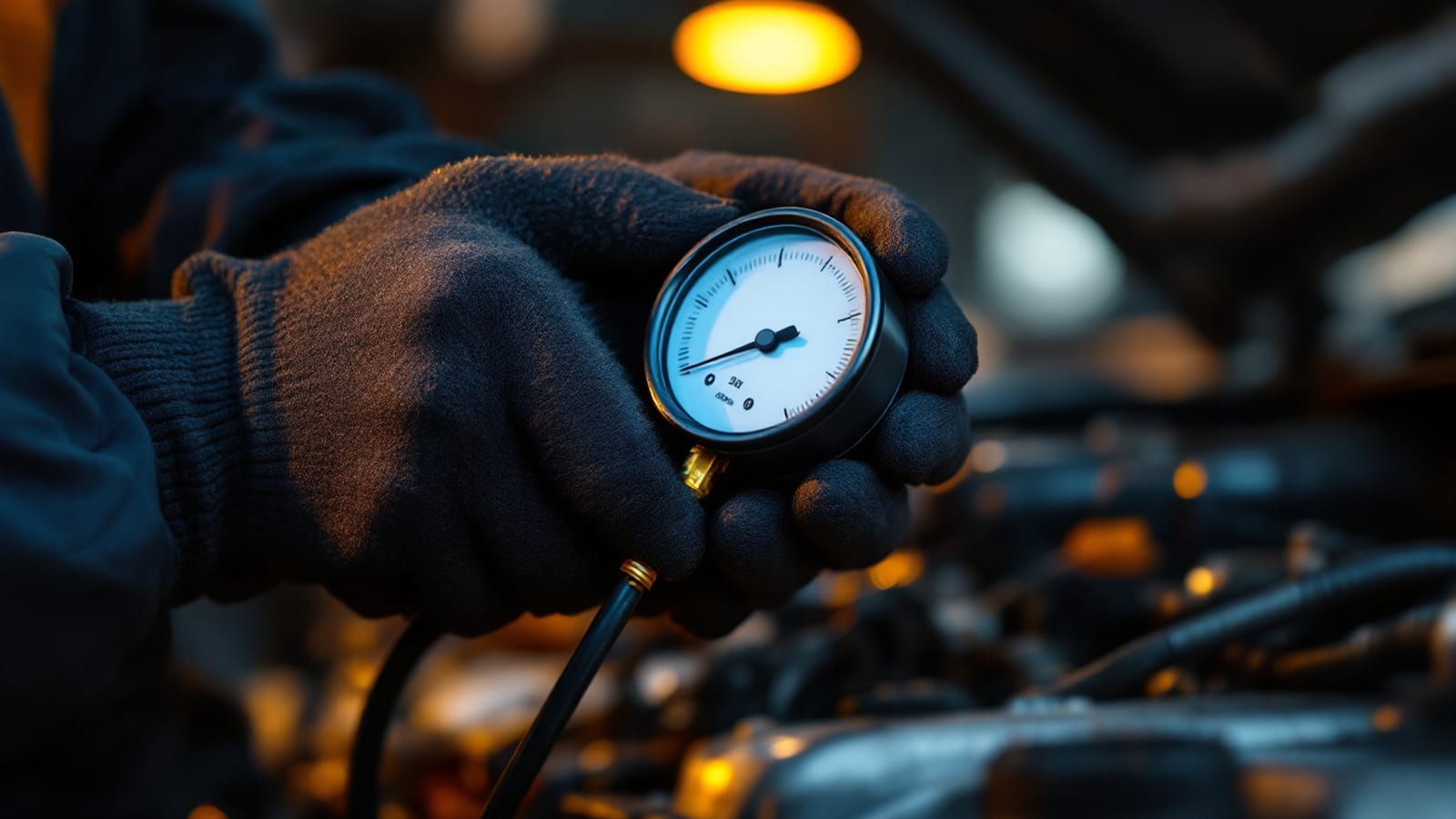
If your car is running badly right now, the honest answer is that a tune is probably not the purchase you need yet. As of September 2026 a full custom dyno tune commonly runs $300 to $600 in the United States and a guided TuneVault tune is $39 per vehicle — but on an engine with a mechanical fault, both of those buy you a calibration written around a problem that is still there afterwards. The calibration work itself is fast; a remote or guided tune usually turns around in a day or two and a dyno session is typically a half-day booking. What actually blows up a tuning timeline is a car that arrived unhealthy.
So the useful question is not "how much and how fast", it is "is this car ready". Below is the list that answers it, in the order worth doing.
Why the order matters
Tuning is optimisation. Every table in a calibration describes how the engine is expected to behave, and the tuner's job is to move those expectations until they match reality. If reality includes a leaking intake gasket, an ageing coil or a cylinder with poor sealing, then the tuner is not calibrating your engine — they are calibrating your engine plus a fault, and every correction they make encodes that fault into the file.
Two things follow. First, when you eventually fix the fault, the tune is now wrong and has to be redone. Second, and more expensively, a fault that is being compensated for is a fault nobody is looking for, and some of them get worse under the extra load a tune brings.
The checklist below is ordered by how much trouble each item causes relative to how long it takes to check. It is not exhaustive — it is the list that catches the overwhelming majority of "the tune didn't fix it" outcomes.
The checklist
| # | Check | Time | Why it matters before tuning | Fail signal |
|---|---|---|---|---|
| 1 | Stored fault codes | 5 min | Existing faults distort every measurement | Any code, current or pending |
| 2 | Vacuum leaks | 20 min | Unmetered air makes the air model unfixable | Smoke escaping, high idle vacuum |
| 3 | Fuel pressure at spec, holding | 20 min | Pressure errors look exactly like tuning errors | Low reading, or bleed-down when off |
| 4 | Spark plugs correct and gapped | 30 min | Wrong heat range or gap misfires under load | Worn, fouled, or wrong part number |
| 5 | Coils and boots | 15 min | Weak spark shows up only under boost or load | Cracks, tracking marks, oil in wells |
| 6 | Compression, all cylinders | 45 min | Uneven sealing caps what tuning can achieve | Spread beyond ~10% between cylinders |
| 7 | Intake path and filter | 10 min | Restriction changes airflow the model assumes | Dirty filter, loose clamps, split ducting |
| 8 | Exhaust leaks upstream of sensors | 15 min | Extra oxygen makes sensors read falsely lean | Ticking on cold start, soot at joints |
| 9 | Oil condition and grade | 10 min | Phaser and lifter behaviour depend on it | Dark, thin, low, or the wrong grade |
Nine checks, most of an afternoon, and no specialist equipment beyond a scan tool, a pressure gauge and a compression tester. Set against the cost of a tune — never mind an engine — it is the highest-return afternoon in the whole process.
The three that catch the most people
Vacuum leaks (#2) deserve to be first in practice as well as second on the list. Any air entering the engine after the point where airflow is measured is invisible to the computer. Its estimate of how much air the engine is breathing is therefore wrong, the mixture goes lean, and the fuel trims wind positive trying to compensate. A tuner looking at that data sees an air model that under-reports airflow and corrects it — permanently baking your leak into the file. Fix the leak later and the car runs rich everywhere.
A smoke test is the definitive check and most shops will do one quickly. Failing that, high idle vacuum, positive long-term trim that is worse at idle than at load, and an idle that improves when you cover part of the intake are all consistent signals.
Spark plugs (#4) are the most common single cause of "the tune made it worse". A plug gap that is fine at atmospheric pressure can be too wide to reliably jump under boost, because higher cylinder pressure makes the spark harder to establish. The result is a misfire that appears only at exactly the load the tune was supposed to improve. Heat range matters too — a plug too hot for a boosted application becomes an ignition source in its own right.
If the car is going to see more cylinder pressure than it used to, plugs are a consumable to change before tuning, not after. It is one of the cheapest items in the entire budget and one of the most consequential.
Compression (#6) is the check people skip because it takes longest. On a well-documented low-mileage engine that is defensible. On anything with unknown history, or where the complaint is roughness, it is the check that tells you whether tuning is even the right activity. A cylinder that seals poorly cannot make the same power as its neighbours regardless of the calibration, and it is the cylinder most likely to be damaged when you add timing or boost.
The number to look at is not the absolute reading — it varies with altitude, cranking speed and gauge — but the spread between cylinders. Even readings that are all somewhat low suggest a worn but consistent engine. One cylinder well below the others is a mechanical problem, and it will not be tuned away.
When the checklist passes and the car still runs badly
This happens, and the next step is not more parts. It is a datalog.
Once you own an interface, logging costs nothing but time, and it separates the three broad categories of fault far faster than parts-swapping:
- Fuel trims across idle, cruise and load tell you whether the air model is wrong and where. Large positive trim suggests unmetered air or under-delivery; large negative suggests over-estimation or over-delivery.
- Misfire counters per cylinder tell you whether roughness is combustion-related and, crucially, whether it is one cylinder or all of them. One cylinder is mechanical or ignition; all cylinders is usually fuelling or timing.
- Knock retard tells you whether the engine is protecting itself, which changes the priority of everything else.
- Coolant and intake temperatures tell you whether the engine is even in a normal operating state when it misbehaves.
That is the same data any competent tuner will ask you for before quoting, so gathering it is not wasted effort even if you end up handing the job over. Our guide to reading a datalog covers the interpretation, and the article on whether pinging and rough running are actually a tuning problem works through the same decision from the symptom end.
The special case: a car that will not run at all
If the engine cranks but does not start, or starts and immediately dies, the checklist above is the wrong tool. That is a systematic no-start diagnosis — spark, fuel, compression, timing reference — and it has its own sequence. An LS swap that cranks but will not start is the most common version of this in the DIY world, and it is almost always something binary and findable rather than a subtle calibration issue.
Do not pay for tuning on a car that does not run. There is nothing to calibrate yet.
What this means for the budget
There is a temptation to see this checklist as an extra expense before the expense you actually wanted to make. It is closer to the opposite.
The most common expensive outcome in DIY tuning is not a failed engine — it is a sequence of purchases that each seemed reasonable: a tune that did not fix the problem, then parts bought on a guess, then a second tune after the parts, then eventually the diagnosis that would have cost an afternoon at the start. Our guide to where it is safe to save money on tuning and where it is not makes the same point from the budget side: the cheap decisions that hurt are almost always the ones that skip diagnosis.
If you are trying to work out what the whole exercise should cost, the 2026 ECU tuning cost guide breaks down DIY, remote and dyno routes with the hardware costs included. The checklist above belongs in that budget as an afternoon of your own time plus, at most, a smoke test and a set of plugs.
Where TuneVault fits
Once the car is mechanically sound, the calibration work is genuinely the straightforward part — and it is the part we automate. Upload your VCM Editor file and a datalog and the Copilot audits the tables, produces an exact change list, and verifies the result against a follow-up log, for $39 per vehicle. Plans run $19 a month for up to three tunes, $49 for up to ten, and $249 for unlimited shop use.
What it will not do is diagnose a coil, and we would rather say so before you pay. If the datalog you send shows a single-cylinder misfire or trims that only a vacuum leak explains, the honest answer is that the file is not the problem — and you will get that answer rather than a change list that pretends otherwise.
The bottom line
A tune optimises a healthy engine. It cannot repair an unhealthy one, and calibrating around a fault encodes the fault into the file, wastes the money, and hides a problem that may get worse under load.
Nine checks, one afternoon: codes, leaks, fuel pressure, plugs, coils, compression, intake, exhaust, oil. If they all pass and the car still runs badly, log it before buying anything — the data will tell you whether you need a tuner or a mechanic far more cheaply than another parts order. And if the car does not run at all, that is a no-start diagnosis, not a tuning job.
Frequently asked questions
My car is running rough — will a tune fix it and how much does it cost?
As of September 2026 a full custom dyno tune commonly runs $300 to $600 in the United States, and a TuneVault guided tune is $39 per vehicle. But on a car that is running rough for a mechanical reason, neither one is the right purchase yet. A calibration can only optimise an engine that is already healthy — if a coil is failing or the engine has a vacuum leak, tuning around it costs money and leaves you with the same car. Diagnose first, tune second.
How long does it take to tune a car?
The calibration work itself is usually the shortest part. A remote or guided tune typically turns around within a day or two once you have submitted a good file and a clean datalog, and a dyno session is commonly booked as a half day. The variable that actually determines the timeline is whether the car arrives healthy — a car with an undiagnosed mechanical fault can consume days of tuning time and still not be right at the end.
What should I check before booking a tune?
Work through the basics in this order: no stored fault codes, no vacuum leaks, healthy compression, spark plugs correct for the build and gapped right, coils and boots in good condition, fuel pressure holding at spec, clean air filter and intake path, no exhaust leaks upstream of the sensors, and fresh oil at the correct grade. That list catches the great majority of problems that get mistaken for tuning faults.
Do I need a compression test before a tune?
It is worth doing on any engine with unknown history, high mileage, or a rough running complaint, and it is essential before adding boost or timing. Uneven compression between cylinders means the engine cannot make even power no matter what the calibration says, and a weak cylinder is far more likely to be damaged by an aggressive tune than a healthy one. On a low-mileage engine with a known history you can reasonably skip it.
Will a tuner tell me if my car is not ready?
A good one will, and will decline the job. That is worth valuing rather than resenting — a tuner who agrees to work on an engine with a misfire is either not paying attention or is happy to hand you back a car with the same complaint. Being turned away is a cheaper outcome than being tuned around a fault.
Does a vacuum leak really matter that much?
Yes, more than almost anything else on the list. Unmetered air entering after the airflow measurement point means the computer's estimate of how much air the engine is breathing is simply wrong, and every fuelling correction the tuner makes is a correction for a leak rather than for the engine. Fix the leak and much of that work has to be undone.
What if the checks find nothing and it still runs badly?
Then a datalog is the next step, and it is free once you own the interface. Reading fuel trims, misfire counters and knock activity across normal driving tells you whether the car has a fuelling problem, an ignition problem or a mechanical one much faster than continuing to replace parts. That log is also the first thing any competent tuner will ask you for.