My Car Is Pinging and Running Rough — Will a Tune Fix It?
Usually no, and here is why. What pinging and a rough idle actually indicate, the mechanical causes a calibration cannot repair, and how to tell in one datalog whether tuning is the answer.
By TuneVault
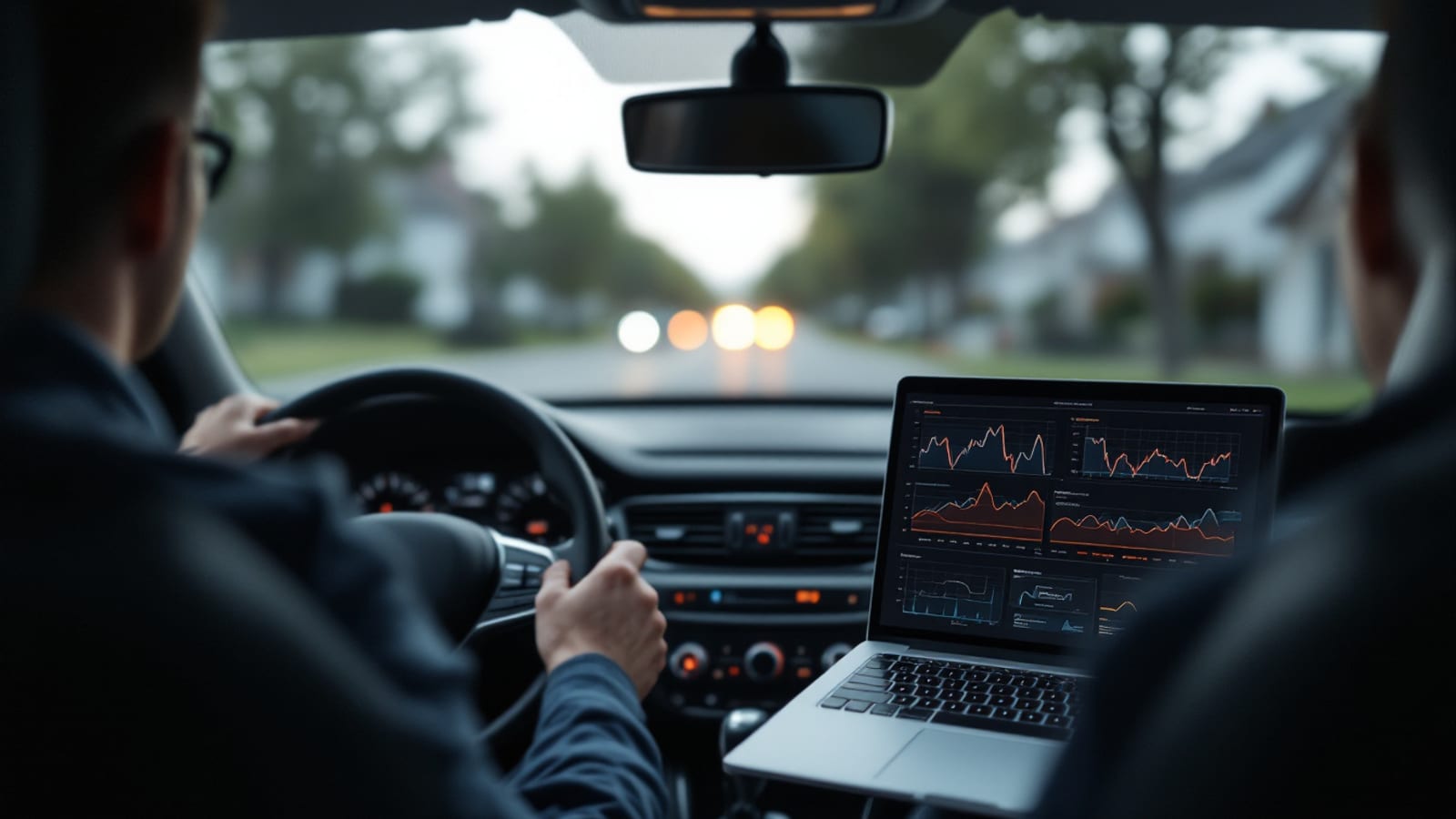
Short answer: on a stock or unmodified car, pinging and a rough idle are almost never a tuning problem — they are a symptom of something mechanical, thermal, or fuel-related that a calibration can only mask. As of July 2026 a full custom dyno tune commonly runs $300 to $600 in the United States, and spending that before you have diagnosed the cause is the most common way people pay for a tune and still have the same car afterwards.
The exception matters, though: if you changed hardware and never updated the calibration, then the tune genuinely is the missing piece. This article is about telling those two situations apart, and it takes one datalog.
What pinging actually is
Pinging — properly detonation — is the fuel-air mixture in the cylinder igniting from pressure and heat rather than from the spark, so two flame fronts collide. The metallic rattle you hear is that collision. It happens because the conditions inside the cylinder exceeded what the fuel could withstand.
Four things drive those conditions: cylinder pressure, temperature, timing, and the fuel's resistance to knocking. A factory calibration is written with margin against all four under expected conditions. If your car is pinging on the factory file, one of those four has moved outside what the engineers assumed — not because the calibration is wrong, but because the car is no longer operating the way the calibration expects.
Modern engines have a knock sensor and will pull timing automatically when they detect it. That is why knock retard is one of the most useful channels in any log: it tells you the engine is already fighting something, often before you can hear it.
The causes a tune cannot fix
Work through these before considering a calibration. They are ordered roughly by how often they turn out to be the answer.
Fuel octane below what the engine needs. The single most common cause. A car that requires premium and got regular will ping under load, and no amount of tuning changes the chemistry in the tank. Run a tank of the correct grade before investigating anything else.
Carbon deposits raising effective compression. Deposits build on piston crowns and in the chamber over years, raising compression and creating hot spots. This is a mechanical condition — the effective compression calculator shows how much a change here shifts your knock threshold.
Cooling system underperforming. A thermostat stuck part-open, a partly blocked radiator, or an air pocket after a coolant change all raise cylinder temperatures. The engine is hotter than the calibration assumes, and the margin disappears.
Intake air temperature far above ambient. Heat soak in stop-and-go traffic, a hot-side intake path, or an intercooler that cannot keep up all raise intake air temperature. Every calibration pulls timing as IAT climbs; if yours is climbing further than the table anticipated, you get knock.
A sensor reading wrong. A coolant temperature sensor reporting cold on a hot engine, an intake air temperature sensor drifting, or a mass airflow sensor with a contaminated element all feed the calibration bad inputs. The tune then makes correct decisions based on incorrect information.
Lean fuelling from a mechanical cause. A vacuum leak, a failing fuel pump, a clogged filter, or a leaking injector produces a lean condition that raises combustion temperature. The fuel trims will be shouting about it in the log.
Genuine mechanical fault. A failing coil, a fouled plug, low compression in one cylinder. This produces roughness rather than classic pinging, and it is not a calibration issue in any sense.
Notice what every entry has in common: a calibration change could reduce the symptom by pulling timing, and none of them would be fixed. You would be driving a car making less power with the original problem still developing.
The one case where tuning is the answer
If you installed hardware and did not update the calibration, the picture inverts.
A bigger camshaft, a different intake, larger injectors, a supercharger, or a change in gearing all move the engine away from what the factory file describes. The airflow model over-reports or under-reports, fuelling drifts, and the timing table is now advancing into conditions it was not written for. Here the roughness and the knock are direct consequences of a mismatch, and a matching calibration genuinely fixes them.
The tell is timing. Did the symptom start after a modification, or did it appear on a car that has not been touched? That single question sorts most cases correctly, and it is the first thing worth writing down before you call anyone.
Read one log and stop guessing
Ten minutes of data answers this. Capture a warm engine with a steady cruise section, a moderate acceleration, and a wide-open-throttle pull if the car is safe to drive that hard. Then read these channels together:
| What the log shows | Most likely category | What to do next |
|---|---|---|
| Knock retard under load, fuel trims near zero, AFR tracking commanded | Fuel quality, carbon, or cooling | Correct fuel grade, check thermostat and IAT before touching the tune |
| Knock retard plus IAT climbing steeply pull over pull | Heat management | Address intake heat; timing will recover as temperature drops |
| Long-term fuel trims strongly positive, rough at idle | Lean condition — vacuum leak or fuel delivery | Smoke-test for leaks, check fuel pressure under load |
| Commanded and delivered AFR disagreeing badly | Airflow model or injector data wrong | Calibration work is genuinely indicated |
| Misfire counts on one cylinder, everything else clean | Mechanical or ignition fault | Coil, plug, or compression — not a tuning job |
| Everything clean but the car feels rough | Sensor, mount, or driveline | Look outside the engine calibration |
That table is the entire triage. Our datalog channels reference explains what each number represents if you are not sure what you are reading, and the how to read a datalog guide walks a complete pull line by line.
Why "quick fix by tune" is the expensive path
The appeal of tuning a rough-running car is understandable: it is one purchase, it happens fast, and somebody else does the thinking. The reason it usually disappoints is that a calibration is a set of instructions to a healthy engine. Give those instructions to an engine with a vacuum leak and you get a calibration built around the leak — which then runs badly the day the leak is repaired.
Worse, a common response to knock is to pull timing globally so the symptom disappears. The car stops pinging, it also makes less power everywhere, and the underlying condition — carbon, heat, a failing sensor — carries on developing quietly.
The cheaper order is always: diagnose, repair, then calibrate if a calibration is still warranted. Our cost guide breaks down what each tuning path actually costs, and the stage 1 versus stage 2 explainer covers why buying a tier does not address a mechanical problem.
If your car is pinging right now
Practical, immediate steps, in order:
- Reduce load. Shift up, lift off, avoid wide-open throttle. Detonation is worst at high load and low RPM.
- Fill with the correct grade of fuel — the grade on the fuel filler door, not the one that was cheaper.
- Check coolant level and that the engine reaches and holds normal operating temperature.
- Scan for stored codes. A pending misfire or sensor code shortens the investigation considerably.
- Capture a datalog before anyone changes anything, so you have a baseline to compare against.
- Then decide whether you are looking at a repair or a calibration.
Steps one through five cost almost nothing and routinely make step six unnecessary.
Where TuneVault fits
TuneVault will not sell you a tune to cover a mechanical fault. What it does is read your HP Tuners datalog and give you a plain reading of the safety channels — commanded against delivered air-fuel ratio, knock retard, fuel trims, intake air temperature, fuel pressure — with severity flags on anything that looks wrong. On a rough-running car that is exactly the triage described above, done for you.
If the log points at a calibration problem, the tool reads your VCM Editor tables and gives you an ordered change list. If it points at a mechanical problem, it says so, and you take the car to somebody with a smoke machine instead. See the datalog analysis page for what the output looks like, or upload a log and find out which one you are dealing with.
The bottom line
Pinging and rough running are symptoms, and a tune is a treatment for exactly one of their causes — a hardware change that never got a matching calibration. On a stock car those symptoms mean the engine's operating conditions have drifted from what the factory assumed, and the fix is to find the drift. One datalog tells you which situation you are in, costs nothing, and will very often save you the price of a tune you did not need.
Frequently asked questions
Will a tune fix an engine that is pinging?
Usually not, and treating it as a tuning problem can make it worse. Pinging on a stock, unmodified car means something has changed in a way the factory calibration did not anticipate — low-octane fuel, carbon buildup, a failing sensor, excessive intake air temperature, or a cooling problem. A calibration can pull timing to mask the symptom, but that is suppressing an alarm rather than fixing the cause. The exception is a car whose hardware was changed without a matching calibration, where the tune genuinely is the missing piece.
How fast can someone diagnose why my car is running rough?
A single well-captured datalog of about ten minutes of driving usually identifies the category of problem, and reading it takes minutes rather than days. That log will not tell you which coil pack is failing, but it will tell you whether you are looking at a fuelling problem, an airflow problem, a knock problem, or a mechanical misfire — which is what determines who you need to call next.
How much does it cost to find out whether tuning is the answer?
As of July 2026, a diagnostic scan at a shop typically costs less than a tune does, and a full custom dyno tune commonly runs $300 to $600 in the United States. A TuneVault guided tune with datalog verification is $39 per vehicle, and reading your own log to see whether tuning is even the right path costs nothing beyond the interface you already need. Spending diagnostic money before tuning money is almost always the cheaper sequence.
Would a stage 1 tune stop my car pinging?
On a stock car, no — and it may increase the problem, because most stage files add timing rather than remove it. Pinging on a stock calibration is a signal that the engine's operating conditions have drifted from what the factory assumed. Adding spark advance on top of that is moving in the wrong direction. Find the cause first.
Can knock damage my engine before I get it fixed?
Sustained heavy detonation under load can, which is why the sensible response to audible pinging is to reduce load immediately — shift up, lift off, stay out of wide-open throttle — until you know the cause. Light, occasional knock retard that the computer catches and corrects is the safety system working. Persistent retard in the same cells every pull is the warning you should act on.
Why does my car run rough only when cold, or only when hot?
Cold-only roughness points at enrichment, coolant temperature sensing, or something that changes as parts expand — often a small vacuum leak that seals when warm. Hot-only roughness points at heat: intake air temperature climbing, a sensor drifting as it warms, or fuel delivery falling off. The temperature dependence is genuinely useful diagnostic information, so note which one applies before anyone touches the calibration.
What should I capture in a datalog before asking for help?
A warm engine, at least one steady cruise section, one moderate acceleration, and if the car is safe to drive that hard, one wide-open-throttle pull. Include RPM, engine load, commanded and actual air-fuel ratio, short and long-term fuel trims, knock retard, intake air temperature, coolant temperature, and fuel pressure if the channel is available. Ten minutes of that beats an hour of description.