Tuning a Truck for Towing: Transmission, Timing and Heat
A tow calibration is not a power calibration with a different name. What actually helps a loaded truck — shift scheduling, converter lockup, torque management and deliberate timing margin — and why the right answer is usually a separate, more conservative file.
By TuneVault
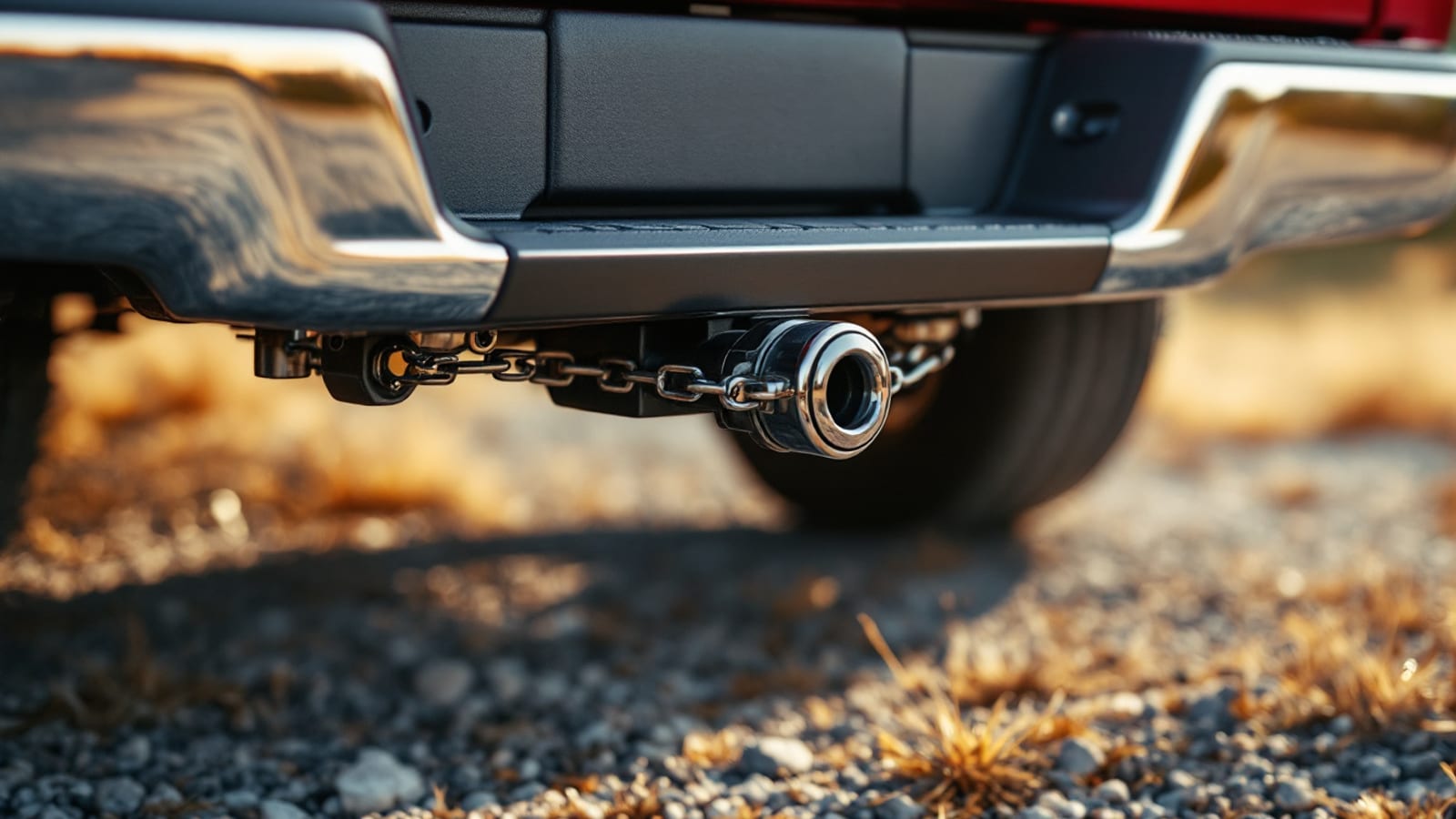
Towing is the operating condition a factory calibration is most carefully engineered for, and also the one where a badly chosen aftermarket calibration causes the most expensive damage. Both of those are true for the same reason: towing is sustained.
A quarter-mile pass is ten seconds. A grade with a loaded trailer behind you is twenty minutes at high load with rising coolant temperature, rising intake air temperature, and a transmission working continuously. As of September 2026 the honest summary is that a good tow calibration is mostly transmission and thermal engineering, and peak power is close to irrelevant to it.
This article is about gasoline trucks. Nothing here involves removing or defeating emissions equipment, which is illegal under federal and state law and not something this site assists with.
Why towing is a different problem
At wide-open throttle for a few seconds, the limiting factors are detonation and fuel delivery. At seventy percent load for half an hour, the limiting factors are heat and how the transmission chooses to behave.
Four things change when a trailer goes on:
Load never stops. Everything that accumulates heat has time to accumulate it — intake air temperature, coolant, transmission fluid, oil.
Air density works against you. A hot day and a climb both reduce available power exactly when demand is highest, which is the same effect covered in heat soak and density altitude.
The transmission does most of the work. Converter slip, shift frequency and lockup behaviour determine both drivability and how hot everything gets.
Detonation margin shrinks. Best-torque spark advance and the onset of detonation move closer together as charge temperature rises, so timing that was safe cold is marginal hot.
A performance calibration optimises for the first scenario. A tow calibration optimises for the second. Asking one file to do both produces something that is worse at both.
The transmission work, which is most of it
This is where the real gains live, and it is the part owners under-estimate because it does not show up on a dyno sheet.
Shift scheduling. A truck that upshifts into a lugging condition on a grade will hunt between gears, heat the converter, and feel awful. A tow calibration holds each gear further into the rev range under load, so the engine stays where it actually makes torque rather than bogging and immediately downshifting again.
Torque converter lockup. This is the single highest-value change. An unlocked converter is a fluid coupling with slip, and slip is heat — the dominant source of transmission temperature when towing. Locking earlier, and keeping it locked through mild throttle changes on a grade rather than dropping out every time the pedal moves, removes an enormous amount of accumulated heat.
Line pressure. Under high load, a shift that slips rather than completing crisply generates heat and wear in the clutch packs. Firmer pressure under load makes shifts short and clean. The trade is a less refined shift when unloaded, which is another reason a separate tow file is the right structure.
Downshift behaviour. A calibration that reacts to load and grade rather than only to pedal position downshifts before the truck is struggling instead of after. That anticipation is what makes a well-calibrated truck feel confident with weight behind it.
Torque management. Factory calibrations reduce engine torque during shifts to protect the driveline. Performance tuning frequently reduces or removes that limiting to make shifts feel sharper. Under a trailer that protection is doing a real job, and this is one of the clearest places where a performance file is the wrong tool — a point developed further in transmission tuning and torque management.
Timing, and the discipline of keeping margin
The temptation with a tow file is to add timing for the extra torque. The discipline is to do the opposite in the region that matters.
Under sustained load, intake air temperature can climb well above ambient and stay there. Most calibrations already pull timing as charge temperature rises, and a tow calibration should treat that correction as a feature to respect rather than a restriction to reduce. The knock retard channel is the honest scorekeeper here: a tow file that shows repeatable retard on a summer grade is asking for more than the conditions support, however good it felt on a cool evening. What counts as normal is set out in how much knock retard is normal.
Fuelling under sustained high load deserves the same conservatism. A slightly richer mixture at high load costs a little fuel and buys real charge cooling, and under a trailer on a hot day that is a good trade. The mechanics of the table doing that work are in open loop versus closed loop fuelling and power enrichment.
Performance file versus tow file, side by side
| Area | Performance file wants | Tow file wants |
|---|---|---|
| Spark at high load | Maximum safe advance | Advance with deliberate margin for heat |
| Power-enrichment mixture | Optimised for peak torque | Slightly richer for charge cooling |
| Shift points | Near redline, aggressive | Held under load, well short of lugging |
| Shift firmness | Firm for feel | Firm to avoid slip under load |
| Torque converter lockup | Often later or unchanged | Earlier, and held through throttle changes |
| Torque management | Frequently reduced | Preserved — it is protecting the driveline |
| Fan and thermal strategy | Rarely touched | Fans on earlier, protection thresholds respected |
| Throttle response | Sharpened | Left progressive for smooth trailer control |
Reading that table, the case for two files rather than one compromise makes itself. Flashing takes a few minutes with the engine off, and the discipline for keeping a family of files consistent is covered in running multiple tune files.
Things a calibration cannot fix
Being clear about this saves money and, occasionally, a transmission.
Cooling capacity. If a truck runs its transmission hot at a load it is rated for, that is a cooler, fluid, airflow or condition problem. Earlier lockup reduces heat generated; it does not increase heat rejected. Diagnose the hardware.
Being over the rating. Payload and tow ratings are structural and thermal limits. No calibration raises them.
Gearing. A truck geared tall for economy will always work harder with weight behind it. If axle gearing has been changed, the calibration must be told — along with tyre size, which is the same correction covered in speedometer, tyre size and gear ratio calibration. A truck that does not know its own final drive will shift at the wrong points and report the wrong speed.
Maintenance. Fluid that towed all summer is not the fluid the calibration was developed against. Towing accelerates every service interval, which is worth planning for deliberately — see the tuned-car recheck schedule.
Verifying a tow calibration
A tow file cannot be validated in a car park or on a short empty pull. It has to be tested loaded, warm, and on a sustained climb, which means the verification drive is deliberate rather than incidental.
Log these, with the trailer on, on the longest grade you have access to:
- Coolant and transmission fluid temperature, watched for whether they stabilise or keep climbing
- Intake air temperature against ambient, which tells you how much charge heating you are dealing with
- Commanded versus actual spark, and knock retard, at the top of the climb rather than the bottom
- Converter slip — commanded lockup versus actual — because this is where the transmission heat is made
- Commanded gear, to see whether the truck is hunting or settling
That is a symptom-driven read rather than a general one; the method for filtering a log down to the channels that answer a specific question is in the datalog symptom index.
The pattern you want: temperatures rising and then levelling off, one downshift held steadily rather than three, lockup engaged and staying engaged, and minimal knock retard at the hottest point of the climb. The pattern that means you have gone too far: temperatures still climbing at the top, retard appearing repeatably, or the transmission cycling in and out of lockup.
Where to get the calibration
If you are running HP Tuners on a GM, Ford or Dodge truck, this is squarely within what TuneVault audits. It reads your VCM Editor tables and checks them against the logs from a loaded drive, which for a tow file means flagging timing that leaves too little margin for the temperatures you actually recorded, and lockup and shift scheduling that generate avoidable heat. A guided tune with a verification pass is $39, or from $19 a month if you are iterating across a season; the pricing page has the detail.
If you would rather hand it to someone, a tow calibration is a reasonable thing to buy from a shop that knows your platform — but ask specifically what they change in the transmission tables, because a "tow tune" that is only a timing map with a different filename is not worth paying for. Which route suits you is the subject of copilot versus e-tuner versus dyno shop.
The measure of a good tow calibration is not a number. It is a truck that settles into one gear on a long climb, keeps its temperatures flat, and arrives with the driver unbothered. That is achievable, and it is mostly transmission work.
Frequently asked questions
Does a tow tune make more power than the stock calibration?
Usually a little, but that is not the point of it. A tow calibration is mostly transmission and thermal work — where the truck holds a gear, when the torque converter locks, how quickly it downshifts on a grade, and how much timing margin it keeps in reserve when everything is hot. Peak power barely matters when you are at sixty percent throttle for an hour.
Should a tow tune and a performance tune be the same file?
Rarely, and this is the most useful decision in the whole subject. The two want opposite things from the same tables — a performance file chases maximum timing and quick, firm shifts, and a tow file wants margin and stability under sustained heat. Running two files and flashing before a trip is simpler and safer than one compromise that is mediocre at both.
What transmission changes actually help when towing?
Holding gears longer rather than upshifting into a lugging condition, locking the torque converter earlier and keeping it locked on grades, higher line pressure so shifts are firm rather than slipping under load, and a downshift schedule that reacts to grade rather than only to pedal position. Converter slip is the single biggest source of transmission heat when towing.
Why does timing need to be more conservative for towing?
Because towing is a sustained high-load, high-heat condition rather than a brief burst. Intake air temperature climbs, coolant climbs, and the margin between best-torque timing and detonation shrinks exactly when the engine is under continuous load. A file that is safe for a ten-second pull can be marginal on a twenty-minute grade in summer.
Can a tune fix transmission overheating when towing?
It can reduce the cause, which is usually torque converter slip, by locking earlier and holding lockup. It cannot substitute for cooling capacity. If a truck overheats its transmission at a load it is rated for, check cooler condition, fluid condition and airflow first — a calibration that hides the symptom without reducing heat is making the problem less visible, not smaller.
Does a tow tune help fuel economy while towing?
Sometimes, modestly, mostly by reducing converter slip and unnecessary shifting rather than by changing fuelling. Do not buy a tow calibration on a fuel-economy argument. Buy it because the truck holds gears sensibly, shifts cleanly under load, and keeps its temperature margins — the economy, if it appears, is a side effect.
Is it safe to tow on a performance tune?
It depends how aggressive the performance file is, and it is a genuine risk worth taking seriously. An aggressive file at maximum timing with reduced torque management, run at sustained load on a hot day, is operating with very little margin exactly where margin matters most. If you only keep one file, keep the conservative one and accept slightly less power.