Tune Car Without Failing Emissions — Legal Ways
Learn which tuning modifications pass emissions tests, what regulators allow, and how to upgrade performance safely. Read the guide now.
By TuneVault
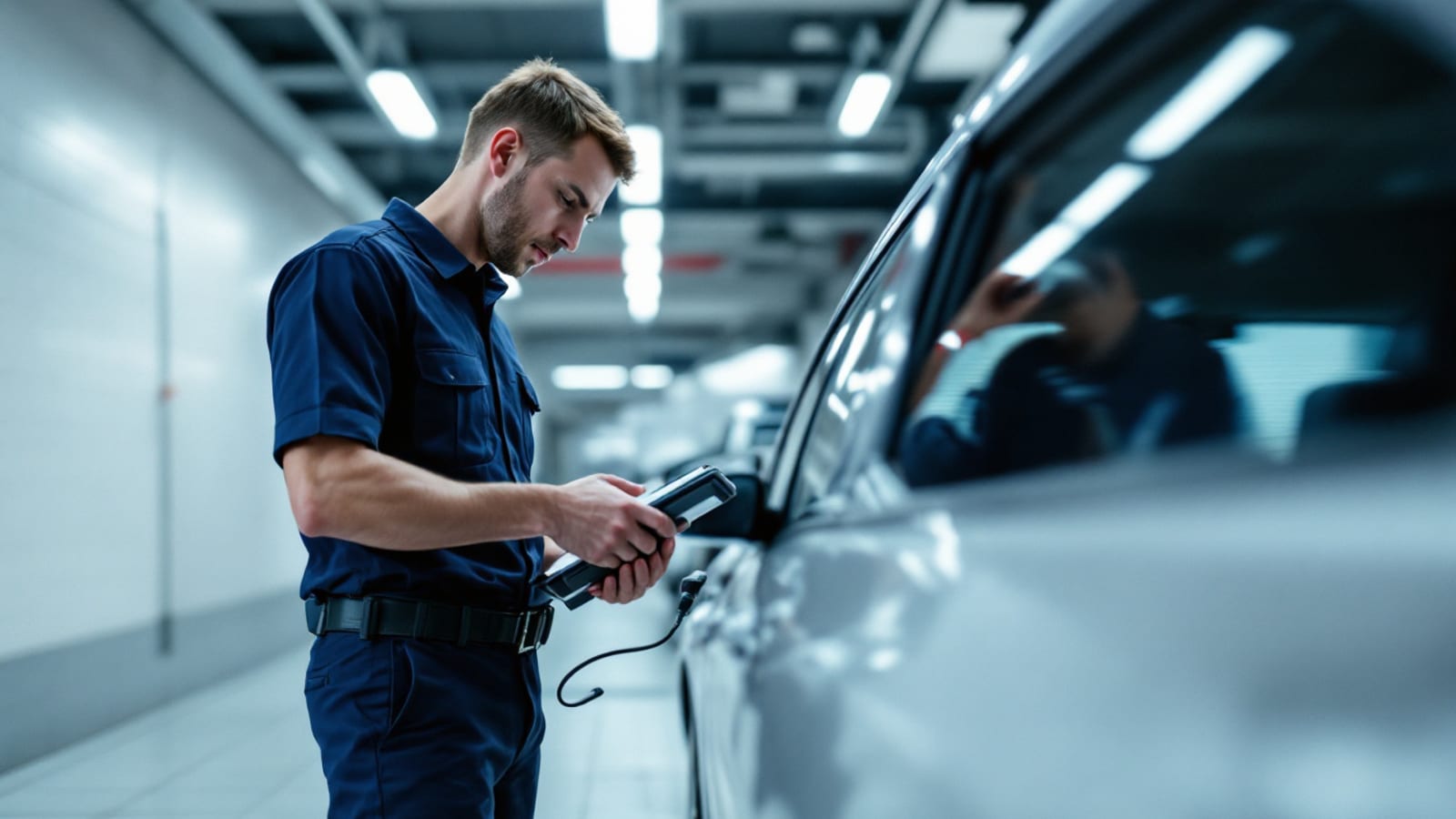
Ask whether you can tune a car and still pass emissions and you will get two confident, opposite answers from strangers on the internet. Here is the accurate one.
Yes — a calibration that leaves the factory emissions controls intact and keeps the onboard diagnostic system fully functional can pass an inspection. What fails, both at the test lane and legally, is tampering: removing or disabling emissions controls, or defeating the monitors that report on them. And an important distinction most discussions miss is that passing an inspection and being legal are not the same test. Federal law prohibits tampering on public-road vehicles whether or not any inspection would have caught it.
This article separates the three things that get conflated — federal law, state inspection programs, and the OBD readiness system — because knowing which one you are dealing with is most of the answer.
The three separate rule systems
Federal law sets the baseline. The Clean Air Act prohibits tampering with or disabling a vehicle's factory emissions controls on public roads. The EPA states that violators are subject to civil penalties up to tens of thousands of dollars per noncompliant vehicle, and enforcement is active rather than theoretical — the agency finalized 172 civil enforcement cases from fiscal years 2020 through 2023, totaling $55.5 million in civil penalties. The underlying regulations sit in 40 CFR Part 85. This applies nationwide regardless of whether your state inspects anything.
State inspection programs are separate and vary enormously. Some states test every vehicle annually, some test only in certain counties, some test only above a certain vehicle age, and some do not test at all. California runs the most demanding program through the Bureau of Automotive Repair's Smog Check program. What your state does affects whether you get caught, not whether the underlying modification is lawful.
The OBD-II diagnostic system is the mechanism most modern inspections actually use. Rather than sampling tailpipe gas, many programs plug into the port and read what the car reports about itself: stored fault codes, readiness monitor status, and calibration identification. This is the layer that trips up tuned cars most often, and it is also the easiest to manage.
What a CARB Executive Order actually does
In California the bar is explicit: an aftermarket part or calibration must carry a CARB Executive Order to be street-legal. As the California Air Resources Board explains, a part shown not to increase emissions is granted an exemption from anti-tampering law, and each Executive Order has an assigned number that Smog Check and Referee stations can verify.
Two practical implications. First, the EO number is checkable — an inspector can look it up, so a claim that a part is "CARB legal" without a number attached is worth nothing. Second, an EO can make a part legal in all 50 states, which is why the designation matters well outside California. Several other states have adopted California's emissions framework, so the EO ecosystem reaches further than its name suggests.
What an EO is not: a blanket permission slip for tuning. It covers a specific part or calibration on specific applications. A custom calibration written for your particular car is, by definition, not a mass-produced part with an EO — which is the honest reason so many street-driven cars in EO states run factory-compliant calibrations with modest optimization rather than aggressive custom files.
OBD readiness monitors: the most common inspection failure
Here is the failure mode that catches people who did nothing legally wrong at all.
The OBD system runs self-tests on individual emissions subsystems — the catalyst, oxygen sensors, the evaporative system, and others. Each reports either complete or not complete. Clearing fault codes resets them. Writing a new calibration to the module also resets them.
Most inspection programs fail a vehicle that arrives with too many incomplete monitors, even when there are no fault codes and nothing is wrong. So the sequence that fails a perfectly compliant tuned car is: flash the calibration on Friday, drive to the inspection station on Saturday, get failed for incomplete readiness. Nothing about the tune caused it; the timing did.
The fix is free: after any write, drive the car through a normal mix of conditions — cold starts, steady highway cruise, city driving, a full range of coolant temperatures — until the monitors set. That typically takes a few days of ordinary driving. Check monitor status with a scan tool before you go, not after you have paid for the test.
What the inspection can see about your tune
Assume the tune is visible. Modern modules record calibration identification data and a reflash counter that increments each time the module is written. Inspection programs can compare that identification against the manufacturer's expected value, and the counter does not reset when you flash the stock file back.
This is why "just flash back to stock before the test" is less reliable advice than it used to be. Returning to the stock calibration restores compliant behavior, which matters, but it does not erase the evidence that the module was reflashed.
The practical takeaway is not that you should try harder to hide it. It is that compliance should be a property of the calibration itself, not of your test-day scheduling.
What a compliant calibration looks like
The distinction that matters is between a tune-only calibration and a defeat device.
| Change | Emissions controls affected | Typical compliance status |
|---|---|---|
| Optimizing spark within knock limits | None | Compatible with a compliant tune |
| Correcting injector and airflow scaling for installed hardware | None | Compatible with a compliant tune |
| Relaxing overly conservative torque management | None | Compatible with a compliant tune |
| Recalibrating for correct tire size or final drive | None | Compatible with a compliant tune |
| Raising boost within factory hardware limits | None directly | Depends on the platform and the resulting emissions |
| Disabling catalyst monitoring | Catalyst diagnostics | Tampering under federal law |
| Removing or defeating exhaust gas recirculation | EGR | Tampering under federal law |
| Disabling evaporative system monitoring | EVAP diagnostics | Tampering under federal law |
| Deleting a diesel particulate filter or its monitoring | Aftertreatment | Tampering, and a stated EPA enforcement priority |
TuneVault does not help with anything in the lower half of that table. That is a product decision, not just a legal one — deleting a control is a way of avoiding the engineering rather than doing it, and the engineering is where the durable gains live.
Notice what remains in the upper half: fueling accuracy, spark optimization, torque management, and correcting the module's understanding of hardware you have actually installed. On most modern engines that is where the largest safe gains are anyway, as our ECU tuning fundamentals article works through. Emissions compliance costs you less power than the forums suggest.
The safety-equipment dimension people forget
Emissions are not the only federal constraint. Federal law also prohibits knowingly rendering inoperative equipment installed to meet a motor vehicle safety standard — 49 U.S.C. section 30122 applies to manufacturers, distributors, dealers, and repair businesses.
Calibration changes can intersect with this. Drive-by-wire torque limiting, speed limiters tied to tire ratings, and stability-control behavior are all things a calibration can touch, and all things that exist for safety reasons. A thoughtful tune leaves them alone unless there is a specific, defensible engineering reason — and if a vehicle's speed limiter exists because of the tires fitted to it, raising it without changing the tires is a genuinely bad idea regardless of legality.
A practical compliance checklist
If you want to tune a street-driven car and keep it inspectable, this is the short version.
Know your state's program. Whether you are tested at all, how often, and whether the test is OBD-based or tailpipe-based determines what you actually need to manage. Our state tuning pages cover the local picture for each state, and the Texas and California pages illustrate how differently two large programs operate.
Keep every emissions control functional. Catalysts, evaporative system, exhaust gas recirculation where fitted, and — critically — the diagnostic monitors that watch them. A control that is physically present but no longer monitored is not compliant.
Drive the readiness monitors after every write. A few days of varied driving. Verify with a scan tool before you book the test.
Save the stock calibration. Not as a way to hide anything, but because a known-good factory file is the fastest way to isolate whether an emissions fault is calibration-related or mechanical.
Check for an EO if you are in a CARB state. And check the number, not just the claim.
Verify with datalogs, not assumptions. A calibration that runs the car well within factory closed-loop behavior at cruise is one that will keep the catalyst and oxygen sensors happy. Our datalog channels article covers the fuel trims and closed-loop behavior that inspection-relevant systems depend on.
The bottom line
You can tune a street car and still pass emissions, provided the calibration leaves the emissions controls and their monitoring fully intact, and provided you let the readiness monitors reset before you go for the test. What you cannot do — legally, not just practically — is delete a control and expect the absence of an inspection in your area to make it lawful. Federal enforcement is active and does not depend on your state's testing regime.
If you are in California or another state that has adopted its framework, the CARB Executive Order system is the mechanism that makes an aftermarket calibration street-legal, and the number is verifiable. Everywhere else, the honest standard is the same one good tuning uses anyway: change what the engine actually needs, leave the controls alone, and verify with data. The complete guide to tuning your car puts the compliance question inside the wider workflow, and if you want your own calibration reviewed with these boundaries in mind, start here.
This article is general information, not legal advice. Rules change and vary by state — confirm your own vehicle's status before you write a file.
Frequently asked questions
Can you tune a car without failing emissions tests?
Yes, in the sense that a calibration which leaves the factory emissions controls intact and keeps the OBD system fully functional can pass an inspection. What fails is tampering — disabling or removing emissions controls, or defeating the diagnostic monitors that report on them. The Clean Air Act prohibits that tampering on public-road vehicles regardless of whether an inspection would have caught it, so passing a test is not the same thing as being legal. In California specifically, an aftermarket calibration generally needs a CARB Executive Order to be street-legal.
What is a CARB Executive Order and why does it matter outside California?
It is an exemption issued by the California Air Resources Board for an aftermarket part or calibration that has been demonstrated not to increase emissions. Each Executive Order carries a number that Smog Check and Referee stations can verify. It matters outside California because an EO can make a part legal in all 50 states, and because several other states have adopted California's emissions framework.
Will an inspection station know my car has been tuned?
Often, yes. Modern OBD-II systems record calibration identification data and a count of how many times the module has been reflashed, and inspection programs can compare those values against the manufacturer's expected values. Reflashing back to stock does not erase the reflash counter. Assume the tune is visible rather than assuming it is hidden.
What are readiness monitors and why do they fail cars?
Readiness monitors are the OBD system's self-tests for individual emissions subsystems — catalyst, oxygen sensors, evaporative system and others. Each reports as complete or not complete. Clearing codes or flashing a new calibration resets them to not complete, and most inspection programs fail a vehicle that arrives with too many incomplete monitors even if there are no fault codes at all. The fix is simply to drive the car through a normal mix of conditions until the monitors set before you go for the test.
Is a tune-only calibration different from a defeat device?
Fundamentally, yes. A tune-only calibration adjusts fueling, spark, and torque management while leaving catalytic converters, evaporative controls, exhaust gas recirculation, and the diagnostic monitors that watch them fully intact and functional. A defeat device removes or disables those controls or their monitoring. The EPA's enforcement focus is squarely on the second category, and it has pursued it actively.
What about a dedicated race car that never goes on public roads?
Vehicles used exclusively in competition and never operated on public roads are treated differently from street vehicles, but the boundary is narrower than enthusiasts often assume and the details matter. If a vehicle is registered, insured, and driven on the road, it is a street vehicle for these purposes regardless of how it is used at weekends. Confirm your specific situation rather than relying on a general rule.
Does emissions compliance limit how much power I can make?
Less than most people expect. The largest, safest gains on a modern engine come from optimizing fueling and spark within the mechanical limits and from removing unnecessarily conservative torque management — none of which requires touching an emissions control. What compliance rules out is the shortcut of deleting a control to avoid engineering around it, which was never the good path anyway.