Do I Need a Wideband to Tune? When & Why
Learn when a wideband matters for tuning and when you can skip it. Get the honest breakdown to tune with confidence.
By TuneVault
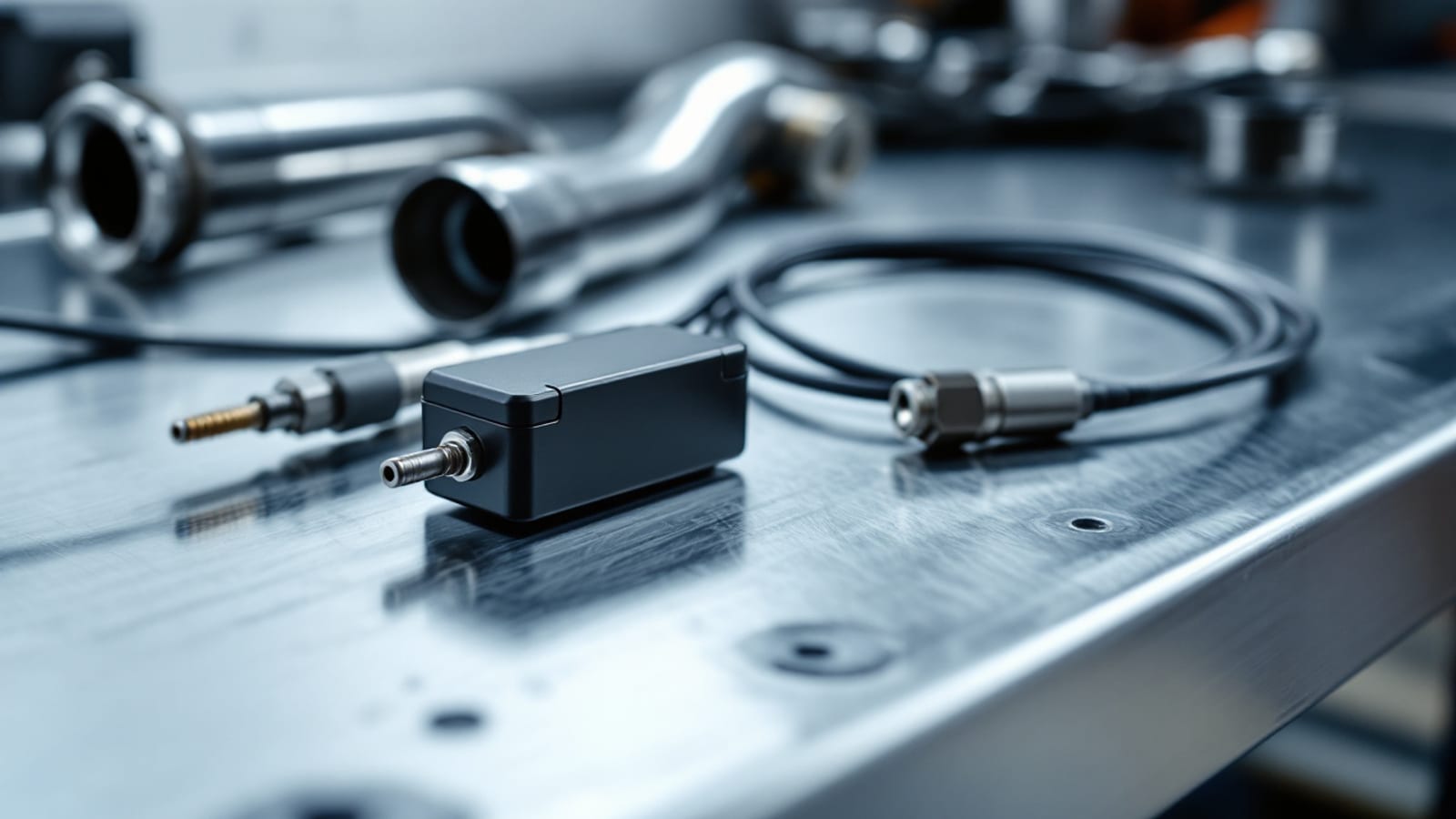
The honest answer is that it depends on how far from stock your car is, and the line is sharper than most discussions of this admit.
If your car is stock or lightly modified and you are tuning the parts of the map that run closed loop, the factory narrowband sensor plus the computer's fuel trims genuinely are enough. They will tell you whether your airflow model is honest at idle and cruise, which is where a mild calibration does most of its work.
If you have changed airflow or fuelling hardware, or you intend to verify anything at wide-open throttle, you need a real measurement. At full load most engines stop correcting from the oxygen sensor and simply follow the commanded target — and a narrowband cannot tell you whether the engine actually delivered it.
That is the whole decision. The rest is why — and as of July 2026 the calculation has shifted slightly, because a growing share of vehicles arrive with a factory wideband already fitted, which changes what you need to buy.
What a narrowband sensor actually does
A factory narrowband oxygen sensor is not really a measuring instrument. It is closer to a switch.
Its output changes sharply right around the stoichiometric ratio — the mixture where, in theory, all fuel and all oxygen are consumed. Slightly rich and it pins one way; slightly lean and it pins the other. Between those two states there is very little useful resolution.
That is exactly what the factory system needs. In closed loop, the computer's job is to hold the mixture at stoichiometric so the catalytic converter can work, and a switch that says "too rich" or "too lean" hundreds of times a minute is a perfectly good way to do that. The fuel trims you can read in a log are the running record of those corrections, and they are genuinely informative — a trim of plus twelve percent tells you the airflow model is under-reporting air by roughly that much in that region.
What a narrowband cannot do is tell you the mixture is at a specific value away from stoichiometric. Ask it what happened during a wide-open-throttle pull at a deliberately rich target and it will simply say "rich" for the entire pull. Comfortably rich and dangerously lean-of-target both look the same from a sensor that only reports which side of the line you are on.
What a wideband adds
A wideband sensor measures across a broad range and reports an actual value. That single change turns fuelling from a binary into a number you can act on.
| Narrowband | Wideband | |
|---|---|---|
| Useful range | Very close to stoichiometric | Broad, from rich to lean |
| Output | Effectively rich or lean | A measured ratio or lambda value |
| Useful in closed loop | Yes, this is its job | Yes, with more detail |
| Useful at wide-open throttle | No | Yes, this is the reason to have one |
| Tells you the trims story | Indirectly, via computer corrections | Directly, alongside trims |
| Cost | Already fitted | Sensor, controller, and a bung to weld |
The critical row is wide-open throttle. In open loop the computer stops correcting and follows the table. If the airflow model over-reports air, the engine gets more fuel than intended and you lose power harmlessly. If it under-reports, the engine runs leaner than commanded at maximum load and cylinder temperatures climb toward detonation. Both cases look identical without a measurement, and only one of them damages an engine.
Where the line actually falls
Stock car, mild calibration work, no hardware changes. Fuel trims will tell you what you need. If they are near zero across your normal driving range, the factory airflow model still describes your engine and your fuelling is honest where it can be checked. You can do a lot of useful, safe calibration work here without buying anything.
Bolt-ons that change airflow — intake, exhaust, both. You are now in a grey area. Trims still work at cruise and will honestly report an airflow model that has drifted. But the top of a pull is no longer verifiable, and that is where a changed airflow path most affects the reading. A wideband becomes strongly advisable rather than mandatory.
Injectors, cam, forced induction, or a swap. A wideband is not optional. Too many assumptions are in play at once — injector data, the airflow model, fuel supply capability — and the only way to know they combined correctly is to measure the result. Our supercharged tuning guide covers why forced induction removes the slack entirely.
Any car where you plan to advance timing. Timing and fuelling are coupled: a lean mixture raises combustion temperature and reduces knock margin. Advancing spark without knowing the real mixture is advancing into an unknown. The stage 1 versus stage 2 explainer covers where that combination bites.
Check what you already have first
A useful number of modern vehicles fit wideband sensors from the factory and expose a genuine air-fuel signal in the data stream. If yours does, and the channel is available in your logging software, you may already have most of what an add-on unit would give you.
Two caveats. Confirm rather than assume — the presence of a sensor in the exhaust says nothing about whether it is narrowband or wideband. And treat a long-serving factory sensor with a little suspicion: sensors drift with age and contamination, and a drifted sensor produces a confidently wrong number, which is worse than an obviously missing one.
Our datalog channels reference covers which fuelling channels are typically available and what each represents.
Installation details that decide whether the reading means anything
A badly placed wideband produces numbers that look plausible and are not.
- Downstream of the collector, where all cylinders have merged, so the sensor reads the whole engine rather than one bank or one runner.
- Far enough from the exhaust port that the sensor is not cooked. Sensor manufacturers publish distance guidance; follow it for your specific unit.
- Above the horizontal centreline of the pipe. Condensation collects at the bottom of an exhaust, and liquid water contacting a hot sensor element damages it.
- Away from any air leak. A leaking joint upstream of the sensor lets atmospheric oxygen in and the sensor reports the engine as leaner than it is — a reading that will send you chasing a fuelling problem that does not exist.
- Free-air calibrated per the manufacturer's procedure before you trust it, and again after long service.
What a wideband will not do for you
It measures one thing well and nothing else at all.
It reports the average mixture of the gas passing it, so one lean cylinder can sit inside a healthy-looking overall number. On an engine where per-cylinder distribution is a real concern, an acceptable wideband trace is necessary but not sufficient.
It tells you nothing about knock retard, fuel pressure, or intake air temperature — and any of those three can be the thing that hurts your engine while the air-fuel ratio looks perfect. A verification pass reads all of them together, which is what the how to read a datalog guide walks through.
And it does not make an unverified tune safe. It makes verification possible. Those are different things, and the difference is whether you actually look at the log afterwards.
The number that matters: commanded versus delivered
Once you have a trustworthy measurement, the single most valuable thing you can do with it is compare it against what the computer intended.
Log commanded air-fuel ratio and actual air-fuel ratio on the same time axis through a full pull. If they track, your airflow model and injector data are working together correctly and every downstream decision rests on solid ground. If they diverge — particularly if delivered goes leaner than commanded as load builds — something upstream is wrong and no amount of spark tuning will fix it.
Watch the units. Some tools report lambda and others report an air-fuel ratio, and comparing one against the other produces nonsense that looks like a catastrophic fuelling error. The AFR and lambda calculator converts between them, and the lambda glossary entry explains why lambda is often the cleaner unit to think in when fuels vary.
Where TuneVault fits
TuneVault reads your HP Tuners datalog and does the commanded-versus-delivered comparison for you, along with knock retard, fuel trims, fuel pressure, and intake air temperature, and returns a plain go or no-go rather than a wall of traces. It works with whatever air-fuel source your log contains — factory wideband channel or an add-on unit wired into the data stream.
What it will not do is tell you a tune is verified when the log has no trustworthy air-fuel measurement in it. If the only fuelling evidence available is a narrowband switching around stoichiometric, the honest verdict on a wide-open-throttle pull is that it was not verified, and the tool says so. See the datalog analysis page for what the check covers, or upload a log to see where your current setup stands.
The bottom line
A wideband is not a badge of seriousness and it is not required to do useful calibration work on a near-stock car — fuel trims will carry you a long way. What it is, is the only way to know what your engine actually did at full load. The moment you change airflow hardware, add fuel system capacity, or advance timing meaningfully, you have moved into territory where "it felt fine" is the only alternative to measuring, and that is not a verification method. Buy the sensor before the parts that make you need it.
Frequently asked questions
Do I need a wideband oxygen sensor to tune my car?
It depends on how far from stock the car is. On a stock or lightly modified vehicle running closed loop, the factory narrowband sensor plus the computer's own fuel trims give you a usable picture of fuelling at cruise and idle, which covers most of what a mild tune changes. Once you are running wide-open throttle in open loop, or you have changed airflow or fuelling hardware, the narrowband can no longer tell you what the mixture actually is — and that is exactly where being wrong is expensive.
What is the difference between a narrowband and a wideband sensor?
A narrowband sensor is essentially a switch. It reports accurately only very close to the stoichiometric point and swings hard to one extreme or the other outside a narrow band, which is all the factory closed-loop system needs. A wideband reports an actual measured value across a broad range of mixtures, so it can tell you a pull was at one specific ratio rather than simply that it was rich.
Can I tune wide-open throttle without a wideband?
You can flash a file, but you cannot verify it. At wide-open throttle most engines run open loop, meaning the computer follows its commanded target and stops correcting from the oxygen sensor. Without a wideband you have no measurement of what was actually delivered — you are trusting that the airflow model and injector data are both correct, which is precisely the assumption a verification pass exists to test.
Where should a wideband sensor be installed?
Downstream of where all cylinders have merged so it reads the whole engine, far enough from the exhaust port to avoid extreme heat, and positioned so condensation cannot pool against the sensor element. Mounting above the horizontal centreline of the pipe is the usual guidance for that last reason. Follow the sensor manufacturer's instructions for your specific unit — placement is one of the few things that will quietly invalidate every reading you take.
Will a wideband reading disagree with my scan tool?
Frequently, and the disagreement is the point. Your scan tool may be showing commanded air-fuel ratio — what the computer intends — while the wideband shows delivered. If those two disagree under load, something between the intent and the outcome is wrong, and that gap is the single most valuable number in tuning. Make sure you are comparing the same units before concluding anything, since some tools report lambda and others AFR.
Are factory wideband sensors on newer cars good enough?
Many modern vehicles do fit wideband sensors from the factory and log a usable air-fuel signal, which reduces the need for an add-on unit. Confirm what your vehicle actually has rather than assuming, and confirm the channel is available in your logging software. A factory sensor that has been in service a long time can also drift, so treat a suspicious reading as a reason to verify rather than as gospel.
What can a wideband not tell me?
It reports the overall mixture leaving the engine, not what each individual cylinder is doing, so a single lean cylinder can hide inside an acceptable average. It also tells you nothing about knock, fuel pressure, or intake air temperature. A wideband is one channel in a verification set, not a substitute for reading the rest of the log.