Stage 1 vs Stage 2 Tuning Explained in Plain English
What stage 1 and stage 2 actually mean, why the labels are marketing rather than engineering, what each one costs, and how to tell which one your car is genuinely ready for.
By TuneVault
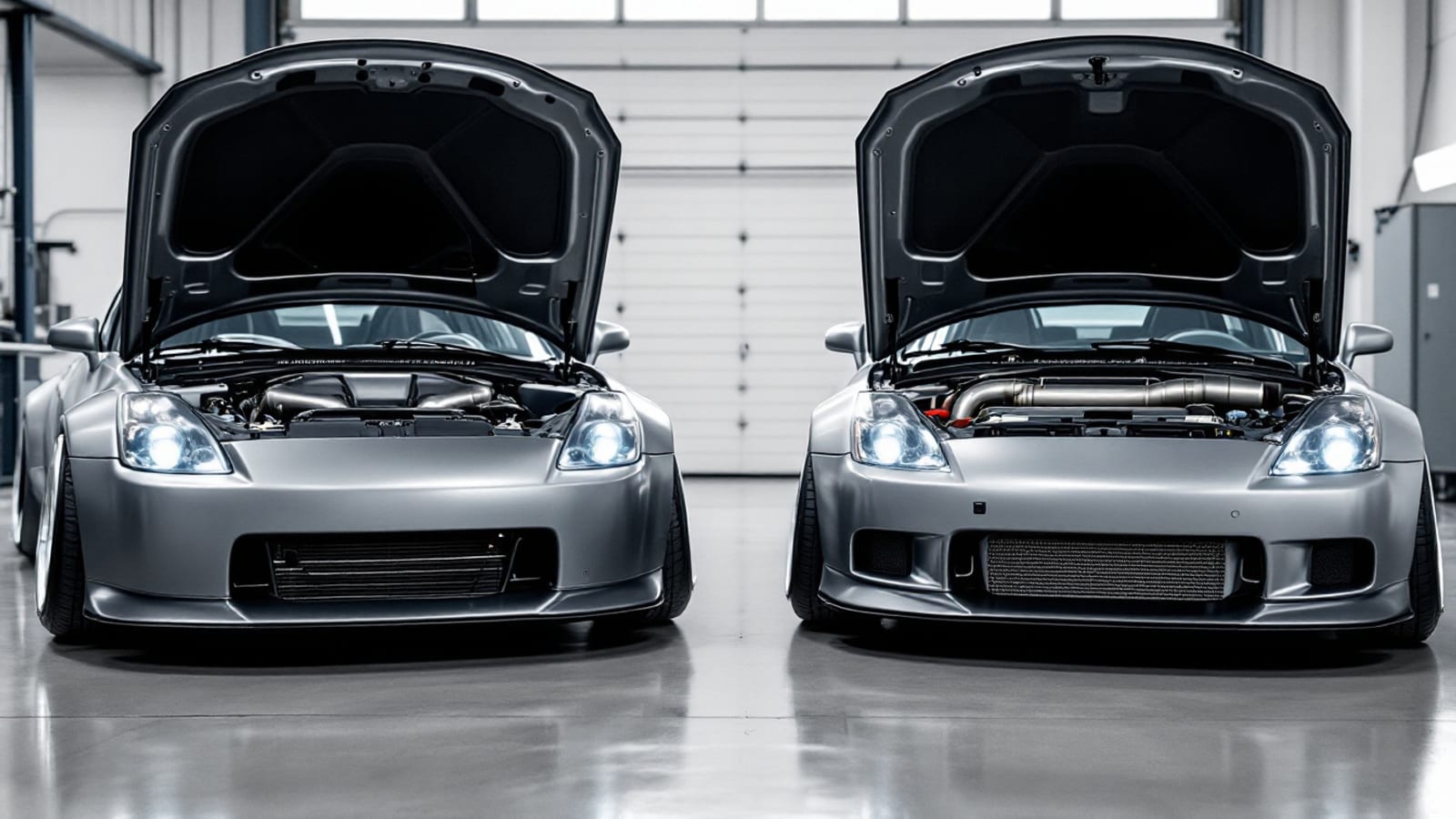
Short answer: stage 1 means a tune written for a car that is mechanically stock, and stage 2 means a tune written to match specific bolt-on hardware you have already installed. The number describes the hardware the calibration assumes — not how powerful the tune is, not how skilled the tuner is, and not any standard that a governing body enforces. As of July 2026 a custom dyno session runs roughly $300 to $600 whichever stage you call it, while a guided DIY tune through TuneVault is $39 per vehicle on the pricing page.
That is the whole distinction. Everything else in this article is about why the labels mislead people, and how to figure out which one your car is actually ready for.
The labels are marketing, not engineering
There is no standards organisation that certifies a file as stage 1. No test, no threshold, no registry. A vendor picks a tier name for a product because customers understand tiers, and then defines the contents however they like.
The practical result is that the same label means different things across sellers. One company's stage 2 assumes an intake and a cat-back exhaust. Another's assumes a full exhaust plus a fuel pump upgrade. A third uses stage 2 to mean "the more aggressive of our two files" with no hardware assumption at all. If you shop by tier name alone, you are comparing products that only appear comparable.
What matters is the line underneath the label: what hardware does this calibration assume is installed, and what fuel does it assume you are running? Every honest vendor states both. If you cannot find that line, you do not know what you are buying, and the tier number is not going to tell you.
What actually changes between the two
Both stages touch the same tables. The difference is how far the numbers move from stock, and which assumptions those numbers depend on.
| Stage 1 | Stage 2 | |
|---|---|---|
| Hardware assumed | Stock or near-stock airflow path | Specific intake and exhaust changes, sometimes fuel system |
| Airflow model | Factory MAF or VE curve mostly valid | Airflow calibration must be re-scaled to the new hardware |
| Fuelling | Factory injector data still accurate | May assume upgraded injectors or higher fuel demand |
| Spark | Modest advance within factory knock margin | More advance, but the knock margin depends on your parts |
| Fuel required | Usually premium pump gas | Premium as a minimum, sometimes higher octane |
| Risk if the assumption is wrong | Lower — you are still close to factory | Higher — several assumptions can be wrong at once |
| Verification needed | Datalog pass strongly recommended | Datalog pass mandatory before sustained load |
Read down the right-hand column and the real story appears. Stage 2 is not "stage 1 turned up". It is a calibration built on top of a set of claims about your car — that a particular intake is fitted, that the exhaust flows a certain way, that the injectors deliver a known amount of fuel. Every one of those claims is a place where your car can differ from the file's author's car.
That is why the air model matters so much once you leave stock. If the calibration expects an intake you do not have, the airflow reading it uses to calculate fuel is wrong, and every fuelling decision downstream inherits that error.
The order of operations that keeps engines alive
The most common expensive mistake in this whole topic is doing these steps out of order.
- Read and save your stock calibration. Before any flash, before any hardware. It costs nothing and it is the only guaranteed way back. Our tune file management guide covers how to label and store it so the file is still findable in two years.
- Install the hardware you intend to run. All of it. A calibration written for parts sitting in a box on your workbench is guesswork.
- Confirm the car runs and holds fuel pressure on the stock file with the new hardware, at light load only. If it will not idle cleanly, you have a mechanical problem that a tune will hide rather than fix.
- Flash the calibration that matches the installed combination.
- Datalog and verify before you drive it hard. Air-fuel ratio against commanded, knock retard, fuel pressure under load, intake air temperature. This is the step people skip, and it is the only one that tells you whether any of the previous four went right.
Notice that the stage number only appears at step four. It is a label on one item in a five-step process, and the steps around it do far more to determine whether your engine survives.
Which one is your car actually ready for?
Forget what you want to buy and describe what you have.
Your car is stock or has an air filter and a cat-back exhaust. You are a stage 1 car. The factory airflow calibration is still broadly valid, the factory injector data is still accurate, and the gains available come from spark timing and fuelling refinement within the margins the factory left. This is genuinely the lowest-risk tuning there is, and it is where most street cars should stop.
You have changed the intake path, the exhaust, or both, in a way that measurably alters airflow. Now you need a calibration that accounts for it, which is what stage 2 files are for. The critical question is not which file to buy but whether you can capture clean datalogs afterwards. If you can, the verification loop protects you. If you cannot, pay someone who can watch the car in person.
You have added forced induction, changed injectors, or built the engine. Stage labels stop being useful here entirely. A blower or turbo build is a custom calibration problem, not a tier selection problem — the supercharged tuning guide explains why boost is unforgiving of generic files.
You are not sure which of these you are. Start by reading your existing calibration and capturing a baseline datalog. That single exercise answers the question better than any forum thread, and it costs almost nothing. The ECU tuning fundamentals article walks through the whole verification loop from scratch.
The emissions question decides your hardware, not your stage
A lot of stage 2 packages sold online assume hardware changes that touch emissions control equipment. This is where the tier conversation collides with the law, and the law does not care what tier you bought.
Under the Clean Air Act, removing or rendering inoperative any emissions control device on a vehicle used on public roads is prohibited, and the EPA enforces that against installers and sellers as well as owners. Separately, California and the states that follow its programme require an Executive Order exemption for aftermarket parts on emissions-controlled vehicles, and many state inspection programmes check both the physical equipment and the onboard readiness monitors.
The practical consequence: decide what your car has to pass before you decide what to bolt to it. If you live somewhere with a tailpipe or OBD inspection — Arizona's Phoenix and Tucson programmes are a common example, and our Arizona tuning page covers the local picture — the compliant hardware list defines your ceiling, and then you calibrate within it. Our emissions and CARB EO guide goes through the rules in detail.
Plenty of real power is available inside those limits. Spark timing refinement, correct fuelling, fixing a skewed airflow curve, and cleaning up transmission behaviour are all calibration work that does not touch a single emissions device.
What a good tune looks like at either stage
Strip the tier language away and the same four things make a calibration good:
- The airflow model matches the car. Whatever the file assumed, your logged airflow agrees with it. The MAF and VE correction calculator is a fast way to check the gap.
- Commanded and delivered air-fuel ratio agree under load. If the car commands one number and delivers another, nothing downstream is trustworthy. The AFR and lambda calculator converts between the units so you are comparing like with like.
- Knock retard is at or near zero on pump fuel through the load range you actually use.
- The whole thing was verified on your car, not on a similar car belonging to somebody else.
A stage 1 file that passes all four is a better tune than a stage 2 file that passes none. That is the entire point, and it is the reason the tier number should be about the last thing you consider.
Where TuneVault fits
TuneVault is a guided copilot for HP Tuners, not a file vendor — we do not sell stage 1 or stage 2 calibrations. What the tool does is read your actual VCM Editor tables from screenshots, audit them for lean wide-open-throttle areas, aggressive timing, injector and airflow mismatches, then hand you an ordered list of exact changes with the reasoning attached. After you flash, you upload a VCM Scanner log and get a clear go or no-go on the safety channels.
That workflow is stage-agnostic by design, because the questions worth asking are the same either way: does the airflow model match this car, is the fuelling honest, is the timing safe on this fuel, and did anybody check afterwards. If you want to see where your car sits before spending anything, start here or run a tune scan.
The bottom line
Stage 1 versus stage 2 is a question about hardware, answered by looking at your car rather than at a product catalogue. Match the calibration to the parts that are physically installed, respect the emissions constraints that apply where you drive, and verify with a datalog no matter which label the file wore. Do that and the tier number becomes what it always should have been — a shorthand, not a decision.
Frequently asked questions
What is the actual difference between stage 1 and stage 2 tuning?
Stage 1 means a calibration written for a vehicle that is mechanically stock or close to it — no hardware changes required beyond good fuel. Stage 2 means a calibration written to match specific supporting hardware that you have already installed, typically intake and exhaust changes and sometimes a fuel system upgrade. The stage number describes the hardware the file assumes, not how good or aggressive the tune is. There is no industry body that defines the terms, so one vendor's stage 2 can be another vendor's stage 1.
Should I start with stage 1 or go straight to stage 2?
Start at whatever stage matches the hardware physically bolted to your car right now. If the car is stock, a stage 2 file is written for parts you do not have and will run on assumptions that are false for your engine. If the hardware is already installed, going through a stage 1 file first buys you nothing except a second flash. The correct sequence is always hardware first, then the calibration that matches it, then datalog verification.
Is stage 2 more dangerous than stage 1?
Not inherently — an unverified tune of any stage is the dangerous one. Stage 2 carries more risk in practice for two reasons: the airflow and fuelling assumptions are further from the factory calibration, and the hardware combination varies more between cars wearing the same label. That is exactly why the datalog pass matters more the further you go from stock.
How much does a stage 1 or stage 2 tune cost?
As of July 2026, a custom dyno tune in the United States commonly runs $300 to $600 regardless of the stage label, because you are paying for dyno hours and a tuner's time rather than for a tier. Off-the-shelf stage files bundle a handheld and a pre-built calibration into one purchase. A guided DIY tune through TuneVault is $39 per vehicle, or $19 to $249 per month on a plan. The stage number does not change what any of those cost.
Do I need a wideband oxygen sensor for a stage 2 tune?
You need a trustworthy way to see real air-fuel ratio under load before you run anything aggressive, and the factory narrowband sensor cannot provide it. On a stock or lightly modified car the factory fuel trims give you a usable picture. Once you have changed airflow hardware, a wideband is the difference between verifying your tune and hoping.
Will a stage 1 or stage 2 tune make my car fail emissions?
The calibration itself is one question and the hardware is another. Removing or disabling emissions control equipment is a violation of the Clean Air Act tampering provisions regardless of how the file is labelled, and many states check both the equipment and the readiness monitors at inspection. If your car has to pass an inspection, that constraint decides which hardware you can install before you pick a stage at all.
Can I go from stage 1 to stage 2 later?
Yes, and that is the normal path. Save your stock calibration read before the first flash, keep every file version labelled, and when you add hardware you reflash to a calibration that matches the new combination. What you must not do is bolt on stage 2 hardware and keep driving on the stage 1 file — that is the combination most likely to run lean or knock-limited under load.