Switching to E85: What Actually Changes in the Tune
E85 is not a bolt-on. It changes how much fuel you need, what your injectors can flow, what your pump has to keep up with, and what the engine will tolerate for timing. Here is the whole picture before you fill up.
By TuneVault
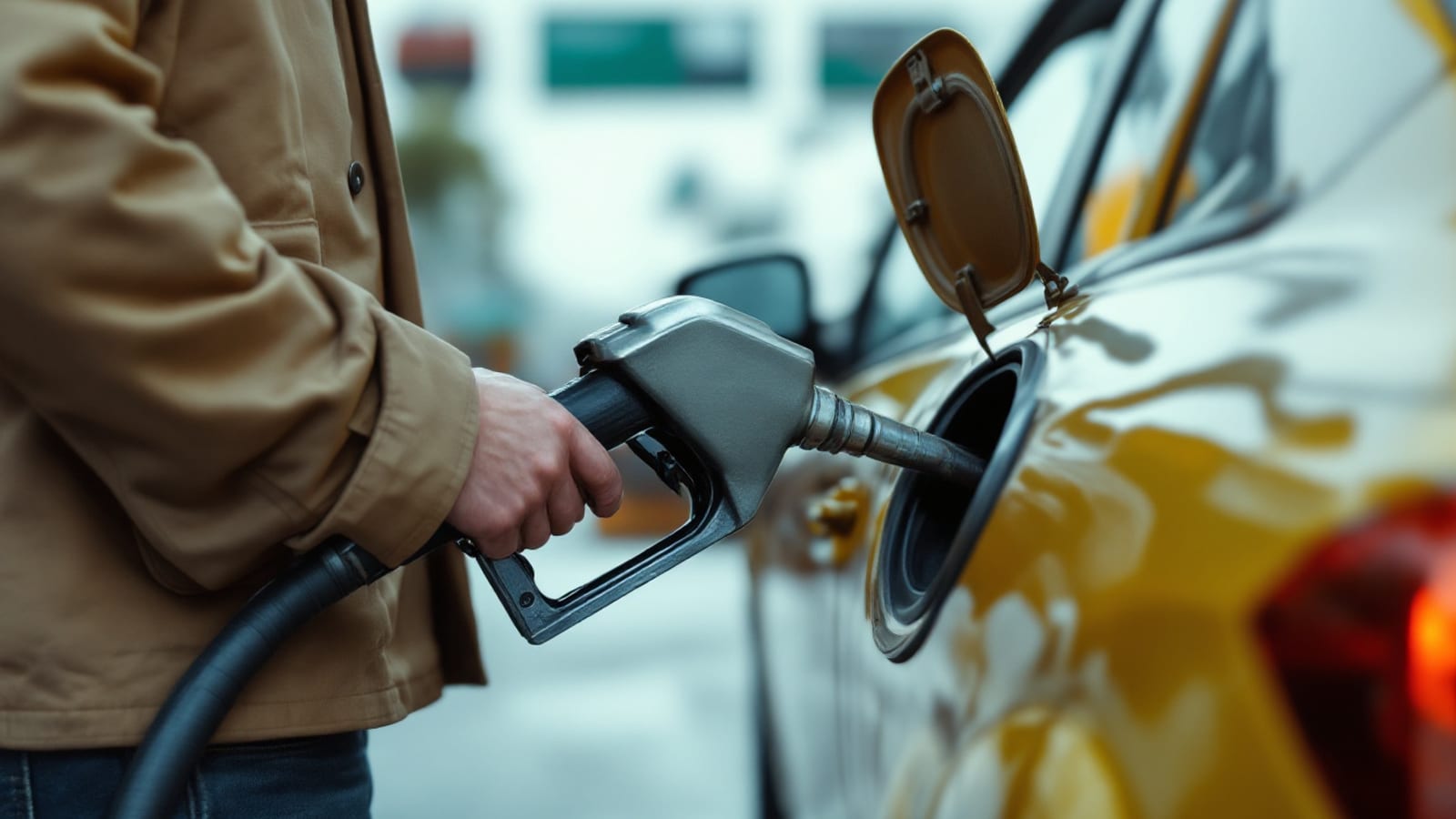
E85 has a reputation as cheap power, and the reputation is not wrong. It resists detonation well, it cools the intake charge substantially, and on a boosted engine it can unlock timing and boost that pump gasoline simply will not support.
It is also the fuel change that most reliably damages engines belonging to people who treated it as a fill-up rather than a conversion. As of August 2026 the failure pattern is unchanged and entirely predictable: the fuel needs roughly thirty percent more volume, the fuel system could not supply it, and the engine ran lean at full load.
Here is the whole picture.
The one number everything else follows from
Ethanol requires substantially less air per unit of fuel than gasoline does, and carries less energy per unit volume. The practical consequence for a tuner is a single figure: for the same air, you need roughly thirty percent more fuel by volume.
Every other item on this list is downstream of that.
- Injectors must flow about thirty percent more at the same power.
- The pump must supply about thirty percent more volume, at pressure, under load.
- Fuel lines and filters must not become the restriction.
- The fuelling tables must command the new quantity.
- Fuel economy falls, because you are burning more volume for the same energy.
If you take nothing else from this post: work out the required flow before you buy fuel. Our injector size calculator exists for exactly this arithmetic, and it takes a minute.
Where conversions actually fail
| Component | Gasoline situation | On E85 | Consequence if ignored |
|---|---|---|---|
| Injectors | Comfortable at 80 percent duty | Need ~30 percent more flow | Duty cycle maxes out, engine goes lean at full load |
| Fuel pump | Adequate | Needs ~30 percent more volume | Pressure falls under load, mixture leans out |
| Fuel lines and filter | Adequate | Higher flow demand | Restriction shows as pressure drop at high load |
| Injector data in the tune | Characterised for gasoline | Different fuel, different behaviour | Commanded and delivered fuel diverge |
| Timing tables | Set for pump gasoline | Fuel tolerates more | Power left unclaimed if unchanged |
| Cold start | Calibrated for gasoline | Ethanol vaporises poorly when cold | Hard or failed starts in cold weather |
The first two rows are where engines get hurt. The rest is where power gets left on the table or where the car becomes annoying to live with.
Injector duty cycle is the specific limit to check. If your injectors are already working hard on gasoline, adding thirty percent pushes them to or past their usable range, and an injector at maximum duty simply cannot deliver more regardless of what the table commands. The mixture goes lean at exactly the load where lean is most dangerous. Our duty cycle glossary entry covers what the number means and where the practical ceiling sits.
Fuel pressure under load is the second. A pump that holds pressure at idle and cannot hold it at full flow produces the same lean condition by a different route. This is why fuel pressure belongs in your log rather than in your assumptions.
The injector data question
Swapping injectors means recharacterising them, and this is not optional. The control system calculates pulse width from the injector's flow characteristics — slope, offset, breakpoint — and if those numbers describe a different injector than the one installed, commanded fuel and delivered fuel diverge in ways that are difficult to diagnose because everything looks correct on the screen.
Our injector data guide covers the whole characterisation properly. The short version: get real data for the specific injector you fitted, enter it correctly, and verify the result with a wideband rather than assuming the numbers were right.
You need a wideband. Genuinely.
The factory oxygen sensor is a narrowband device. It is precise around the stoichiometric point and effectively blind everywhere else — which is to say, blind exactly where E85's advantages and dangers both live, at full load.
Converting to E85 without a wideband means running a fuel with a thirty percent different requirement, through a fuel system you have not proven can supply it, at full load, with no instrument capable of telling you the mixture. That is not a calculated risk; it is an uninstrumented one.
Our wideband piece makes the general case, and E85 conversion is the scenario where the answer stops being "it depends" and becomes "yes". The AFR and lambda calculator handles the conversions between fuels, which matters because a target expressed as an air-fuel ratio means something different on E85 than on gasoline — see the lambda glossary entry for why lambda is the more portable way to talk about mixture across fuels.
Content variability, and the sensor argument
Pump E85 is not a fixed product. Ethanol content varies seasonally and by supplier, and the pump label describes a range rather than a guarantee. Winter blends in particular carry less ethanol to help with cold starting.
That variability is a real calibration problem. A vehicle tuned for one content and then filled with a materially different blend is running a fuel it was not calibrated for, and the direction of the error depends on which way the blend moved.
Two workable approaches:
Fixed blend. Commit to a content, verify what you are putting in, and calibrate for it. Practical for a dedicated car that gets fuel from one place. Requires actual discipline, because "it is probably fine" is how this approach fails.
Flex fuel sensor. A content sensor in the fuel system reports actual ethanol content, and the calibration blends fuelling and timing between gasoline and E85 targets accordingly. More hardware, more calibration work, and considerably less to think about at the pump. For a daily driver it is the right answer.
Timing, once fuelling is proven
Ethanol's detonation resistance and charge-cooling effect generally allow more timing than pump gasoline. That is where a substantial part of the power comes from.
The order of operations matters absolutely: fuelling first, verified with a wideband, then timing. Adding timing on a fuel system you have not proven can supply the required volume is combining the two most dangerous unknowns at once.
When you do get to timing, it is the same disciplined process as any other fuel — small increments, log every change, watch knock, stop when the engine tells you to. Our spark timing guide covers the method, and our knock retard guide covers how to read the response honestly.
Cold start, the liveability problem
Ethanol vaporises poorly at low temperature, which is why cold starting on high-ethanol blends needs specific attention. A car that starts beautifully in August and refuses in January has a cold-start enrichment problem, not a mystery.
If you live somewhere with real winters and this is your daily driver, budget calibration time for cold enrichment, and expect the seasonal blend change to interact with it. This is a second, quieter argument for a content sensor.
What fuel trims will not do for you
A recurring hope: fill with E85 and let closed-loop correction sort it out.
It will not. Closed-loop trims have bounded authority and are designed to correct modest drift, not a thirty percent step change in fuel requirement. And under full load many strategies leave closed loop entirely and run from the tables — so the correction being relied on is not even active in the condition where a lean mixture does the damage. Our fuel trims guide covers what trims genuinely tell you and what they cannot fix.
A workable order
- Calculate required injector flow for your power target on E85 before buying anything.
- Verify the pump and lines can supply that volume at pressure under load.
- Confirm fuel system material compatibility, particularly on older vehicles.
- Fit and characterise injectors properly, with real data.
- Fit a wideband if one is not already installed.
- Calibrate fuelling and verify measured mixture matches commanded across the range.
- Prove fuel pressure holds under sustained full load in a log.
- Only then approach timing, in small steps with logs between each.
- Address cold start before the weather does it for you.
- Decide on a content strategy — fixed blend with discipline, or a sensor.
TuneVault audits exactly this kind of change: it reads your injector data, fuelling and timing tables against the parts you actually installed, flags the combinations that will not survive a full-load pull, and checks your datalog before you make one. See pricing for what that costs relative to finding out the expensive way.
The bottom line
E85 is real power on the right build and a reliable engine-killer on an unprepared fuel system. The whole conversion follows from one number — about thirty percent more fuel by volume — and almost every failure traces back to a fuel system that could not deliver it.
Do the flow arithmetic first. Fit a wideband. Prove fuelling before you touch timing. Then enjoy the fuel, because on a boosted engine it genuinely is the cheapest power available.
Frequently asked questions
How much more fuel does E85 need than gasoline?
Roughly thirty percent more by volume for the same air, because ethanol carries less energy per unit volume and its stoichiometric air-fuel ratio is substantially lower. That single fact drives most of the conversion: injectors, pump, lines and the fuel tables all have to accommodate a materially larger flow requirement at the same power level.
Will my stock injectors handle E85?
Frequently not, and this is where most conversions stall. If your injectors were already working reasonably hard on gasoline, adding roughly thirty percent to the required flow pushes them toward or past their usable duty cycle. Working out the required flow before you buy fuel is far cheaper than discovering the shortfall on a full-load pull.
Does E85 let me run more timing?
It generally allows more, because ethanol resists detonation well and its high heat of vaporisation cools the intake charge substantially. How much more is engine-specific and must be found the same careful way as on any fuel — small increments, logged, watching knock. The fuel raises the ceiling; it does not tell you where the new ceiling is.
Is pump E85 consistent?
No, and planning around that is part of doing this properly. Ethanol content at the pump varies by season and by supplier, and the label is a range rather than a promise. A vehicle calibrated for one content and then filled with a materially different blend is running a fuel it was not tuned for, which is exactly the argument for a flex fuel sensor.
Do I need a flex fuel sensor?
If you intend to run whatever is in the tank, yes. A content sensor lets the calibration adapt fuelling and timing to the actual blend rather than to an assumed one. Without it you are committing to a fixed blend and taking responsibility for verifying what you put in, which is workable for a dedicated track car and awkward for a daily driver.
Does E85 damage fuel system components?
Older or unsuitable materials can degrade with sustained ethanol exposure — some rubber lines, seals and certain pump internals. Modern flex-fuel-rated components are designed for it. On an older vehicle, treat the fuel system compatibility check as part of the conversion cost rather than as an optional extra.
Can I just fill up and let the fuel trims sort it out?
No. Closed-loop fuel trims have limited authority and are intended to correct small drift, not a thirty percent change in fuel requirement. Under full load many strategies leave closed loop entirely, so the correction you were relying on is not even active in the condition where being lean does the damage.