False Knock vs Real Detonation: Reading Noise in Your Datalog
A knock sensor is a microphone, and plenty of things in an engine bay sound like detonation to it. How to tell mechanical noise from genuine knock in a datalog, which sources cause false readings on which engines, the one test that settles it, and why raising the noise threshold is the wrong first move.
By TuneVault
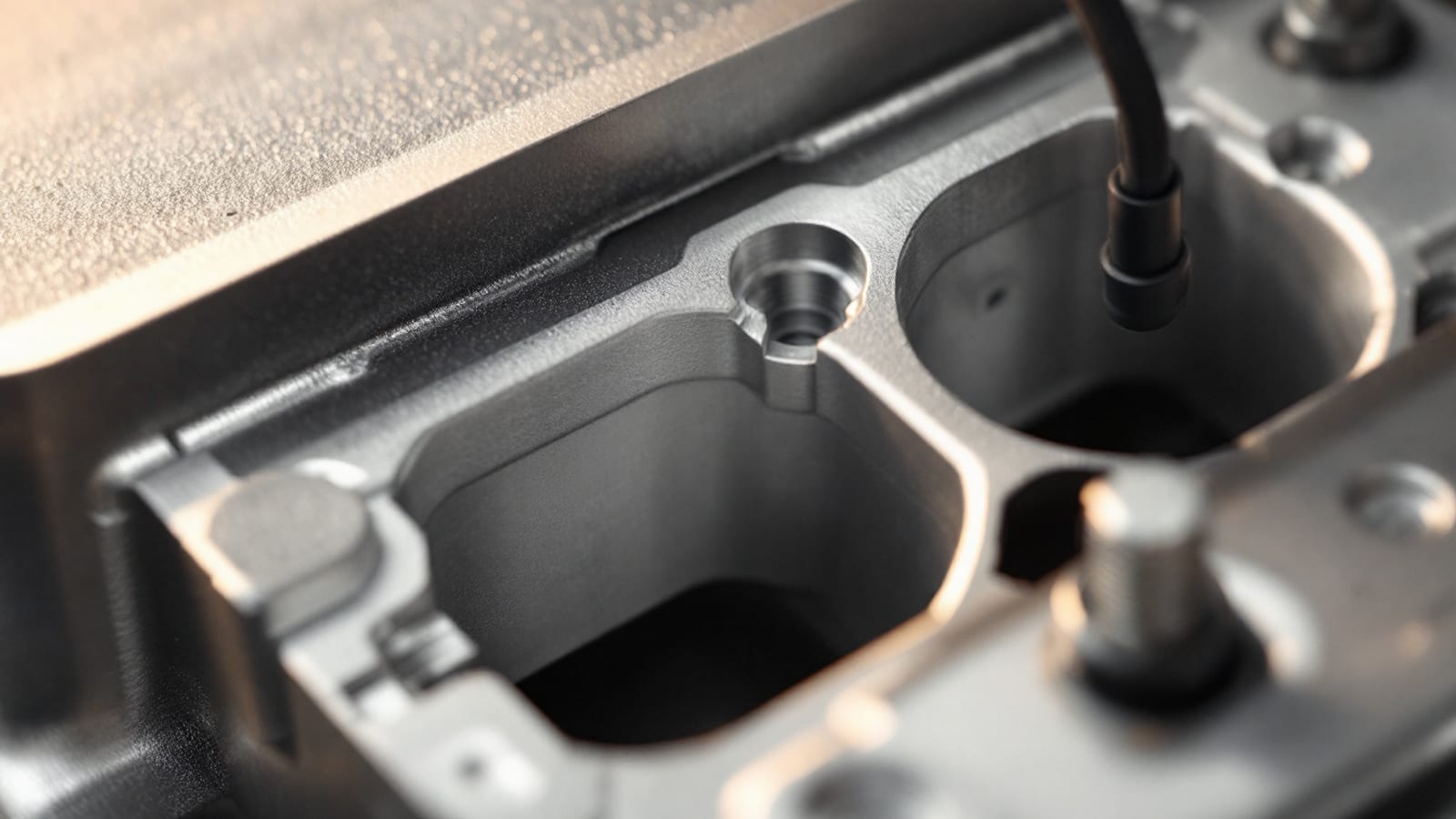
A knock sensor is a piezoelectric microphone bolted to the engine block. It does not know what detonation is. It converts vibration into voltage, and the ECU decides — within a crank-angle window, inside a frequency band, against a stored noise floor — whether that voltage represents combustion going wrong.
That is a good system, and it is also why plenty of engines report knock that is not knock.
As of September 2026 the practical distinction is simple to state: real detonation responds to spark timing, and mechanical noise does not. Everything else in this article is about getting to that test efficiently and knowing what to do with the answer.
This is a different question from how much retard is acceptable, which is covered in how much knock retard is normal. That article answers "is this amount alarming". This one answers "is this real at all".
How knock detection actually works
Four mechanisms decide whether a vibration becomes retard.
Frequency filtering. Detonation produces vibration in a characteristic band determined largely by bore diameter. The ECU listens in that band and ignores the rest. This is why engines with the same block but different bores use different filter settings.
Crank-angle windowing. Detonation happens in a narrow slice of the cycle, shortly after the spark event. The system only listens during that window, which rejects most noise occurring elsewhere in the rotation.
Noise floor tables. Every engine has a background level that rises with speed and load. The calibration stores an expected noise level across the operating range, and a signal only counts as knock when it exceeds that expectation by a margin.
Retard and recovery logic. When knock is declared, timing is pulled — often on the affected cylinder — and then restored gradually if the knock does not recur.
False knock is what happens when mechanical noise lands inside the band, inside the window, and above the floor. The system is not malfunctioning when that occurs. It is reporting exactly what it heard.
The common sources, by likelihood
Valvetrain. The most frequent single cause on modified engines. Solid lifters, aggressive ramp rates, incorrect lash, worn rockers, high spring pressures. A cam swap changes all of these at once, which is why retard that appears after a build often has nothing to do with combustion — the same class of post-build symptom as rough idle after a camshaft swap, and worth diagnosing together because the underlying cause is frequently the same hardware.
Loose or resonant hardware. A heat shield, an accessory bracket, an alternator mount, an exhaust hanger. These produce retard that appears at a specific engine speed and vanishes on either side of it, because what you are seeing is a resonance rather than a combustion event.
Direct injection noise. High-pressure injectors are loud and they fire during the window the system listens in. Most factory calibrations account for this. Aftermarket injectors, or a factory calibration ported into an engine with different injectors, may not.
Timing chain, guides and tensioner. Wear here produces a noise that grows over months and correlates with engine speed rather than load.
Piston slap. Common on cold engines with more clearance, which is why some cars show retard for the first few minutes and never again once warm.
The sensor and its wiring. Cracked sensor bodies, corroded connectors, damaged shielding, or a sensor torqued incorrectly. A knock sensor is a contact microphone, and mounting pressure changes what it hears — the torque specification is a functional requirement, not a formality.
Exhaust leaks near a sensor. A leaking manifold gasket close to the block produces a sharp, repetitive sound that sits comfortably in the detection band.
Telling them apart from the log alone
Before touching anything, the pattern in the data narrows it considerably.
| Observation | Leans toward false knock | Leans toward real detonation |
|---|---|---|
| Appears at idle or light cruise | Strongly | Rarely — pressure is too low |
| Tracks engine speed regardless of load | Yes | No |
| Tracks load and charge temperature | No | Yes |
| Same cylinder every time, others clean | Often mechanical, that cylinder | Possible — lean or hot cylinder |
| Appears only when cold | Yes, often piston slap | Unlikely |
| Grows across a long pull as heat builds | No | Yes, classic signature |
| Worse on lower octane fuel | No | Yes, decisive |
| Unchanged after pulling 4 degrees | Yes, decisive | No |
Two rows in that table are decisive on their own: response to fuel octane, and response to timing. Both are things you can arrange.
The test that settles it
Pull timing from the region where the retard appears — three to four degrees is enough — and log the same conditions again. Same road, same gear, same throttle, similar ambient temperature.
If the retard reduces or disappears, it was real. You removed the cause. Now the question becomes why the engine was detonating at the original timing: fuel octane, charge temperature, a lean cylinder, carbon deposits, or simply a calibration that was too aggressive. That diagnosis continues in how much timing is safe.
If the retard is unchanged, it was noise. Spark advance had nothing to do with it, which means combustion had nothing to do with it.
A second test costs nothing on a car that is already running: change fuel. Real detonation improves on higher octane. Mechanical noise is completely indifferent to what is in the tank.
A third, where the platform supports per-cylinder reporting: check the distribution. Noise from a bracket or a chain usually reports on whichever cylinders are nearest the sensor, in a fixed pattern. Genuine detonation in one cylinder points to something specific about that cylinder — distribution, a fouled plug, an injector delivering less than its neighbours.
What to do once you know
If it is real, treat it as information rather than an inconvenience. Reduce timing in the affected region, verify with a clean log, then investigate why the margin was that thin. Charge temperature, fuel quality, and mixture distribution are the usual three. The channel-by-symptom routing for that investigation is in the datalog symptom index.
If it is mechanical, find the source. That means inspection rather than calibration — checking lash, torquing the sensor to specification, shaking accessory brackets, looking at heat shields, listening with a stethoscope at the engine speed where the retard appears. Most of these are in the pre-tune mechanical checklist for exactly this reason: a noise you can hear is cheaper to fix than a calibration you have blinded.
Why raising the threshold is the wrong first move
There is a fast solution to false knock, and it is available in the file: raise the noise floor in the region where the false readings occur.
Sometimes this is legitimate. An engine with a known, unavoidable mechanical noise — a solid-lifter valvetrain that will always be loud at a given speed — may genuinely need its expected noise level adjusted to reflect the engine that exists rather than the one the factory calibrated.
It is legitimate only in that order: identify the noise, confirm it is mechanical, confirm it cannot reasonably be fixed, then raise the floor narrowly in the region affected.
Reversing that order is how engines get damaged. Raising the threshold in a region where real detonation could occur means the next genuine event does not produce retard. The gauge goes quiet, and the thing the gauge was watching continues. Silence after raising a threshold proves nothing about the engine — only that you stopped listening.
The same caution applies to disabling knock control entirely, which some calibrations allow. On a street engine with pump fuel of varying quality, that removes the only mechanism that protects it when a tank of bad fuel or a hot day exceeds what the tables anticipated.
Pre-ignition is a different and worse thing
Worth separating clearly, because the words are used interchangeably and the failures are not.
Detonation is the end gas igniting spontaneously after the spark event. It is audible to the sensor, and the ECU has authority over it — retarding timing genuinely reduces it.
Pre-ignition is the mixture being ignited before the spark, by a hot surface: a glowing deposit, an overheated plug electrode, a sharp edge in the chamber. The control system has no authority over it at all, because timing is no longer what is lighting the charge. It destroys pistons in seconds rather than minutes.
Pre-ignition often follows sustained detonation, which is the strongest argument for taking small, consistent retard seriously rather than tuning it out of view.
Building the log that answers the question
A useful false-knock investigation needs a handful of channels and one discipline: reproduce the condition deliberately.
Log engine speed, load or manifold pressure, intake air temperature, commanded and actual spark, knock retard — per cylinder if available — and, where the platform exposes it, the raw knock sensor level alongside the noise threshold. That last pair is the most informative view available, because you can see how close the signal normally runs to the floor.
Capture three separate runs: idle and light cruise, a steady mid-load pull, and a full-throttle pull once thoroughly warm. If retard appears in the first, you are almost certainly looking at noise before you test anything. The structure of a clean baseline run is in reading your first wide-open-throttle pull.
The summary
The sensor hears vibration and the ECU interprets it. Interpretation can be wrong, and the wrongness is systematic and diagnosable rather than random.
Look at when the retard appears — low load and cold-only patterns point at mechanics, load and heat patterns point at combustion. Then run the timing test, because it is the only one that is conclusive. Real knock responds to spark advance; noise does not.
Fix mechanical noise mechanically. Adjust thresholds only for a noise you have identified and cannot remove, narrowly, in the region it occurs. And never take a quiet knock channel as evidence of a healthy engine if the way it got quiet was that you raised the floor.
Frequently asked questions
How do I know if my knock retard is real or false?
The decisive test is whether the retard responds to timing. Pull three or four degrees from the region where the retard appears and log the same conditions again — genuine detonation gets better or disappears, because you removed its cause. Mechanical noise is unchanged, because the noise was never related to spark advance in the first place.
Why does my car show knock retard at idle or light cruise?
Real detonation at idle is uncommon because cylinder pressure is low, so retard there is a strong indicator of mechanical noise. The usual sources are valvetrain, a loose accessory or heat shield, injector noise on a direct injection engine, or a timing chain and guide that has worn. Retard that appears at light load and low load is almost always the sensor hearing the engine rather than hearing combustion.
Should I raise the knock threshold to stop false readings?
Only after you have identified the noise and confirmed it is mechanical, and even then with restraint. The threshold tables describe the engine's normal noise floor, so raising them blinds the system to real detonation in the same region — you have not silenced a false alarm, you have disabled the alarm. Find and fix the noise source first; adjust the threshold only where a known, harmless noise is genuinely unavoidable.
Can a bad knock sensor cause false knock?
Yes, and so can its wiring. A cracked sensor, a corroded connector, a sensor torqued incorrectly or one that is not the correct type for the block will all report noise that has nothing to do with combustion. Torque specification matters more than people expect, because a knock sensor is a contact microphone and mounting pressure changes what it hears.
Does a camshaft swap cause false knock?
Frequently. A more aggressive cam profile, a different lash setting, changed lifter or spring hardware, and more valvetrain noise all sit in a frequency band the sensor already listens to. It is one of the most common reasons a car that never showed retard starts showing it after a build, and the retard usually appears at engine speeds that correspond to valvetrain activity rather than to load.
What is the difference between detonation and pre-ignition?
Detonation is the end gas in the cylinder igniting spontaneously after the spark event, which the knock sensor can hear and the ECU can respond to by retarding timing. Pre-ignition is the mixture being lit before the spark by a hot surface, which happens outside the control system's authority entirely and destroys pistons quickly. Retarding timing does not fix pre-ignition, because timing is no longer what is lighting the charge.
How much retard is normal on a healthy engine?
Brief, small values under hard load are ordinary on many platforms — the system is doing its job at the edge of the envelope. Sustained retard, retard that grows across a pull, or retard at conditions that cannot produce detonation are all abnormal. The scale of what counts as acceptable varies by platform and is covered separately in the guide to how much knock retard is normal.