HEMI Tuning with HP Tuners: Checking Coverage and Knowing Which Tables Matter
Mopar V8 platforms are well represented on HP Tuners, but coverage is decided controller by controller, not badge by badge. Here is how to confirm your car before you spend, and which HEMI-specific tables actually change the way it drives.
By TuneVault
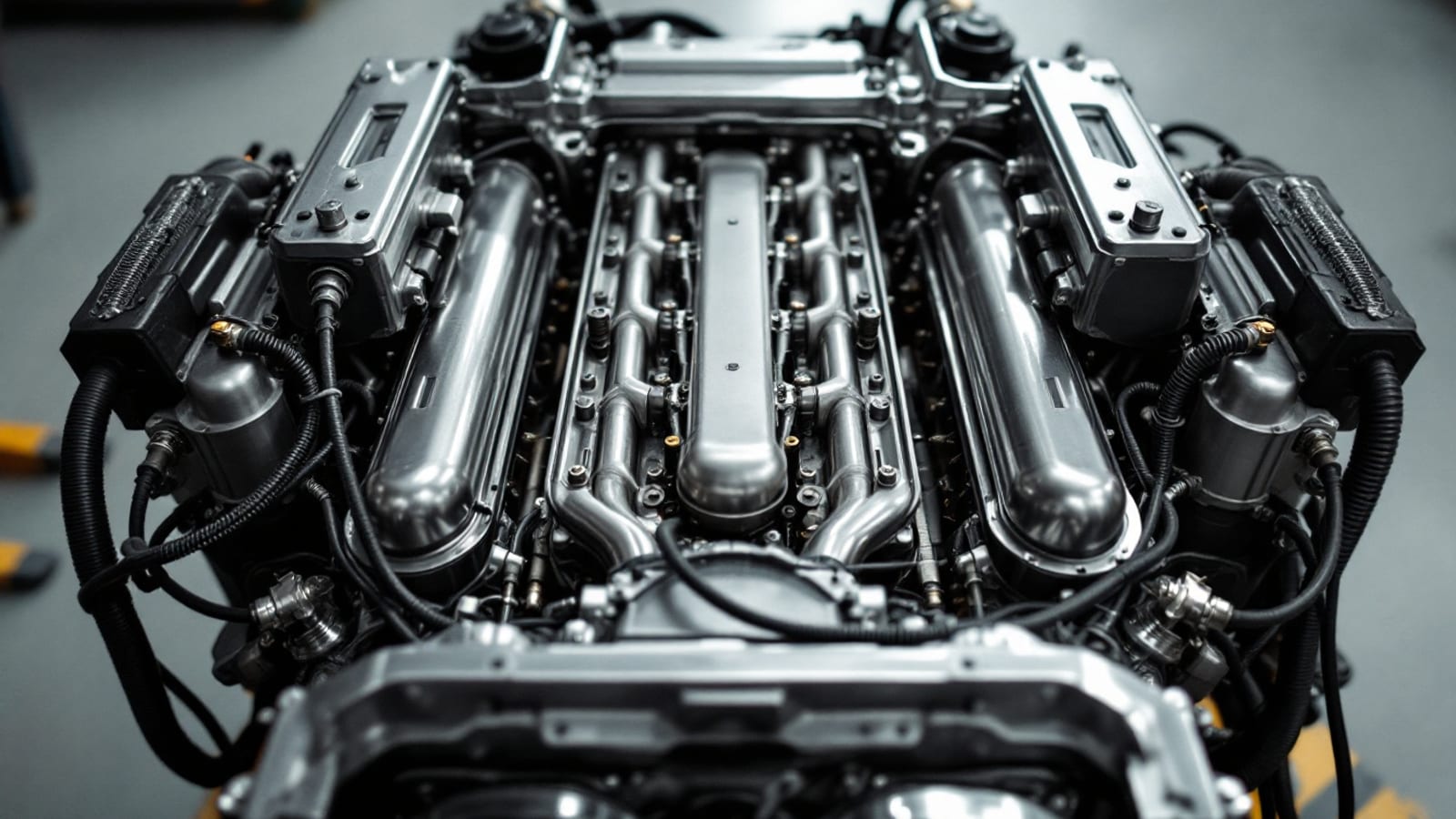
Mopar V8 platforms are, alongside GM and Ford, one of the families the mainstream tuning software supports most thoroughly. That is the good news, and it is why so much HEMI content exists.
The part that catches people out is that coverage is not decided by the badge on the car. It is decided by which controller is in it and which calibration that controller is running. Two cars that look identical in a listing, share an engine and differ by a model year can sit on opposite sides of the coverage line. So the first job on any Mopar project is not choosing a tune — it is confirming what you actually have.
This article is about calibration tuning: identifying the platform, confirming access, and knowing which tables genuinely change how the car behaves. It is not about unlocking secured controllers, which is a separate service discipline with its own considerations.
Step one: identify the controller, not the car
"It's a 5.7" is a starting point, not an identification. What matters is the controller part number and the calibration currently loaded in it, because that pair is what the coverage list is really describing.
Two habits make this reliable:
Read before you commit. If you already own an interface, connecting and attempting a read of the current calibration is the most definitive coverage check there is — it either reads or it does not, and that is precisely the operation the coverage list is trying to predict. Everything else is inference.
Match on year, engine and controller. When checking the published coverage list, match all three. Model names get reused across generations and trims, and the model name alone is the least reliable field on the page. Our explainer on vehicle coverage, credits and VIN licensing covers how licensing attaches to a vehicle and why this check belongs before the purchase rather than after it.
This discipline is not Mopar-specific. Ford owners do the same thing with strategy codes and operating system identifiers, as our guide to identifying a Ford PCM strategy code and OSID explains, and GM owners navigate a similar generational split described in LS versus LT tuning across Gen III, IV and V. The principle is universal: the controller is the unit of coverage.
What tends to differ across the generations
Without turning this into a year-by-year table that would be wrong somewhere, the pattern of change on these platforms over time looks like this:
| Era characteristic | What it means for tuning |
|---|---|
| Earlier controllers, simpler security | Read and write access is generally well established and widely documented |
| Introduction of cylinder deactivation | A whole family of tables governing when cylinders drop out, and a common thing owners adjust |
| More sophisticated torque modelling | The engine and transmission negotiate more, so engine-only changes have more side effects |
| Newer controllers with stronger security | Access can require additional steps, and coverage varies by exact controller |
| More speeds in the automatic | Shift strategy has more degrees of freedom and more scope to feel wrong after a power change |
The direction of travel across all manufacturers is the same: more integration between engine and transmission control, more torque-based modelling, and stronger security on newer controllers. That is why a check against current coverage information beats any article's year list, including this one.
The tables that actually matter on a HEMI
Once you have access, the number of editable parameters is intimidating and mostly irrelevant to a street build. A small group does nearly all the work.
The airflow model. The controller has to estimate how much air is entering the engine to decide how much fuel to inject and how much timing is safe. Change how the engine breathes — intake, exhaust, camshaft — and that estimate drifts from reality. Fuel trims will paper over some of it, which is precisely why people think nothing is wrong. Reading trims before you change anything is the fastest diagnostic available, and our guide to fuel trims and what they are telling you covers how to interpret them.
Spark timing. This is where the power is and where the risk is. A large-displacement pushrod V8 on pump fuel is not short of torque, and adding timing beyond what the fuel supports produces knock long before it produces a headline number. Our piece on how much timing is actually safe sets out the reasoning, and how much knock retard is normal covers what to look for afterwards.
Commanded fuelling under load. Power enrichment governs what the engine is asked to run at wide-open throttle, where the narrowband sensors have stopped being useful and only a wideband tells you the truth. The distinction matters more than beginners expect, and open-loop versus closed-loop fuelling and PE mode is the background reading.
Cylinder deactivation. MDS shuts down half the cylinders under light load. Owners commonly disable it in the calibration for driveability reasons and out of concern about wear in the deactivating cylinders. It is a normal, frequently adjusted parameter — but it is a fuel-saving feature, and turning it off costs real fuel. Make that trade deliberately rather than because a forum post treated it as a default first step.
Transmission and torque management. These cars pair a lot of low-end torque with a sophisticated automatic, and the transmission calibration was written for the factory torque curve. Change the engine and the shift points, converter lockup and apply pressures are all now optimised for an engine that no longer exists. This is the single most common reason a car feels worse after a good engine tune, and our article on transmission tuning and torque management explains why.
Where HEMI owners most often go wrong
Treating a bolt-on as needing no calibration. The car will run. It will also be relying on trims to correct an airflow model that is now slightly wrong, which costs consistency and occasionally masks a developing problem.
Chasing timing on pump fuel. The seductive thing about a big V8 is that it tolerates a lot before it complains audibly. By the time you can hear it, the log has been telling you for a while.
Tuning the engine and ignoring the transmission. Covered above, and it is the number one "I paid for a tune and it feels slower" complaint on these platforms.
Copying a file from a car that is not yours. A calibration is written for a specific combination, fuel and climate. A file from a car with different bolt-ons, different fuel and a different altitude is not a shortcut, it is an unverified guess with your engine as the test rig.
Skipping the stock read. The one unforced error that turns an ordinary problem into a serious one. Our piece on what to do when you no longer have a stock file exists because this happens far more often than it should.
A workable order of operations
- Identify the controller and check coverage before buying hardware or licences.
- Read and save the stock calibration, then back it up somewhere that is not the laptop plugged into the car.
- Log the car as it stands — trims, timing, knock, temperatures — so you know what normal looks like before you change it.
- Fix the airflow model first, because everything downstream depends on the controller knowing how much air is arriving.
- Then fuelling under load, verified with a wideband rather than assumed.
- Then timing, in small steps, reading the log after each one.
- Then the transmission, once the engine's torque curve has stopped moving.
- Re-verify with a clean pull and read the whole log, not just the peak.
That order is not Mopar-specific either, which is rather the point. The platform decides what you can access; the discipline decides whether the result is any good. Our step-by-step VE correction workflow walks through steps four and five in detail, and what a good wide-open-throttle pull looks like shows you what step eight should be showing.
If your car turns out not to be covered
It happens, particularly on newer controllers, and the honest answer is that no analysis tool sitting on top of the platform helps if the platform cannot read the file. Owners in that position generally have three options: wait for coverage to develop, use a manufacturer-supported route through a specialist, or work on the parts of the car that do not need calibration access. What is not a good option is buying a file from someone who cannot explain how they got access to a controller nobody else can read.
Import owners face a version of the same question with a different shape, which we cover in platform coverage for Honda, Subaru and Toyota. The decision framework is identical: confirm access first, then decide what to spend.
If your car is covered and you would rather have the analysis than acquire the expertise from scratch, that is what a guided tune is for — our pricing page sets out what a single one includes.
Frequently asked questions
Are HEMI engines supported by HP Tuners?
Mopar V8 platforms are among the three families HP Tuners covers most thoroughly, alongside GM and Ford. Support is decided per controller and per calibration though, not per engine badge, so two cars with the same engine and different model years can have different levels of access. Check your specific vehicle against the platform's own coverage list before buying anything.
How do I check whether my specific car is covered?
Use the vehicle coverage list published by the platform and match on model year, engine and controller rather than on the model name. If you already own an interface, connecting and attempting a read is the definitive answer, because that is the operation coverage actually describes. Do this before you buy licences, not after.
What is MDS and should I turn it off?
MDS is the cylinder deactivation system that shuts down half the cylinders under light load to save fuel. Owners disable it in the calibration mostly for driveability and because of concerns about long-term wear in the deactivating cylinders. It is a legitimate, commonly adjusted parameter on the street, though it is a fuel-economy feature, so switching it off has a real and usually noticeable cost at the pump.
Which tables matter most on a naturally aspirated HEMI?
The airflow model that the controller uses to estimate load, the spark tables that decide how much timing that load gets, the commanded fuelling under power enrichment, and on an automatic the shift and torque management tables. On a mild bolt-on car the airflow model and spark are where nearly all of the honest gain and nearly all of the risk live.
Do I need to tune after a cold air intake or headers?
You do not have to, because the fuel trims will attempt to compensate. You should, because a change to how the engine breathes puts the airflow model slightly out of step with reality, and the controller ends up correcting for something better fixed properly. The gain from calibrating around a bolt-on is usually driveability and consistency rather than a large peak number.
Is transmission tuning necessary on a HEMI?
It is more relevant here than on many platforms because these cars pair a torque-rich V8 with sophisticated multi-speed automatics whose shift and torque management strategies were written around the factory torque curve. If a car feels worse after an engine tune, the transmission calibration reacting to an engine it does not recognise is a common explanation.
What should I do before writing anything to a Mopar controller?
Read and save the stock calibration, back it up somewhere other than the laptop, confirm the vehicle battery is healthy or on a maintainer, and make sure nothing will interrupt the write. A failed write with no backup is the one problem in tuning that turns an afternoon into a recovery project.