LS vs LT: What Actually Changes When You Tune Gen III, Gen IV and Gen V GM
People talk about GM V8 tuning as one subject, but the calibration you open on a Gen III LS looks nothing like a Gen V LT. Here is what changes across the generations and which habits stop working.
By TuneVault
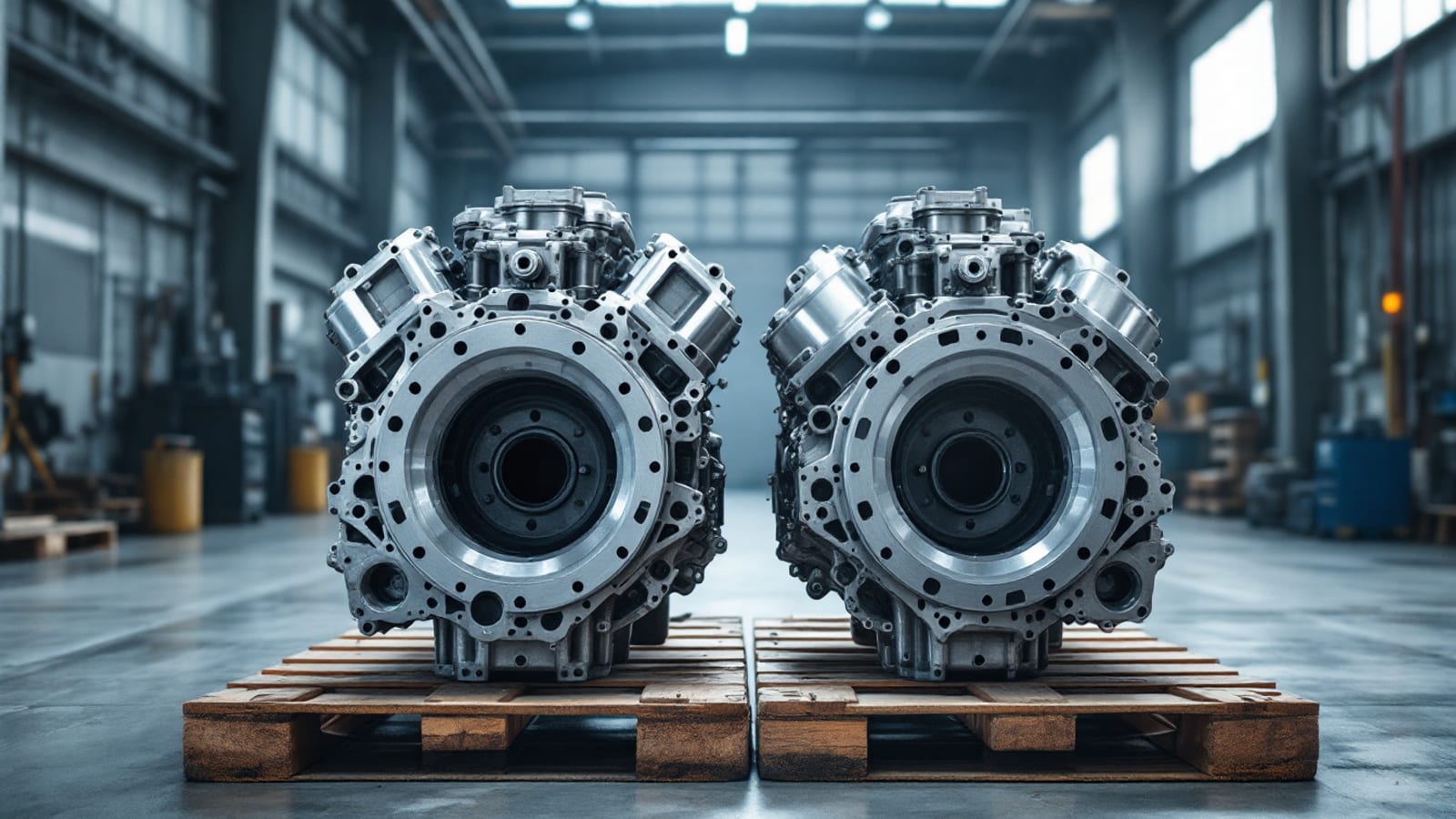
"GM V8 tuning" gets discussed as though it were a single subject. It is not. As of August 2026 the engines that get lumped under that heading span roughly a quarter century, several controller families and one genuinely fundamental change in how fuel gets into the cylinder.
If you learned on a Gen III truck engine and then opened a Gen V calibration, the second file is going to feel unfamiliar in ways that matter. This is a map of what actually changes, and which of your habits survive the transition.
The three generations, in one paragraph each
Gen III is the original modern small block family — the engines most people mean when they say LS. Port fuel injection, cable throttle on the earliest versions, a comparatively simple airflow and fuelling architecture, and an enormous amount of documented community knowledge. This is the platform that made DIY tuning mainstream, largely because the calibration is legible once someone explains the structure.
Gen IV keeps the port-injected architecture and layers additional strategy on top. Variable valve timing appears on many engines, cylinder deactivation appears on many others, electronic throttle becomes universal, and the controllers get more capable. Structurally it is still a recognisable descendant of Gen III, which is why tuners moving between them adapt quickly.
Gen V is the break. Direct injection replaces port injection, which brings a high-pressure fuel system, a mechanical high-pressure pump driven off the camshaft, injection timing as a live tuning variable, and a fuelling model that is coupled to combustion in a way port injection never was. Everything above the fuel system is still familiar. The fuel system itself is a different discipline.
What stays the same
Before the differences, the constants, because they are the reason skills transfer at all:
- The airflow model still governs fuelling. The engine still has to estimate how much air is entering each cylinder, and that estimate still drives the fuel calculation. Our piece on MAF versus speed density applies across every generation here.
- Volumetric efficiency is still the core table. A VE correction workflow that converges on a Gen III converges on a Gen V. The table means the same thing.
- Fuel trims still tell you the truth. Long and short term trims remain the most honest single readout of whether the airflow model matches reality.
- Knock is still the limit. The mechanism, the risk and the response are unchanged. The engine is still telling you when timing is too aggressive.
- The verification loop is identical. Change one thing, log it, read the log honestly, decide the next change from data.
Anyone who internalised those five things on a Gen III is not starting over on a Gen V. They are learning one new subsystem.
The differences that actually change your workflow
| Area | Gen III | Gen IV | Gen V |
|---|---|---|---|
| Fuel delivery | Port injection | Port injection | Direct injection, high pressure |
| Injection timing tunable | No, effectively fixed | No, effectively fixed | Yes, and it matters |
| Fuel pressure | Low, regulated | Low, regulated | High, actively controlled |
| Variable valve timing | Rare | Common | Standard |
| Cylinder deactivation | No | Common | Common |
| Throttle | Cable on early units | Electronic | Electronic |
| Typical first-tune difficulty | Approachable | Approachable | Demanding |
Direct injection changes the fuel conversation
On a port-injected engine, the injector sprays into the intake port, the charge has time to mix, and your job is largely to get the quantity right. Injector characterisation matters — our injector data guide exists because getting slope and offset wrong quietly ruins everything downstream — but the relationship between commanded fuel and delivered fuel is comparatively forgiving.
On a direct-injected engine the injector fires into the cylinder itself, at pressures an order of magnitude higher, during a window measured in crank degrees. Three consequences follow:
- Injection timing becomes a real variable. When the fuel goes in changes how it mixes, how it cools the charge, and how the resulting combustion behaves. It is not a set-and-forget number.
- Rail pressure control becomes part of the tune. The high-pressure pump is mechanically driven and actively controlled, and its behaviour under load is something you now have to watch in a log rather than assume.
- Fuelling errors present as combustion problems. On a port engine a fuelling error shows up as a mixture that is too rich or too lean. On a direct engine the same error can present as poor combustion phasing, unexpected knock behaviour, or soot, which makes diagnosis less direct.
None of that is a reason to avoid Gen V. It is a reason not to assume your Gen III instincts about fuel are sufficient.
Variable valve timing changes what airflow means
Cam phasing changes effective volumetric efficiency continuously. A given manifold pressure and RPM no longer implies one airflow value — it implies a different one depending on where the cams are. The calibration accounts for this, but it means your airflow model must be correct across the phasing states the engine actually uses, not just at one operating point.
The practical effect on your workflow is that logs need to include the phasing channels. If you are correcting VE and you cannot see where the cams were, you are averaging across conditions and your corrections will oscillate rather than converge. Our datalog channel guide covers which channels earn their place in a log.
Cylinder deactivation is a state, not a nuisance
Engines that shut down cylinders under light load are running two quite different configurations. Fuel trims collected while half the cylinders are dormant do not describe the same engine as trims collected in full operation. If you mix them, you are correcting a table using data from two engines.
Many builds delete deactivation mechanically. When that happens the calibration has to be made consistent with the hardware, and inconsistency here produces some of the most confusing symptoms in GM tuning — a car that runs acceptably at some loads and badly at others, with no obvious pattern until you realise you are looking at two states.
Controller generations and the read-write reality
Newer controllers generally take longer to read and write, and are less forgiving of a voltage sag partway through. This is one of the few places where the practical advice scales directly with generation: the further up you go, the more a battery maintainer stops being optional.
The file discipline does not change. Take a stock read. Verify it. Save it somewhere that is not only the laptop that is going in the car. Our tune file management guide is generation-agnostic for exactly this reason — the cost of losing a good file is the same whether it came from a 2001 truck or a 2024 one.
Swaps, across generations
The LS swap became a cultural default partly because the calibration side is tractable. If you are working through one, our step-by-step LS swap tuning process and the cranks-but-will-not-start checklist cover the ground, and our LS swap service page explains where TuneVault fits into one.
A Gen V swap is a different proposition. The high-pressure fuel system has to be complete and correct, the controller expects sensors that a donor harness may not have brought with it, and the interactions between systems leave less room for the approximations that get an LS swap running. It is entirely doable and people do it constantly — but it is not the project to learn calibration on.
Where transmissions come into it
Across all three generations, adding power to an automatic car without touching the transmission calibration produces a car that frequently feels worse. Shift points, converter lockup and apply pressures were all written for the factory torque curve. Our piece on transmission tuning and torque management covers why that happens and how to approach it without destroying clutches.
The bottom line
Gen III and Gen IV are the same conversation with more strategy layered on. Gen V is that conversation plus an entirely new fuel system that couples to combustion in ways port injection does not.
Learn on a port-injected engine if you have the choice. Keep the constants — airflow model, VE, trims, knock, one change at a time — because they carry across all of it. And when you move to direct injection, treat the fuel side as a new subject rather than a variation on a familiar one.
Frequently asked questions
Is tuning a Gen V LT harder than tuning an LS?
Meaningfully harder, yes. Direct injection adds a high-pressure fuel system with its own control strategy, the injection timing itself becomes a tunable variable, and the fuelling model is more tightly coupled to combustion behaviour than a port-injected LS ever was. The workflow is recognisable, but the number of things that can go wrong in an unexpected way is larger.
Can I use the same tuning approach on a Gen IV as a Gen III?
Mostly. Gen IV shares the port-injected fuelling architecture with Gen III, so the core airflow and fuel logic will feel familiar. What changes is the amount of additional strategy layered on top — cylinder deactivation and variable valve timing on many Gen IV engines both influence airflow in ways the tables have to account for.
What is the biggest single difference between LS and LT tuning?
Direct injection. On an LS the injector sprays into the port and you have a comparatively forgiving relationship between injector data, airflow and delivered fuel. On an LT the injector sprays into the cylinder at very high pressure during a narrow window, so injection timing, rail pressure and combustion phasing all interact, and errors show up as combustion problems rather than simply as a wrong mixture.
Do cylinder deactivation and variable valve timing need to be tuned?
They need to be accounted for, which is not quite the same as tuned. Both change effective airflow for a given manifold pressure and RPM, so your airflow model has to be correct across the states the engine actually operates in. Many builds change or remove these systems mechanically, and when that happens the calibration has to be made consistent with the hardware that is now installed.
Does the controller generation change how I read and write the file?
It changes the specifics rather than the concept. Newer controllers generally take longer to read and write and are less tolerant of interruptions, which is why a stable voltage supply matters more as you move up the generations. The habit of taking and verifying a stock read before touching anything applies identically across all of them.
Is a Gen V swap into an older chassis realistic for a DIY tuner?
It is done regularly, but it is a substantially bigger calibration project than the equivalent LS swap. The direct injection fuel system, the additional sensors the controller expects, and the tighter coupling between systems all mean more can be missing or wrong. Anyone attempting one should be comfortable with an LS swap first.
Which generation is the best starting point for learning to tune?
A port-injected Gen III or early Gen IV, on a naturally aspirated engine, with a known-good stock file. The architecture is well documented, the failure modes are well understood, the airflow model is straightforward enough to build real intuition on, and mistakes are more likely to be recoverable than they are on a high-pressure direct-injection engine.