Retune Cost After New Mods: When It's a Revision and When It's a New Tune
Every new part raises the same question: does the existing tune need touching, and will that be a small update or a fresh bill? How tuners decide, which parts fall on which side of the line, and how to plan a build so you pay for calibration once instead of four times.
By TuneVault
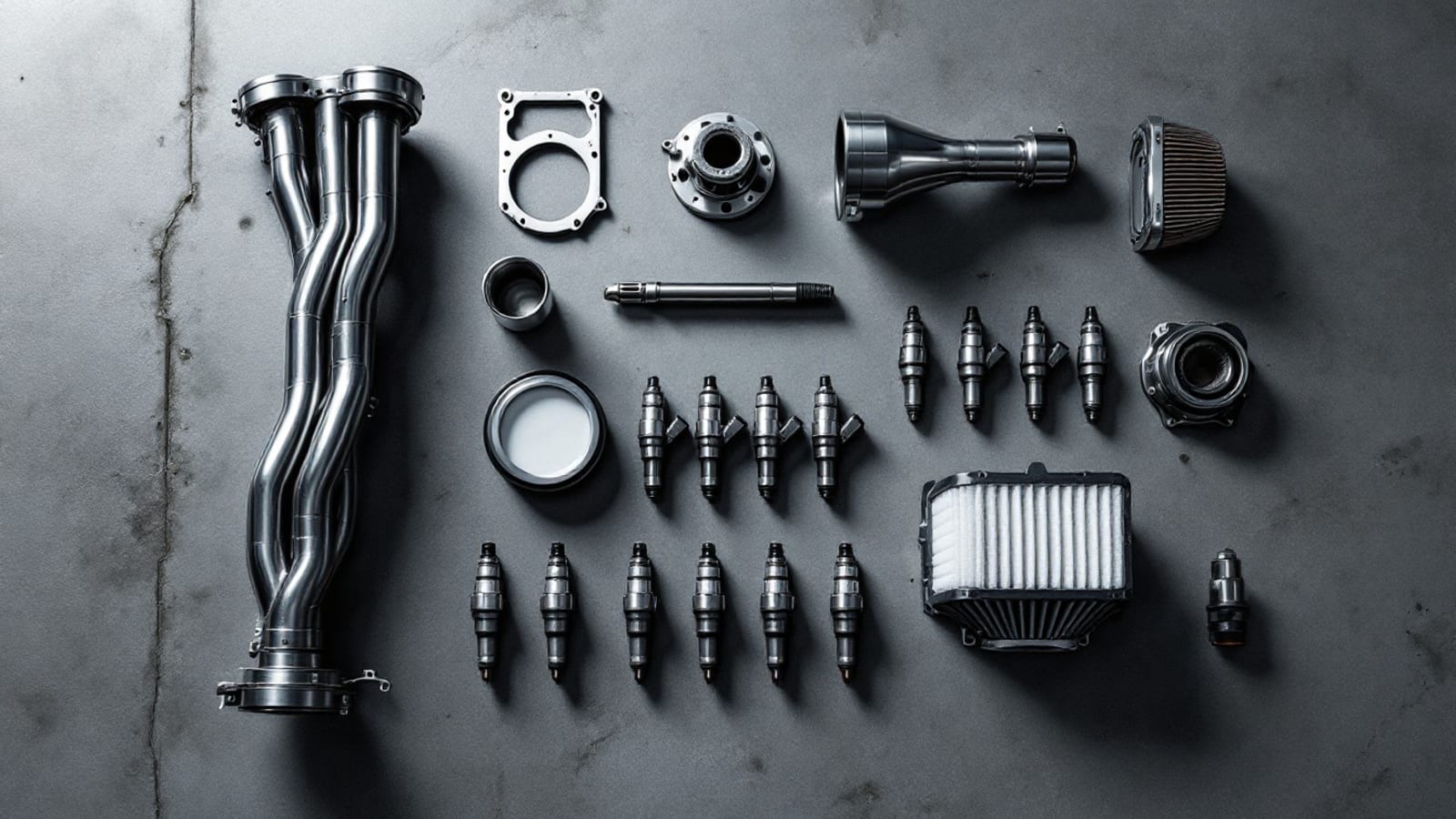
You paid for a tune. Three months later there is a box in the garage with a new part in it, and a question nobody answered at the time: does the tune need doing again, and is that going to be a small update or the whole bill a second time?
As of October 2026 the answer turns on one distinction. A revision adjusts the existing calibration for the same hardware and is often included or cheap. A retune recalibrates for hardware that has changed, and after a major change it is usually priced like a new tune — commonly $300–600 for a custom dyno session. On TuneVault a guided tune is $39, and monthly plans at $19, $49 and $249 include re-audits and unlimited datalog re-checks on your saved cars.
The rest is about which side of that line a given part falls on, and how to plan so you cross it once.
Revision and retune are different purchases
The words get used interchangeably. They should not be.
A revision is the same job, finished. The hardware has not changed. The first file was written on a particular day and the car has since shown something it did not show then — a hesitation on cold mornings, a little knock retard on a hot afternoon, a trim that drifted. Correcting that is part of delivering the original tune, and most tuners include two or three revisions in the price for exactly that reason.
A retune is new work. The engine is no longer the engine the calibration describes. Some or all of the tables have to be rebuilt and verified again.
When a tuner quotes for a later change, what they are really estimating is how many tables the new part invalidates. That is a question with a reasonably objective answer.
Which parts invalidate what
The calibration rests on three descriptions: how much air the engine moves, how that air is measured, and how fuel is delivered. A part matters to the tune in proportion to how much it disturbs those.
| Change | What it disturbs | Typical outcome |
|---|---|---|
| Cat-back exhaust | Very little | Usually none; confirm with a log |
| Cold-air intake keeping the factory meter housing | Small airflow change | Often none, sometimes a light update |
| Intake that resizes or relocates the airflow meter | How air is measured | Update needed — the meter curve is now wrong |
| Long-tube headers | Airflow across the range | Update recommended |
| Injectors | How fuel is delivered | Retune of the fueling foundation |
| Camshaft | Airflow, idle, and often the whole airflow model | Full retune |
| Supercharger or turbo | Everything | Full retune |
| Switching to E85 or flex fuel | Fuel requirement and spark | Full retune, or a second file |
| Different tire size or gear ratio | Speed and shift calculations only | A small update, not an engine retune |
A few of those deserve a sentence.
The intake is the one that catches people. An intake is sold as a bolt-on, and many are. But the engine measures incoming air with a meter in a tube of a specific diameter, and a different tube changes what the same reading means. Whether the factory housing is retained is the detail that decides it. The mechanics are in the MAF transfer function calibration guide, and the general bolt-on question is answered in do I need a tune after intake, headers or exhaust.
Injectors are a foundation change. Every fueling decision the computer makes passes through its description of the injectors. New injectors mean new data, entered correctly, and then confirmation that idle and cruise trims settle. The injector data page covers what is needed.
A camshaft is close to starting again. It changes how the engine breathes at every speed and usually how it idles, which is its own piece of work — see rough idle after a camshaft swap.
Tire size is not an engine retune. It is a correction to the speedometer and shift calculations, described in the speedometer and gear ratio calibration guide. Do not pay full price for it.
How to find out without guessing
A table can only say what is typical. Your car says what is true, and it says it in a datalog.
Fit the part, drive gently, and record a log. Three things tell you most of what you need:
Fuel trims. If the long-term corrections are small and similar to what they were before, the calibration is still describing the engine adequately at part throttle. If they have moved by a large amount, it is not. Fuel trims explained gives the ranges.
Knock retard. New activity that was not there before is a reason to stop and update, not to keep driving. How much knock retard is normal sets the baseline.
Commanded versus delivered fueling under load. Only with a wideband, and only once the first two look sane. This is the check that matters most, because at wide-open throttle the computer is not correcting anything — it is trusting its tables.
That last point is why "the car runs fine" is not evidence. At part throttle the trims hide a mismatch. At full throttle nothing does. A car can feel perfect around town on a calibration that is lean exactly where it is most dangerous.
Comparing a log from before the part with one from after is the cleanest way to see the change, which is one reason to keep a baseline. If you are not sure what you are looking at, datalog analysis is what TuneVault does: upload the log and get a clear answer about whether the existing calibration still holds.
What tuners charge, and what to ask
There is no standard, which is why the conversation should happen before the first tune rather than after the second part.
The common arrangements are:
- Revisions included, later changes quoted separately. The most usual. Reasonable, as long as "revision" is defined.
- A flat update fee for returning customers. Common for small changes on a car the tuner already knows.
- Every change is a new tune. Simple, and expensive for a build that evolves.
- A package covering a planned sequence of parts. Worth asking about if you know what is coming.
Three questions settle it:
- How many revisions are included, and for how long?
- If I add a part later, how is that priced?
- Will I get a copy of my file, so that another tuner could continue from it if I move?
The third matters more than it sounds. If the calibration is locked or the file is withheld, every later change has to go back to the same tuner at whatever they charge, or start over from stock with someone else. Who owns your tune file explains the position, and the wider list of questions is in how to vet a tuner.
For reference prices across every route, see the 2026 ECU tuning cost guide.
Plan the build so you pay once
The expensive pattern is one part, one tune, repeated. Intake and a tune. Headers and a tune. Camshaft and a tune. Each of those reworks tables the previous one already paid for.
Three ways to avoid it.
Decide the destination first. If the plan ends at a cam and headers, fit both before calibrating. Parts that affect airflow belong in one batch.
Tune at plateaus, not at parts. A plateau is a point where the build will sit for a while. Calibrate there. Between plateaus, a part that does not disturb the calibration much can wait.
If the build will not sit still, own the loop. A car that changes every few months is the case for doing the calibration work yourself, or for a plan that makes each check free. On TuneVault the Garage plan at $19 a month covers up to three guided tunes and unlimited datalog re-checks on your cars, which suits a year of steady changes far better than paying per appointment. What each plan includes is in the pricing explainer, and the first-year arithmetic of the DIY route is in the hidden costs of DIY tuning.
Keep the files in order
Every change to the hardware should produce a new, named version of the calibration, with the previous one kept. When a new part goes on, you want to be able to say exactly which file the car was running and return to it.
That discipline is cheap and it pays back the first time a new part turns out to be faulty and you need to rule out the tune. A naming and backup scheme that works is set out in tune file management: versioning, backups and stock reads.
The same applies in reverse. Taking a part off is a hardware change too, and the calibration written for it is wrong without it. Often the simplest route back is the saved stock file.
The short version
Ask what the new part does to air, to the measurement of air, or to fuel. If the answer is "nothing much", log it and move on. If the answer is "a lot", the calibration needs updating before the car sees full throttle. And if the list of parts still to come is long, wait — or set things up so that updating costs you an evening instead of an invoice.
Frequently asked questions
How much does a retune cost?
It depends on whether the change needs a revision or a new calibration. As of October 2026 a full custom dyno tune commonly runs $300–600, and a retune after a major change such as a camshaft or a power adder is usually priced as a new tune. Small updates are often included in a tuner's revision policy or charged at a reduced rate. On TuneVault a guided tune is $39, and monthly plans include re-audits and unlimited datalog re-checks on your saved cars.
Do I need a retune after every modification?
No. Parts that do not change how much air the engine moves, how fuel is delivered or how the air is measured generally do not need one. Parts that do — injectors, a camshaft, an intake that relocates or resizes the airflow meter, forced induction, a change of fuel — need the calibration updated. A datalog is the way to find out which group a part belongs to on your car.
What is the difference between a revision and a retune?
A revision adjusts an existing calibration for the same hardware — refining it after real driving or correcting something the first session missed. A retune recalibrates for hardware that has changed. Tuners usually include a number of revisions in the original price and charge separately for a retune, because the second is new work.
Will my tuner charge again if I add a part later?
Usually yes for anything that changes airflow or fueling, and the amount depends on how much of the calibration has to be redone. Ask before the first tune what the policy is for later changes — some tuners discount returning customers, some charge a flat update fee, and some treat every change as a new job.
Can I drive on my old tune with new parts fitted?
For a part that barely changes airflow, generally yes, and fuel trims will absorb the difference. For injectors, a camshaft or a power adder, no — the calibration no longer describes the engine, and at wide-open throttle there is no correction to save it. If in doubt, drive gently and stay out of boost and heavy throttle until the tune is updated.
How do I avoid paying for multiple retunes?
Decide the whole build before the first tune and fit the parts that affect calibration together. Tuning after each individual part means paying for the same tables to be reworked repeatedly. If the build will keep changing for a year, owning the tools or using a plan with unlimited re-checks costs less than repeated appointments.
Is a retune needed after returning a part to stock?
Yes, in the same way as fitting it. The calibration was written for the modified engine, so removing a camshaft, injectors or a power adder makes it wrong again. The simplest answer is often to write back the saved stock file, which is one more reason to keep it.