Do I Need a Tune After Intake? Expert Answer
Find out which bolt-on mods actually require tuning and which your car handles fine. Skip unnecessary spending with this honest breakdown.
By TuneVault
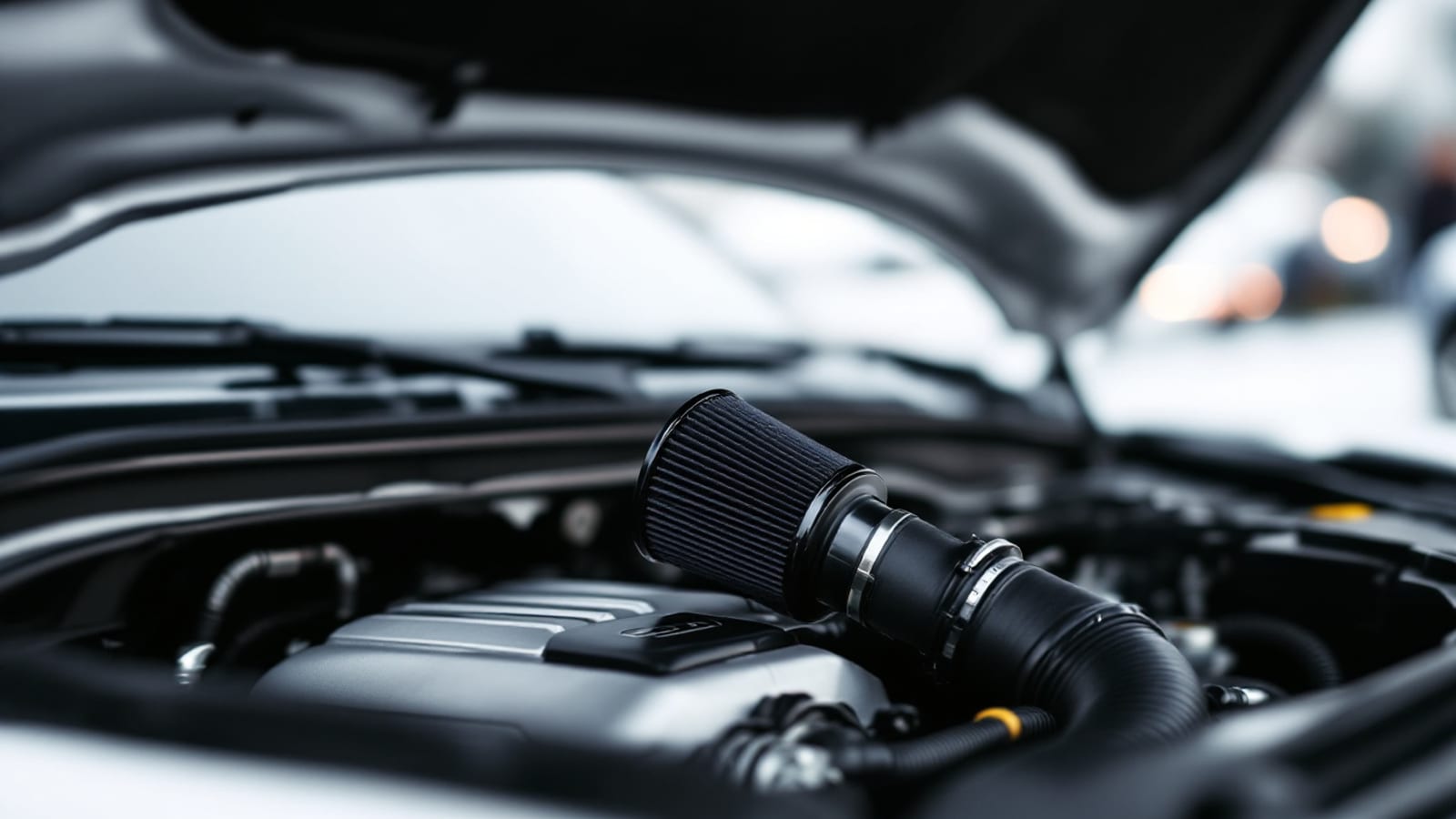
This is the most-asked question in modified-car ownership, and it usually gets answered with a slogan rather than a reason. So here is the direct version, and then the reasoning underneath it.
As of September 2026: a cat-back exhaust almost never needs a tune. An intake often does on a mass-airflow car and often does not on a speed-density one. Long-tube headers usually do. And a tune is worth buying for gains even when it is not needed for safety — which is a different decision, made for different reasons. A calibration costs roughly $39 for a guided DIY audit through this site, or roughly $300 to $600 for a custom dyno session at a shop.
The rest of this article is about how to tell which situation you are actually in, using your own car rather than someone else's opinion.
The real question the computer is asking
An engine computer is not aware of parts. It has never heard of your intake. What it has is a model of how much air is entering the engine, and a set of tables that decide how much fuel and how much spark advance that quantity of air should receive.
So the question "does this part need a tune" always reduces to one of three narrower questions:
- Does this part change how much air enters the engine at a given operating point?
- Does this part change how accurately the computer can measure that air?
- Does this part change what is safe or legal downstream of combustion?
A part that does none of these three things does not need a tune, no matter how expensive it was. A part that does any of them might.
Part by part
Below is the practical map. Treat the right-hand column as the thing to verify on your own car, not as a promise.
| Modification | Typically needs a tune? | Why, and what to check |
|---|---|---|
| Cat-back exhaust | No | Downstream of the sensors the computer uses; the calibration does not model it |
| Axle-back / muffler | No | Noise change only |
| Cold air intake (MAF car) | Often | The sensor's calibration was written for the factory tube diameter and flow profile — check long-term fuel trims |
| Cold air intake (speed-density car) | Often not | The air model does not depend on a sensor sitting in the tube — still check trims |
| Drop-in filter | Rarely | Same tube, same sensor position |
| Shorty headers | Usually not | Converters typically stay in place; modest change to the airflow curve |
| Long-tube headers | Usually | Converter position changes; rear oxygen sensors and emissions monitors are affected |
| Throttle body (larger) | Sometimes | Electronic throttle cars carry a throttle-area model the calibration expects to match |
| Camshaft | Yes | Changes cylinder filling everywhere; see rough idle after a camshaft swap |
| Forced induction | Yes, always | New load range the factory tables never covered |
| Larger injectors | Yes, always | The computer's fuel maths depends on knowing injector characteristics |
Two rows deserve expanding, because they are where most of the confusion lives.
Intakes and the sensor problem
On a mass-airflow car, a sensor sits in the intake tube and reports airflow directly. Its calibration — the MAF transfer function — is a curve that converts the sensor's electrical output into grams of air per second, and that curve was measured with the factory tube around it. Change the tube's diameter, its internal texture, the distance from the filter, or the presence of a flow straightener, and the same air produces a different reading.
The computer then fuels for the number it was given rather than the air that is actually there. On most cars the fuel trim system quietly corrects the error and you never notice, which is exactly why so many people install an intake, feel no difference, and conclude no tune was needed. Sometimes that is true. Sometimes the trims are sitting at fifteen percent doing the work, and the car is one modification away from running out of correction authority.
On a speed-density car the air model is computed from manifold pressure, engine speed and a volumetric-efficiency table rather than a sensor in the tube. Changing the tube upstream moves the model much less. This is the single biggest reason the same intake "needs a tune" on one car and not on another, and it is why generic forum answers are unreliable: the answer depends on which air model your car uses, which is covered in MAF versus speed density.
Headers and the downstream problem
Shorty headers generally replace the exhaust manifolds while keeping the catalytic converters roughly where the factory put them. The engine breathes slightly better, the torque curve shifts slightly, and the calibration copes.
Long-tube headers are a structurally different change. They usually move the converters much further downstream or delete them entirely, which relocates the rear oxygen sensors that exist specifically to monitor converter efficiency. Those sensors will report that the converter is not doing its job, because from where they now sit, it is not. That sets emissions monitors and, in many regions, is a legal problem as well as a calibration one — a topic with real consequences covered in tuning and emissions inspection.
There is also a genuine performance argument. Long tubes shift where the engine makes its torque, and spark timing that was optimal for the old curve is no longer optimal for the new one. That is a gains argument, not a safety one, and it is worth separating the two.
The three numbers that settle it on your car
Stop guessing. Drive the car, pull a datalog, and read three things.
Long-term fuel trim. This is the computer telling you how wrong its air model currently is. Trims within a few percent of zero across idle, cruise and light load mean the model still matches reality and your intake has not broken anything. Trims sitting at ten or fifteen percent mean the model is wrong and the system is papering over it — which works until you add the next part.
Knock retard at load. Knock retard is the computer pulling timing because it detected combustion it did not like. A little, occasionally, on a hot day, is normal. Repeatable retard at the same point in every pull is the calibration telling you its spark tables no longer suit this engine, and that is the condition worth acting on quickly. The normal-versus-not question is covered in detail in how much knock retard is normal.
Wide-open-throttle air-fuel ratio. At full load the car leaves closed-loop control and fuels from a power-enrichment table rather than from sensor feedback, which means fuel trims are not protecting you. This is where a broken air model actually costs engines. If you have a wideband sensor fitted, this is the number it exists to show you; if you do not, the factory narrowband cannot tell you much at full throttle.
If those three are in range, your bolt-ons have not created a problem. What remains is an opportunity question rather than a risk question.
The gains argument, stated honestly
A factory calibration is a compromise written for a global fleet. It has to survive poor fuel, high altitude, extreme heat, neglected maintenance and a warranty period, on every car that leaves the line. So it is conservative on spark timing and generous on fuelling at high load, because those are the cheap insurance policies.
A calibration written for your actual car, your actual fuel and your actual climate does not need those margins to be as wide. That is where most of the gain from tuning comes from — not from the parts, from removing margin the factory could not remove. It is also why tuning a completely stock car frequently produces a measurable result, which surprises people who think a tune only "unlocks" aftermarket hardware.
Both things can be true at once: your bolt-ons may not have created a problem, and a tune may still be the best value modification on the list. The honest framing is that these are separate purchases with separate justifications. What a tune is worth relative to the parts is the core of cheap ECU tuning — what to save on and what not to, and the full price landscape is mapped in our ECU tuning cost guide.
A sensible order of operations
If you are still in the planning stage, the cheapest version of this whole question is to sequence it well.
- Install the hardware and drive it. Two or three hundred miles of normal use lets the adaptive systems settle so your data reflects steady state rather than transient relearning.
- Confirm the car is mechanically healthy. A tune written over a vacuum leak or a tired coil calibrates the fault into the file. The pre-tune mechanical checklist is the short version of what to rule out.
- Datalog and read the three numbers above. Now you know whether you have a problem, an opportunity, or neither.
- Then decide what to buy. A guided DIY audit, an online e-tune, or a dyno session are three different products at three different prices, compared in copilot versus e-tuner versus dyno shop.
Doing it in this order means you arrive at whichever option you choose carrying evidence about your specific car. That is worth real money, because the first thing any competent tuner asks for is data, and the first thing any tuning tool needs is a starting point.
Where this site fits
TuneVault reads HP Tuners VCM Editor tables and audits them against your datalogs — largely on the GM, Ford and Dodge platforms HP Tuners covers well. If you have installed bolt-ons and want to know whether your air model, spark tables and power-enrichment fuelling still make sense for the parts now fitted, that is precisely the question a guided audit answers, and you can see exactly what is included on the pricing page.
If you are not tuning yourself at all, the same three numbers above are still the right things to check before you hand the car to anyone. They are what tells you whether you are buying a repair or an upgrade — and those deserve to be different conversations.
Frequently asked questions
Do I need a tune after installing a cold air intake?
Often yes on a mass-airflow car, sometimes no on a speed-density one. The intake changes the shape of the tube the airflow sensor sits in, and the factory sensor calibration was written for the factory tube. If the sensor now reads high or low, the computer fuels wrong and long-term fuel trims drift away from zero. Pull a datalog and look at your trims first — if they sit within a few percent, the factory adaptation has absorbed it and there is nothing urgent to fix.
Do headers require a tune?
Shorty headers usually do not require one to run safely. Long-tube headers usually do, because they typically relocate or remove the catalytic converters, which moves the rear oxygen sensors out of position and sets emissions monitors. The power gain from long tubes also arrives at a different point in the rev range than the calibration expects, so the spark and fuelling in that region is no longer optimal even when nothing is broken.
Do I need a tune for a cat-back exhaust?
Almost never. A cat-back changes only the section downstream of the catalytic converters, which the engine computer does not model in any detail. It makes noise and a small amount of power, and the factory calibration copes with it. If someone tells you a cat-back alone requires a tune to be safe, treat that as a sales pitch rather than an engineering claim.
What happens if I do not tune after bolt-ons that need it?
Usually nothing dramatic and immediately. The factory fuel trim system corrects moderate errors, so the engine keeps running. The costs are quieter: fuel economy drifts, part-throttle drivability gets uneven, and at wide-open throttle — where trims do not apply — the mixture can be leaner than intended, which is the condition that matters for engine health on a boosted or high-load car.
How do I know if my car actually needs a tune after modification?
Datalog it and read three things. Long-term fuel trims tell you whether the air model still matches reality. Knock retard at load tells you whether spark timing is still safe. Wide-open-throttle air-fuel ratio tells you whether the power-enrichment fuelling is where it should be. If all three are in range, your bolt-ons have not broken the calibration, whatever a forum told you.
Will a tune give me more power from parts I already installed?
Usually yes, and this is a better reason to tune than fear. Most factory calibrations are conservative because they are written for a wide range of fuel quality, climates and maintenance standards. Once the hardware changes, a calibration matched to your actual parts, fuel and climate typically finds gains the factory left on the table — separately from anything the parts themselves add.
Does a tune have to happen at the same time as the parts?
No, and splitting them is often smarter. Install, drive, datalog, and see what the car actually does. You arrive at the tune with evidence about your specific car instead of a generic assumption, and if a part is faulty or fitted badly the datalog usually shows it before a calibration hides it under corrections.