Throttle Response Tuning: Pedal Maps, Torque Tables, and What 'Snappier' Actually Costs
A sharper pedal adds no power — it changes where the power you already have arrives in the pedal's travel. How drive-by-wire actually works, which table to edit, and why an aggressive pedal map makes a car harder to drive smoothly.
By TuneVault
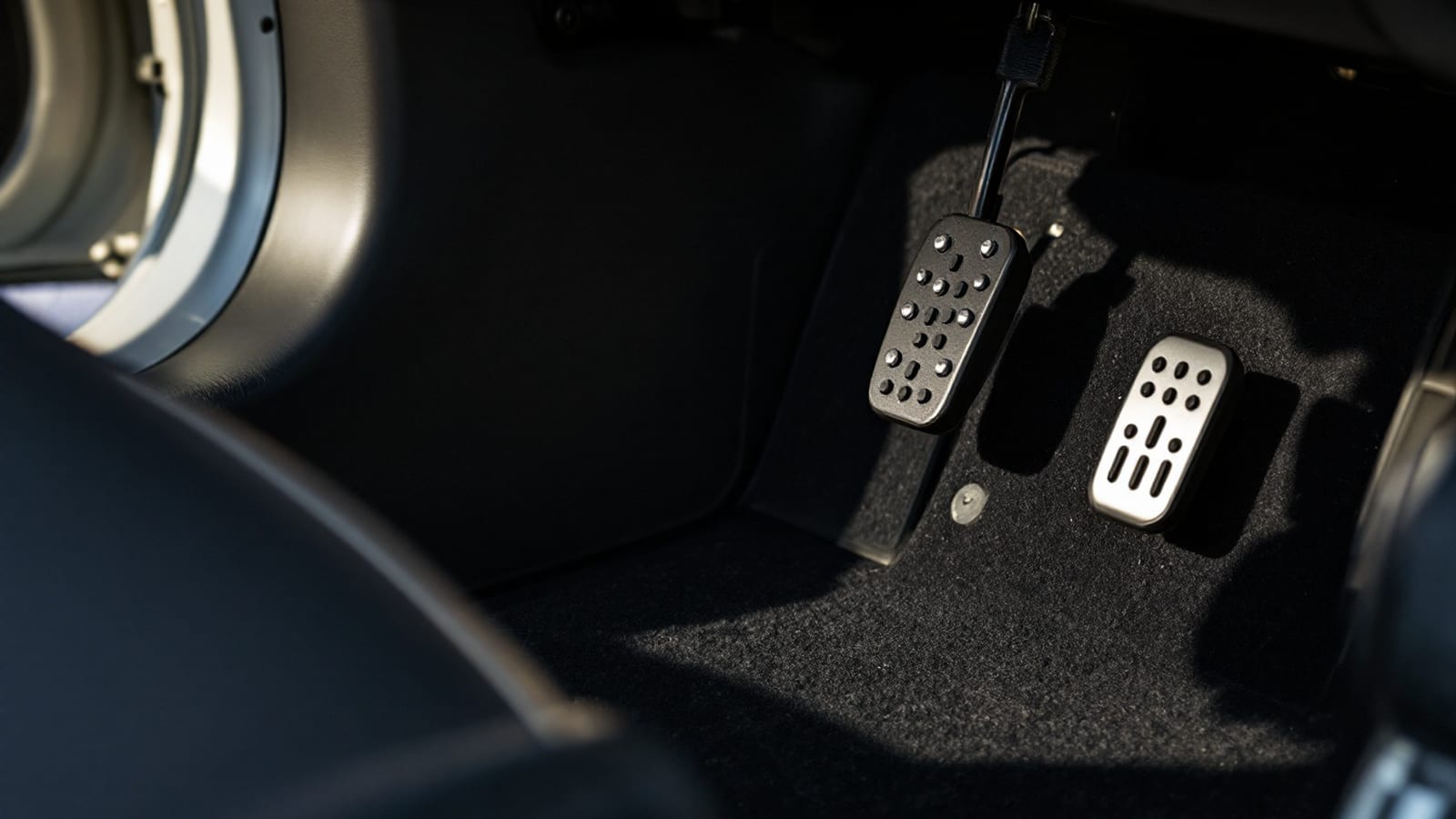
"More responsive throttle" is one of the most requested outcomes in tuning and one of the least well understood. Almost everyone who asks for it believes they are asking for power. They are not — they are asking for a different mapping between their foot and the power the engine already makes.
That is a legitimate thing to want. It is also a change with real costs that nobody mentions when they are selling it. As of September 2026 the mechanism below is how essentially every electronically throttled GM, Ford and Dodge application handles the pedal.
Your pedal is not connected to anything
On a cable-throttle car the pedal pulls a plate open. Press half way, the plate opens roughly half way, and the engine makes whatever it makes with that much air. Simple, direct, and gone from new cars for two decades.
On a modern car the pedal is a pair of position sensors reporting to the computer, and there is no mechanical connection to the throttle body at all. What happens next is a chain:
- Pedal position becomes a torque request. A table converts "how far the pedal is pressed, at this vehicle speed and gear" into "how much torque the driver is asking for".
- The request is filtered. Torque management, traction control, transmission protection and various rate limits can all reduce or slow that request before it becomes an action.
- Torque becomes airflow. The computer calculates how much air is needed to produce the allowed torque under current conditions — temperature, phasing, load, fuel. This is the calibration doing arithmetic, not a mechanical linkage.
- Airflow becomes a throttle position. The plate is opened as far as required to deliver that airflow.
Only the last step touches the physical throttle, and by then the driver's input has been through three layers of interpretation. This is why the plate frequently does not mirror the pedal: at low speed a small pedal input can open the plate a surprising amount, and at high load the plate may already be fully open while there is pedal travel left.
Understanding the chain matters, because "throttle response" complaints can originate at any link and each one needs a different fix.
Where the delay actually is
| What you feel | Where it originates | Is it a pedal map problem? | The real fix |
|---|---|---|---|
| Little happens in the first third of pedal travel | Pedal-to-torque table is conservative | Yes | Rescale the low-pedal region |
| Response is fine but shifts feel soft | Torque management during shifts | No | Transmission-side torque reduction |
| Delay of a second or more under load | Turbocharger spool | No | Boost control and hardware, not the pedal |
| Hesitation right off idle | Phaser movement or transient fuelling | No | Cam phasing rate, acceleration enrichment |
| Response varies with gear | Gear-dependent pedal maps | Yes | Check the map for the gear you drive in |
| Sudden torque then a plateau | A rate limit capping how fast torque rises | Partly | Torque rise rate limits |
| Sluggish when cold only | Warm-up torque limiting | No | This is deliberate protection — leave it |
That last row is worth stating plainly. Many calibrations limit torque while the engine is cold, and that limit exists to protect a motor whose oil has not reached temperature and whose clearances are not yet correct. Removing it makes the car feel better for two minutes and shortens its life.
The pedal map itself
The pedal-to-torque table typically has pedal position on one axis and either engine speed or vehicle speed on the other. Its shape defines the entire character of the car from behind the wheel.
A factory map is usually progressive: the first portion of travel requests a modest amount of torque, and the request accelerates as you go further. This is deliberate. Most driving happens in the first third of the pedal, and giving that region fine resolution makes the car easy to modulate in traffic, on a wet road, when parking, when towing.
Making a car feel "sharper" means moving torque request earlier in the travel — the same total torque, arriving sooner in the pedal's range. The consequences follow directly from that:
- You get less resolution where you use the pedal most. The region that used to cover a broad band of gentle torque now covers a much wider range, so small foot movements produce larger changes. That is precisely the definition of a car that is harder to drive smoothly.
- Full throttle is unchanged. Both maps arrive at maximum torque request at 100% pedal. Nothing about acceleration from a standing start with the pedal pinned changes at all.
- Passengers notice before you do. Jerky low-speed driving is felt by everyone in the car, and the driver adapts to it faster than they do.
The useful middle ground is to modestly steepen the early region while keeping it genuinely progressive, rather than flattening the map into something close to a switch. If you drive in traffic, park in tight spaces, tow, or drive in poor weather, be conservative — and be honest that this is a preference adjustment, not a performance one.
Torque management, and why "delete it" is bad advice
The torque limits in a calibration are not laziness. They exist because a torque-based control strategy has to protect components that cannot absorb an unlimited rate of change.
The most significant is shift torque reduction. During an automatic transmission's gear change there is a brief moment where clutches are handing off, and applying full engine torque through that handoff drives wear and shock into the transmission. The calibration reduces torque momentarily so the shift completes smoothly. That reduction is why the shift feels soft — and softening it is exactly the point.
You can reduce it, and doing so gives firmer, faster-feeling shifts, which many people genuinely prefer. What you cannot do without consequence is remove it, because the energy the calibration was absorbing has to go somewhere and the destination is the clutch packs. On a stock transmission behind a modified engine that is a straightforward path to an expensive failure. Our guide to transmission tuning and torque management covers the trade in detail, and it is the part of the calibration where DIY tuners cause the most collateral damage.
Other limits worth recognising before touching them: torque rise rate limits that prevent abrupt steps, gear-specific torque caps that protect first gear from wheel-hop-level shock, and the cold-engine limiting mentioned above. Each has a rationale. Some of those rationales matter less on a modified car; none of them is arbitrary.
Testing a pedal map honestly
Pedal changes are unusually easy to fool yourself about, because the change is entirely subjective and you know you made it. Two disciplines help.
Log pedal position and torque request together. Drive the route you actually drive — traffic, junctions, a car park — and look at how much torque you were requesting for the pedal positions you naturally used. That tells you whether the new map matches how your foot behaves, which is the real question.
Test the awkward manoeuvres deliberately. Reversing onto a driveway, moving off on a hill, creeping in traffic. These are where an aggressive map is worst and where a test drive down an empty road will never reveal a problem. If the car has become annoying to park, that is a real cost you will pay every day, against a benefit you notice occasionally.
And if the car has an automatic transmission, drive it through several shifts under moderate load. Changes to the pedal map alter the torque request the transmission controller sees, which can shift the shift points and the shift quality even when you have not touched a transmission table.
What a pedal map cannot fix
It is worth being blunt about the boundary, because a great deal of money is spent here on the wrong problem.
If the delay you dislike is turbo spool, no pedal map touches it. The engine is producing what it can; the air is not there yet. That is boost control and hardware territory.
If the hesitation is transient fuelling — the moment where airflow changes faster than the fuel calculation follows — that is acceleration enrichment, and it lives in the fuel tables.
If the car feels flat rather than slow to respond, the problem is torque, not the mapping of it, and you are looking at airflow, timing and the rest of the calibration.
A useful test: at 100% pedal, is the car as quick as you expect? If yes, your complaint is genuinely about the mapping and a pedal map is the right tool. If no, the pedal map will make the car feel busier while being exactly as fast, which is the worst of both outcomes. The tables that actually govern output are elsewhere in the file.
Where TuneVault fits
The pedal map is a preference, which makes it a strange thing to buy from someone who has never driven your car. What is not a preference is whether the torque management around it has been left in a state that will damage something — and that is visible in the file.
The Copilot reads the pedal, torque limit and shift torque reduction tables out of your VCM Editor file and flags the combinations that predict trouble, particularly torque management reduced far enough that a stock transmission is taking shock it was never designed for. It is part of the same $39 guided tune, and the plan breakdown covers what each tier includes. The pedal map itself it will help you shape sensibly rather than aggressively, because the aggressive version is the one people quietly undo.
The bottom line
A pedal map redistributes the torque you already have across the pedal's travel. It changes the character of the car meaningfully and its performance not at all. The cost is resolution in the part of the pedal you use for almost all of your driving, which is why very aggressive maps get reverted.
Torque management is protection, not restriction — reduce it thoughtfully, never delete it wholesale on stock transmission hardware. And before editing anything, work out which link in the pedal-to-plate chain your complaint actually lives in, because three of the four common causes of "laggy throttle" are not in the pedal map at all.
Frequently asked questions
Does tuning the pedal map add power?
No. A pedal map changes how much of the engine's existing capability you get for a given amount of pedal travel. At full throttle the outcome is identical either way, because both maps reach the same place. What changes is the first third of the pedal, which is where all normal driving happens, so the car feels transformed while making exactly the same peak power.
Why does my car feel laggy when I press the pedal?
There are several separate causes and they need different fixes. A conservative pedal map means small pedal movements request little torque. Torque management can deliberately limit how quickly torque is allowed to rise. On a boosted car much of the delay is the turbo itself. And on an engine with variable valve timing, phaser movement takes real time. Only the first two are pedal-map territory.
Is an aggressive pedal map worse for daily driving?
Usually, yes. Compressing more torque into less pedal travel gives you less resolution to work with, which makes smooth low-speed manoeuvring, towing and driving in the wet noticeably harder. The pedal feels alert and the car becomes harder to be gentle with. Most people who fit a very aggressive map end up backing it off after a few weeks of parking.
What is torque management and should I remove it?
Torque management is the calibration deliberately delivering less torque than the driver requested, most often during gear shifts, to protect the transmission and make shifts smoother. It exists for a reason, and removing it entirely on a stock automatic transmission transfers the shock the calibration was absorbing straight into the hardware. Reducing it thoughtfully is reasonable; deleting it is how people break transmissions.
Will a throttle response module do the same thing as tuning?
A plug-in throttle controller intercepts the pedal signal and rescales it before the computer sees it, which is functionally similar to editing the pedal map but done outside the calibration. It works, and it is easy to remove. The drawback is that the computer now receives a pedal signal that does not match what the driver's foot is doing, which can interact awkwardly with cruise control, traction control and torque-based strategies.
Why does the throttle plate not match my pedal position?
Because on a torque-based calibration it is not supposed to. The pedal expresses a torque request, the computer works out how much airflow is needed to produce that torque under current conditions, and it opens the throttle by however much that requires. At low speed a small pedal input might open the plate a long way; at high load it may already be wide open while you press further.
Does a sharper pedal map hurt fuel economy?
Indirectly and usually modestly. The map itself changes nothing about how efficiently fuel becomes power. What changes is driver behaviour: the same casual pedal press now requests more torque, so people use more throttle without intending to. Reported economy loss after an aggressive pedal map is almost entirely this rather than any change in the engine's efficiency.