Boost Control Tuning Basics: Wastegate Duty, Targets and Adding Pressure Safely
How electronic boost control actually works — spring pressure, wastegate duty cycle, target versus actual boost and the closed-loop correction between them — plus the order to change things in when you want more pressure without hurting the engine.
By TuneVault
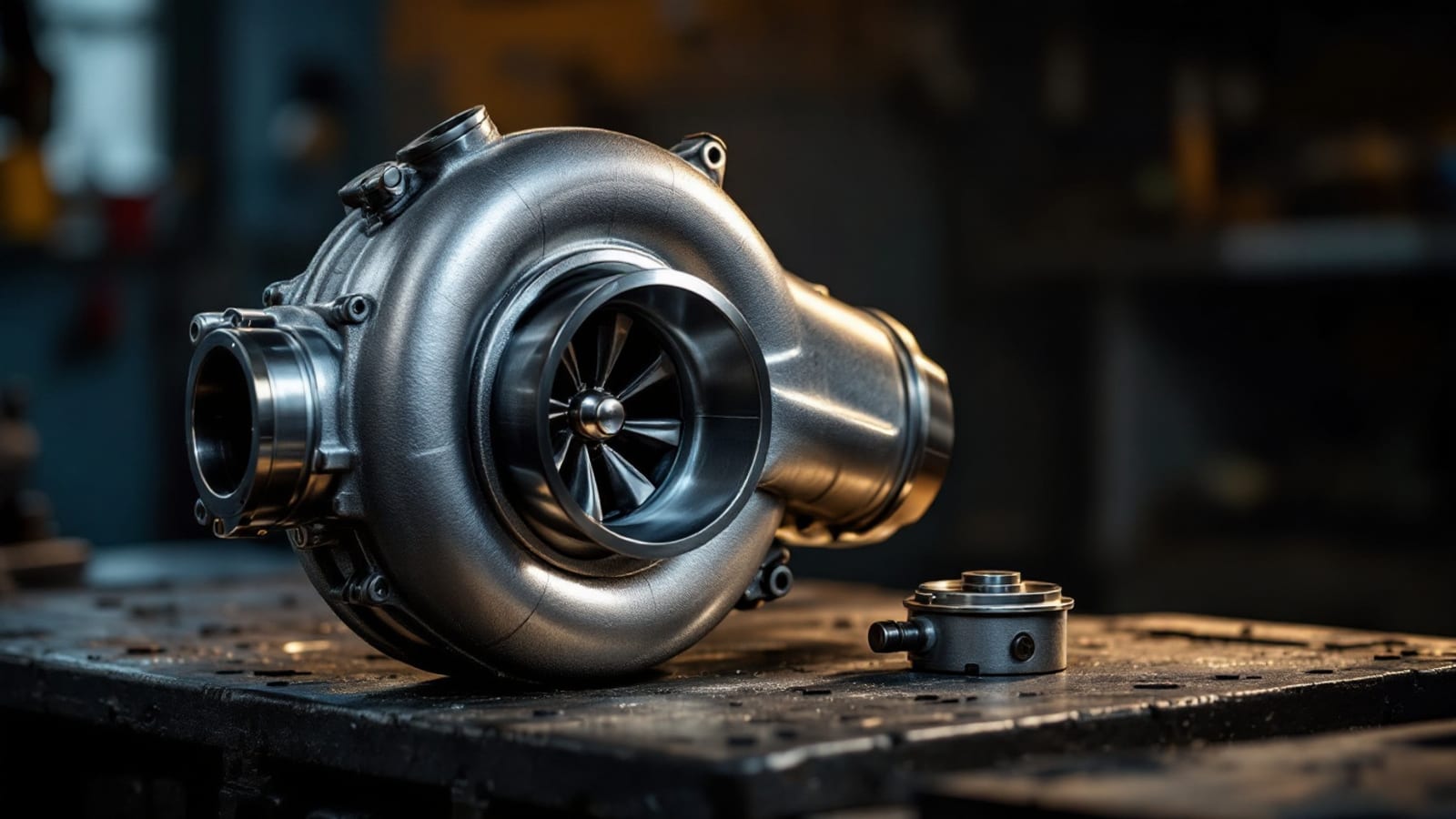
Boost is the easiest thing on a turbocharged car to increase and the last thing you should increase. As of August 2026, that ordering is still the most useful advice in the subject, and understanding why requires knowing what the control system is actually doing when you change a number.
What the hardware does
Start with the mechanical baseline, because the calibration only exists on top of it.
The wastegate is a valve that allows exhaust gas to bypass the turbine wheel. When it opens, less energy drives the turbine, and boost stops climbing. Its spring sets the pressure at which it begins to open with no help from anything else — which establishes a floor. You cannot calibrate below spring pressure; that is a mechanical property of the part, not a setting.
The boost control solenoid is what gives the ECU authority above that floor. It manipulates the pressure signal reaching the wastegate actuator so the actuator sees less pressure than the system is actually making, which keeps the gate closed longer and lets boost climb past spring pressure. The ECU commands the solenoid as a duty cycle — the percentage of time it is energised.
So the chain is: spring sets the minimum, duty cycle buys you everything above it, and the turbine and wastegate flow capacity set a ceiling you cannot calibrate past. The wastegate, boost pressure and pressure ratio glossary entries define the terms if any of that is new.
Open-loop base duty and closed-loop correction
Most factory and aftermarket boost control has two layers, and confusing them is the source of a lot of frustrated table editing.
The base duty table is the open-loop layer: a starting duty cycle looked up against engine speed, and often gear or another axis. It is the system's best guess before any feedback.
The closed-loop correction compares target boost against actual boost and trims duty to close the gap, usually with proportional and integral terms.
The practical consequence is that a healthy system needs the base table to be roughly right on its own. If the base duty is badly wrong, the correction spends the whole pull dragging it toward target, which shows up as sluggish response, overshoot, or oscillation. Correction is meant to handle day-to-day variation in weather and fuel — not to compensate for a base table that was never calibrated.
The diagnostic question, then, is not "is boost right" but "how much correction is being applied to make it right." A system hitting target with small corrections is calibrated. A system hitting the same target with large corrections is working hard and will behave differently the moment conditions change.
Reading the system in a log
| What you see | What it usually means | Where the fix lives |
|---|---|---|
| Actual tracks target smoothly | Base duty and correction are both healthy | Nothing to do |
| Large sustained correction, target eventually met | Base duty table is off | Calibration — adjust base duty |
| Sharp overshoot then settle | Correction reacting faster than system lag allows | Calibration — soften correction or ramp |
| Boost sags at high engine speed | Turbine out of breath, or a leak | Hardware, or find the leak |
| Boost climbs above target at zero duty | Boost creep — wastegate out of flow capacity | Hardware only |
| Sudden power cut mid-pull | ECU overboost protection triggered | Fix the cause, not the limit |
That last row deserves emphasis. The overboost limit is the ECU noticing the system did something it was not asked to do. Raising the limit so the cut stops happening removes the alarm and leaves the fire. Find out why boost exceeded target first.
Why boost is the last thing you change
Raising duty cycle raises pressure immediately, without touching anything else. That is exactly the problem — more pressure means more air, which requires more fuel and less timing to stay safe, and the boost table does not know that.
The order that works:
1. Confirm the airflow model is honest. More boost means operating in load regions your calibration may never have visited. If the airflow estimate is wrong there, the fuelling is wrong there too, and nothing downstream can save it. Get volumetric efficiency or the mass-airflow transfer function correct first.
2. Confirm the fuel system can supply it. Injectors have a duty ceiling and pumps have a flow ceiling. Running out of either at the top of a pull produces a lean condition exactly where it is least survivable. Injector characterisation matters here too — see injector data, slopes and offsets, and the injector size calculator for a sanity check on headroom.
3. Confirm full-load fuelling with a wideband. Power enrichment is open loop, so nothing corrects it for you. Our article on open loop versus closed loop explains why part-throttle fuel trims tell you nothing about this, and why a wideband is required rather than optional.
4. Set timing appropriate for the new cylinder pressure. More boost means more cylinder pressure means less timing tolerance. How much timing is safe covers the reasoning, and knock retard in a datalog is how you check whether you were right.
5. Then, in small increments, raise the boost target. Log every step at full load. Stop when knock margin or fuelling stops looking comfortable, not when you reach a number you read somewhere.
Doing this in reverse — pressure first, then chasing the problems it created — is how engines get hurt. The NA-to-boosted article covers the same logic from the other direction, for people adding a power adder to a naturally aspirated engine for the first time.
Heat is the other axis
Boost is a pressure number and it is only half the story. What the engine actually cares about is the mass and temperature of the charge arriving in the cylinder.
Compressing air heats it. An intercooler removes some of that heat, and its effectiveness drops as ambient temperature rises and as it heat-soaks in slow traffic. So the same indicated boost delivers hotter, less dense charge on a hot afternoon than on a cool morning — less power, and less knock margin at the same time.
This is why boosted cars need their calibrations verified in the conditions they actually see, not only in the conditions they were built in. Intake-air-temperature-based timing compensation should be doing real work, and on some setups temperature-based boost reduction is worth having as well. The mechanism is covered in heat soak and density altitude, and the intercooler and heat soak entries define the terms.
If you run ethanol blends, the picture changes again in your favour — greater knock resistance and considerable evaporative cooling — but the fuelling requirement changes substantially with it, which the E85 conversion article covers.
What no amount of tuning fixes
Three problems look like calibration issues and are not:
Boost creep. Pressure climbing above target with the wastegate fully open means the gate cannot flow enough exhaust to hold it down. It is a flow limitation. Porting, a larger gate or a different exhaust housing are the answers; duty cycle is not.
Leaks. A cracked coupler or a loose clamp produces boost that will not reach target regardless of duty, and it wastes a great deal of time because the symptom looks like a control problem. Pressure-test the system before calibrating it.
Turbine out of breath. Boost sagging at high engine speed on an otherwise healthy setup usually means the turbo is at the edge of its efficient range. That is a hardware sizing conversation, and pushing duty higher to compensate just moves the compressor further into a region where it makes heat instead of pressure.
Start every boost session by ruling these out. It is much cheaper than calibrating around them.
If you want a review of what your boost, timing and fuelling tables currently say before you raise anything, the copilot reads them and flags what looks unsafe, and our turbo tuning page covers the wider workflow.
Frequently asked questions
How does electronic boost control actually work?
The wastegate is a valve that lets exhaust gas bypass the turbine, and its spring sets a baseline pressure that boost cannot fall below. A solenoid, commanded by the ECU as a duty cycle, bleeds or redirects pressure signal to the wastegate actuator so it stays closed longer than the spring alone would allow. Higher duty means the gate opens later, which means more boost. The controller then compares target and actual boost and applies a closed-loop correction on top of that baseline duty.
Can I turn up boost just by raising the duty cycle?
Physically yes, which is why the mistake is common. Raising duty raises pressure without touching fuelling, timing, or any of the limits that keep the engine intact, so it delivers more of everything including risk. Boost is the last thing you change, not the first — the fuelling has to support it, the timing has to be appropriate for the resulting cylinder pressure, and a wideband has to confirm both under real load.
What is boost creep and what causes it?
Boost creep is pressure climbing above target at high engine speed even at zero or minimum duty, and it means the wastegate has physically run out of capacity — it is fully open and still cannot bypass enough exhaust to hold pressure down. Because it is a flow limitation rather than a control error, no calibration change fixes it. The fixes are mechanical: wastegate porting, a larger or better-flowing gate, or a different exhaust housing.
What is the difference between a boost spike and overboost?
A spike is a brief overshoot at the moment boost comes on, usually because the control loop reacts more aggressively than the system's lag allows. Overboost is sustained pressure above target. A spike is typically fixed by softening the correction or the ramp into full duty; sustained overboost points at a control or hardware fault, and either can trip the ECU's own protection and cut power abruptly.
Does hot weather change the boost I should run?
It changes the boost the engine can tolerate. Charge air arrives at the cylinder hotter, intercooler efficiency drops, and knock margin shrinks — so the same pressure that was safe on a cool morning can be marginal on a hot afternoon. A well-built calibration handles this with intake-air-temperature-based timing compensation and, on some setups, temperature-based boost reduction, both confirmed in logs taken when it is genuinely hot.
How much boost can my engine take?
There is no number that answers that, because pressure is not the limit — cylinder pressure and charge temperature are, and those depend on compression ratio, fuel quality, cooling, camshaft profile and the health of the engine. Two identical-looking engines on different fuel have very different ceilings. The honest approach is to raise pressure incrementally, log each step at full load, and stop where knock margin and fuelling stop looking comfortable.
What should I log when working on boost?
Target boost, actual boost, wastegate duty cycle, intake air or charge-air temperature, wideband fuelling, engine speed and any knock or timing-correction channel. The comparison that matters most is target against actual across the whole pull — a system that hits target smoothly and holds it is working, and one that overshoots then settles, or sags at high engine speed, is telling you which of your problems is control and which is hardware.