Rev Limiters, Fuel Cut and Safety Limits: What to Leave Alone
A calibration is full of limits, and they are not all the same kind of thing. Which ones are tuning parameters, which ones are protection that should never be raised, what has to be true mechanically before a rev limit moves, and why fuel cut and spark cut behave differently.
By TuneVault
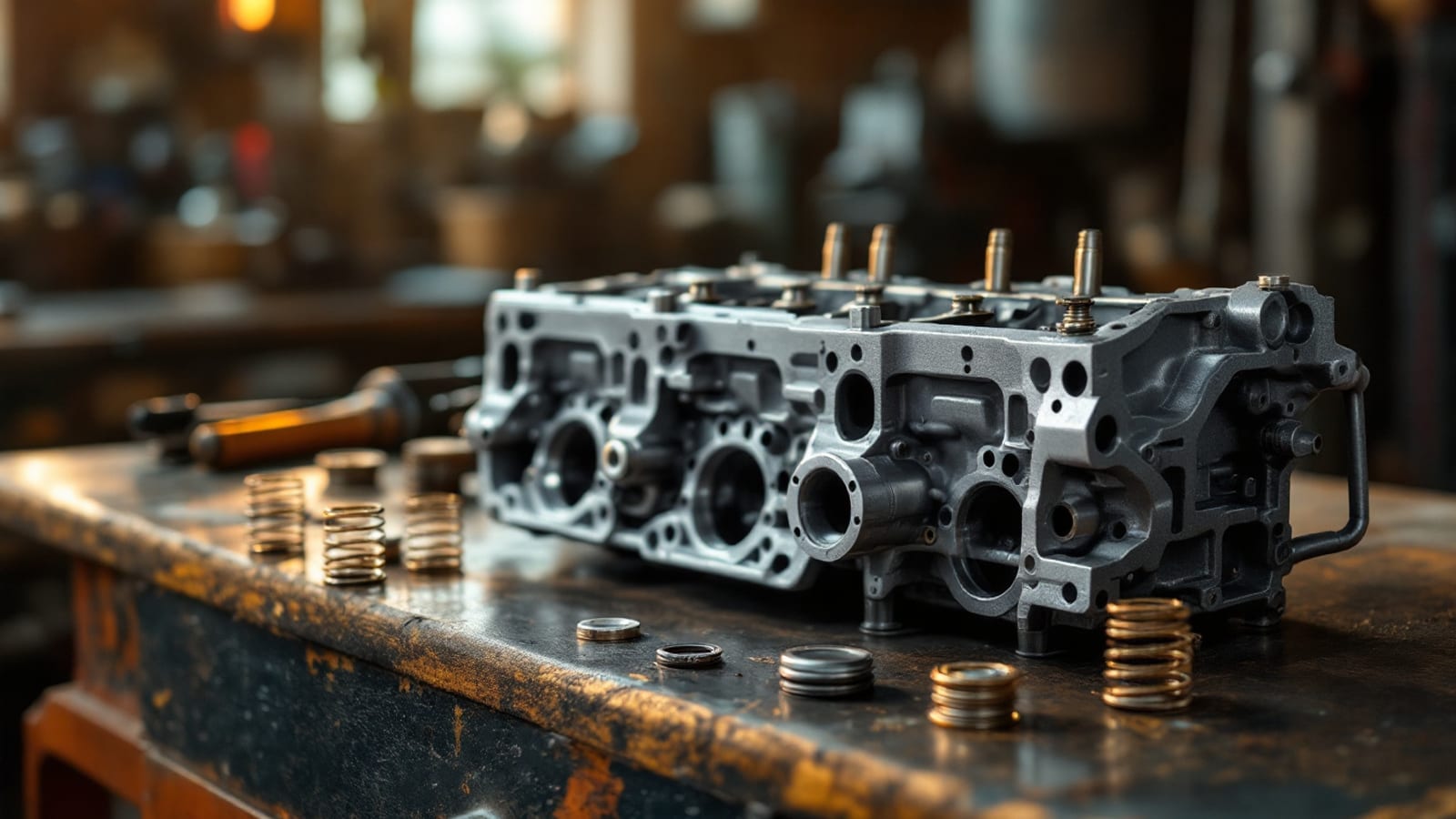
Open a calibration file and you will find dozens of ceilings. Rev limits, speed limits, torque limits, boost cuts, lean protection, temperature derates. To someone new they can read like a list of restrictions to be removed one at a time.
They are not one category. Some are calibration parameters that legitimately move when hardware changes. Others are the last line of defence against an engine destroying itself, and they exist precisely because the manufacturer measured where the destruction begins.
As of September 2026 the most useful skill in this part of the file is not knowing how to raise a limit — that takes seconds — but being able to say which kind of limit you are looking at.
The two categories
Operating limits describe the intended envelope. A rev limit, a speed limit, a per-gear ceiling. These were chosen for a specific set of hardware, and when the hardware changes the number can legitimately change with it.
Protection limits describe a fault. Lean protection, overboost cut, oil pressure protection, over-temperature derate. These do not trigger during normal operation of a healthy engine. When one fires, it is reporting something already wrong — and raising the threshold does not fix the fault, it removes the notification.
Confusing the two is the most expensive mistake available in the editor, and it is not a subtle one once you know to ask which type you are holding.
The inventory
| Limit | What it protects | Legitimately adjustable? | What must be true first |
|---|---|---|---|
| Rev limit | Valvetrain, rotating assembly | Yes, with hardware | Springs, retainers, oiling verified for the new speed |
| Per-gear rev limit | Driveline shock, tire speed | Yes | Same as above, plus gearing checked |
| Speed limiter | Tire speed rating | Sometimes | Tires rated above the new limit |
| Torque management | Transmission, driveline | Rarely, small changes | You understand what absorbs the shock instead |
| Boost target | Turbo, head gasket, fuel system | Yes | Fuel, cooling and knock margin proven in logs |
| Overboost cut | Catastrophic boost fault | No | Nothing — fix the wastegate or boost control |
| Lean protection | Pistons, exhaust valves | No | Nothing — fix the fuel delivery |
| Oil pressure protection | Bearings | No | Nothing — fix the oiling |
| Over-temperature derate | Whole engine | No | Nothing — fix the cooling |
| Catalyst overtemp protection | Emissions equipment, fire risk | No | Nothing, and it is emissions equipment |
Every "no" in that third column is a limit where the correct response to it triggering is a diagnosis, not an edit.
Rev limit: the number that hides the real constraint
The tempting mental model is that a rev limit is where the engine runs out of breath, so raising it is free until the engine stops pulling. The actual constraint is usually valvetrain control.
Above a certain engine speed, valve springs stop being able to close valves in time against inertia. The valve floats — it does not follow the cam — and in the worst case it meets a piston. That speed is set by spring pressure, retainer and valve mass, rocker ratio and, on pushrod engines, pushrod stiffness. None of those are visible in the calibration file, and none of them change because you typed a bigger number.
Secondary constraints stack on top: oil control and windage at high speed, connecting rod loading which rises with the square of engine speed, harmonic balancer speed rating, and on a variable-cam engine the cam phasing authority at the top of the range.
So the responsible sequence is the reverse of the popular one. Establish what the valvetrain is rated for — from the spring manufacturer's specification, not from a forum post about the same engine family — and then set the limit below it. A two to three hundred rpm reserve is normal practice.
And raise it only if there is a reason. On most engines, power has already fallen away by the factory limit because the heads and camshaft stop flowing. Revving further adds wear and noise without adding area under the curve. The legitimate case is usually gearing: being able to hold a gear through a corner or to a shift point without an extra change, which is a drivability gain rather than a power one.
Fuel cut versus spark cut
How a limiter intervenes matters as much as where.
Fuel cut stops injection. The cylinder receives air and no fuel, nothing burns, and engine speed falls. It is undramatic, which is why most factory calibrations use it.
Spark cut continues injecting and withholds ignition. Fuel leaves the cylinder unburnt and enters the exhaust, where residual heat can ignite it. That is the popping and banging associated with aggressive limiters and with anti-lag strategies, and it is genuinely hard on hardware: catalytic converters see fuel they were not designed to process, turbine wheels see combustion events downstream of the valve, and exhaust valves see thermal cycling.
There are defensible uses for spark-cut behaviour on a dedicated competition engine with no catalyst. On a street car with emissions equipment intact, it is noise bought with converter life — and damaging a catalytic converter is not only expensive but an emissions compliance issue, discussed in the emissions inspection guide.
Torque management is not an obstacle
Of all the limits removed for a bad reason, torque management leads.
During a shift, the transmission needs the engine to briefly stop pushing so clutches can engage without absorbing full crank torque. The calibration does this by pulling timing or reducing throttle for a fraction of a second. The result feels soft, and a great deal of internet advice suggests removing it to get a "crisp" shift.
The energy does not disappear when the reduction does. It goes into the clutches, the bands, the driveshaft and the differential — components sized on the assumption that the reduction exists. Firmer shifts are achievable through line pressure and shift timing with the reduction intact, which is the approach covered in transmission tuning and torque management. Deleting protection to get a feel is a trade most people would decline if it were described as such.
Torque-based ceilings elsewhere in the file deserve the same respect. On a torque-structured calibration, a request ceiling can quietly cap output no matter what the spark and fuel tables say, which is why a car sometimes ignores a boost or timing change — a situation that overlaps with pedal maps and torque tables.
When the car cuts below the limit you set
This is one of the most common confusions, and the diagnosis is always the same: something else acted first.
A second limiter. Transmission calibrations frequently carry their own engine speed ceiling, and per-gear limits exist on many platforms. Changing one and not the other gives you a car that respects a number you did not set.
Fuel delivery ran out. If injector duty cycle reaches saturation, the mixture goes lean and either lean protection intervenes or the engine simply stops making power. The symptom feels like a limiter; the cause is fuel system capacity, covered in injector duty cycle and fuel pump headroom.
A protection limit fired. Overboost, over-temperature, oil pressure. These are usually logged.
A fault code produced a reduced-power mode. Check for stored codes before assuming anything about the calibration.
The datalog settles it. Look at the half second before the cut and ask what changed — duty cycle, boost, lambda, coolant, a code setting. The channel-by-symptom mapping in the datalog symptom index exists for exactly this kind of question.
Speed limiters and the tire problem
Factory speed limiters frequently exist because of tires, not engines. Original equipment tires carry a speed rating, and the limiter is set below it.
Raising the limiter on a car still wearing those tires moves the failure from a controlled electronic intervention to an uncontrolled mechanical one. A tire failure at that speed is not a recoverable event, and no amount of calibration work changes the construction of the tire.
If the car is going to see speeds above the factory limit in a legal setting, the tires are the first purchase, not the last. Public roads have their own limits regardless of what the ECU permits.
Raising a limit responsibly
A short checklist that applies to any operating limit:
Name the component that sets it. If you cannot name what the limit is protecting, you are not ready to move it.
Get the specification for that component. From the manufacturer of the part actually fitted.
Leave a reserve. Set the limit below the mechanical capability, not at it.
Change one limit at a time. Multiple simultaneous changes make a failure untraceable.
Keep the old file. Every limit change is a revision worth recording, which is the point of tune file versioning and backups.
Log the first outings. Watch the channels relevant to the limit you moved, at increasing load, rather than going straight to a full run.
If a step in that list cannot be completed — commonly the specification step, because the previous owner's parts are unknown — that is the signal described in when to hand a tune to a professional. Limits are the part of the file where guessing is most expensive.
The summary
Limits are information. The operating ones describe the envelope the hardware was chosen for and can move when the hardware does. The protective ones describe failures, and when one fires it is telling you something true.
Raise a rev limit when you know what the valvetrain will tolerate and there is a drivability or gearing reason to want it. Leave lean protection, overboost cut, oil pressure protection and thermal derate exactly where they are. And when the car cuts somewhere unexpected, read the log rather than reaching for the next ceiling — the cut is almost never the problem, it is the report.
Frequently asked questions
Can I just raise the rev limiter in my tune?
You can change the number in minutes, and that is the problem — nothing about the engine changes with it. The factory limit is set by the weakest rotating or reciprocating component, usually valve springs and valvetrain control rather than the bottom end. Raising it without knowing your spring pressures, retainer and pushrod specification, and oiling behaviour is not tuning, it is a bet with no information behind it.
What is the difference between fuel cut and spark cut?
Fuel cut stops injection, so the cylinder simply does not fire. Spark cut keeps injecting but withholds ignition, which pushes unburnt fuel into the exhaust where it can ignite — that is the popping and banging people associate with aggressive limiters, and it is hard on catalytic converters, turbochargers and exhaust valves. Fuel cut is the gentler and more common factory strategy.
Should I remove the speed limiter?
Only if the tires actually carry a speed rating above the new limit, and it is worth being blunt about this because a tire failure at that speed is not a recoverable event. Many factory speed limiters exist specifically because of the original equipment tire rating rather than any engine constraint. Public-road use also has its own legal limits regardless of what the calibration allows.
Is torque management something I should turn off?
No, and this is the limit most often removed for the worst reason. Torque management protects the transmission and driveline during shifts and high-torque transitions by briefly reducing engine output. Removing it produces firmer shifts that feel impressive and transfers the shock load into clutches, bands and driveshafts that were engineered around that reduction.
Which limits should never be raised?
Lean protection, overboost cut, over-temperature derate, and oil pressure protection. Those exist to stop an engine destroying itself when something has already gone wrong elsewhere, and none of them trigger during normal operation of a healthy engine. If one is triggering, it is reporting a fault, and raising the threshold deletes the report rather than the fault.
Why does my car still cut out below the rev limit I set?
Because something else intervened first. Common culprits are a separate limiter in the transmission calibration, a per-gear limit, injector duty running out of headroom, a torque-based ceiling, or a fault code driving a reduced-power mode. The datalog tells you which — look at what changed in the moment before the cut rather than assuming the rev limit was the actor.
Does raising the rev limit make more power?
Only if the engine is still making usable torque above the old limit, which on most stock engines it is not. Power falls away past the point where the heads and cam stop flowing, so revving past it adds wear without adding area under the curve. The gain, when there is one, usually comes from being able to hold a gear through a shift point rather than from the extra revs themselves.