EcoBoost Tuning Basics: The Torque Model, Boost and Direct-Injection Limits
An EcoBoost does not have a boost knob. It has a torque request, and boost is what the computer does to satisfy it. How the torque-based strategy works, what limits a turbocharged direct-injection engine, and where a first-time tuner should and should not start.
By TuneVault
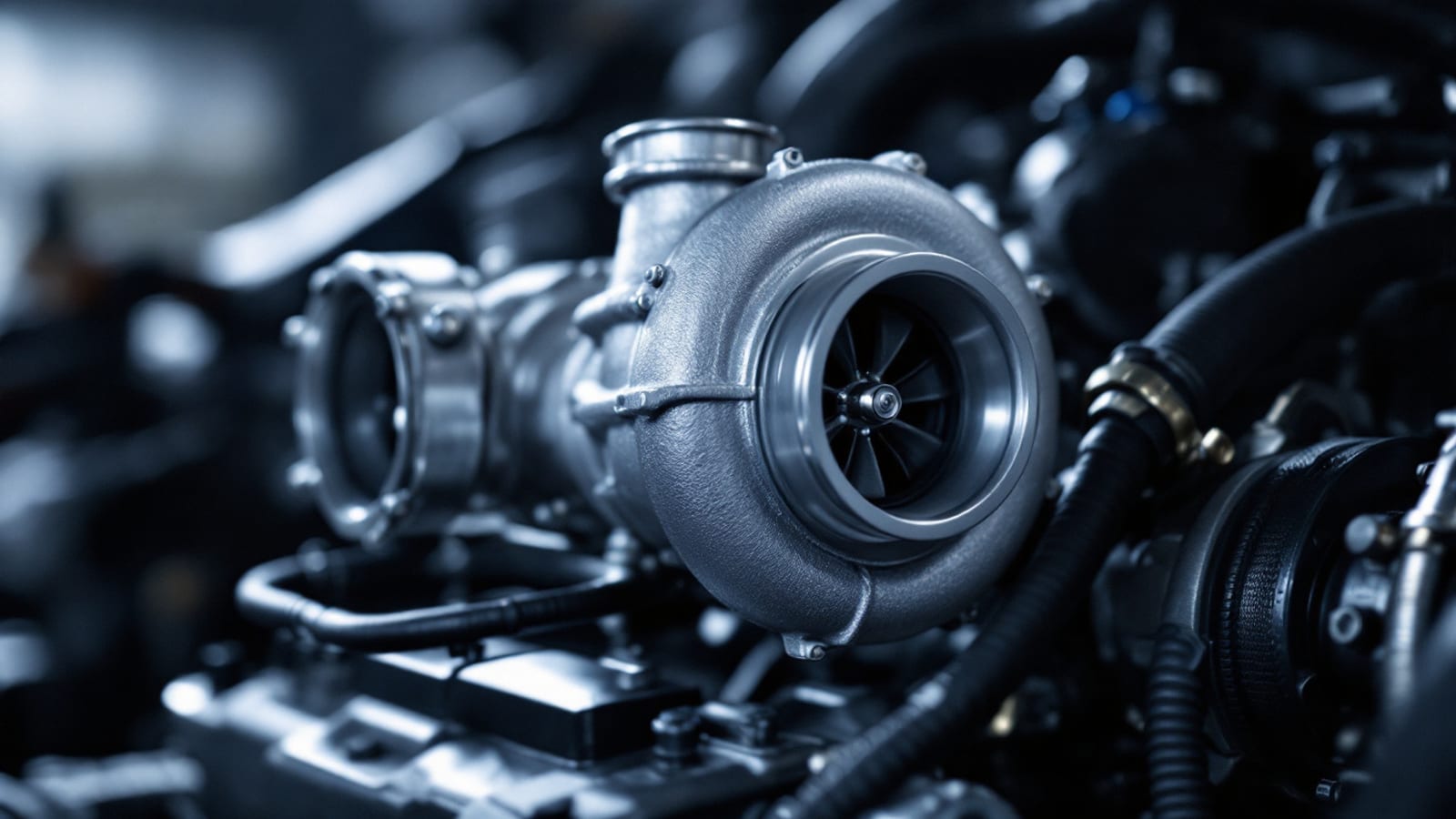
People coming to an EcoBoost from a naturally aspirated V8 look for the same handful of tables — fuel, spark, perhaps a boost target — and find that changing them does surprisingly little. The car pulls for a moment, then goes flat, or surges, or simply behaves as it did before.
That is not a fault. It is the control strategy doing its job.
An EcoBoost is controlled by torque. The pedal requests an amount of torque; the computer works out how much air, boost, fuel and spark will produce it, and it holds the engine to the limits it has been given. Boost is an outcome, not an input. As of October 2026 a custom dyno tune on one of these commonly runs $300–600, and a guided DIY tune on TuneVault is $39 on top of the interface and licensing. Either way, understanding the torque logic comes before touching anything.
The chain from pedal to boost
On an older engine the chain is short: pedal opens throttle, air goes in, the computer adds fuel and spark to match. On an EcoBoost it runs the other way.
- The pedal position becomes a torque request. A table translates pedal and engine speed into the torque the driver is asking for.
- The request is checked against limits. Transmission limits, driveline protection, temperature protections and traction systems can all reduce it.
- The surviving request is converted into an air target. The computer uses its model of the engine to decide how much cylinder air will make that torque.
- The air target becomes throttle and boost commands. The throttle and the turbocharger's wastegate are positioned to deliver it.
- Fuel and spark follow the air. Fueling tracks the measured air; spark is set for the conditions.
- The result is checked. The computer estimates the torque actually being produced and compares it with what was asked for.
Step six is why isolated changes fail. If the engine is producing more torque than the computer believes was requested, it treats that as an error and intervenes — typically by closing the throttle. From the seat, that is the surge and the flat spot.
So the tables that matter are a set, and they have to agree with each other: the driver demand, the limits, and the model that translates torque into air and back. The same idea applies to any modern torque-based engine and is explained from the driver's side in throttle response tuning: pedal maps and torque tables.
What actually limits one of these engines
More boost is the easy part. What stops a turbocharged direct-injection engine is nearly always something else.
| Limit | What it is | How it shows up in a log |
|---|---|---|
| High-pressure fuel supply | The pump and direct injectors have finite capacity and a short injection window | Fuel rail pressure falling away from its target under load |
| Low-pressure fuel supply | The in-tank pump feeding the high-pressure pump | Low-side pressure dropping at high demand |
| Charge temperature | The intercooler heat-soaks under repeated load | Intake air temperature climbing pull after pull |
| Knock margin | Cylinder pressure rises with boost | Spark being pulled, octane adjustment moving |
| Low-speed pre-ignition | Abnormal combustion at low speed and high load | Sudden severe knock events low in the rev range |
| Turbocharger range | The turbo runs out of efficient flow | Boost falling at high engine speed despite the wastegate being closed |
| Torque capacity | Transmission and driveline limits | Requested torque being clipped |
Fuel supply is usually first. A direct-injection engine sprays fuel into the cylinder at very high pressure, in a narrow window of time. The pump that generates that pressure has a ceiling. When demand exceeds it, rail pressure drops, and the engine goes lean at exactly the wrong moment. Watching commanded against actual rail pressure is the EcoBoost equivalent of watching injector duty cycle on a port-injected engine — the principle is in injector duty cycle and fuel pump headroom. Some later versions of these engines add port injectors alongside the direct ones, which changes the picture; know which system yours has.
Heat is second. A small, hard-working turbocharged engine produces a great deal of it. One pull on a cool evening tells you little about the fifth pull on a hot afternoon. The computer reduces spark and boost as intake temperature rises, which is correct behaviour and should not be tuned out. The background is in heat soak and density altitude.
Knock margin is third. These engines infer fuel quality from knock activity and adjust accordingly. A log showing that adjustment moving away from its best value is the engine telling you the fuel is not supporting the request. How much knock retard is normal and false knock versus real detonation cover how to read it.
Low-speed pre-ignition
This one deserves its own section, because it is specific to this kind of engine and it does not behave like ordinary knock.
Low-speed pre-ignition is an abnormal combustion event that can occur in turbocharged direct-injection engines at low engine speed and high load. Unlike ordinary knock, it is not reliably prevented by removing spark advance, and a single severe event can damage an engine. The general distinction between the abnormal combustion types is in the glossary under pre-ignition and detonation.
Two things follow for anyone tuning one.
Do not ask for large torque at very low engine speed. The temptation with a turbocharged engine is to fatten the bottom of the torque curve, because that is where it feels strongest. That is precisely the region where the risk lives. A calibration that raises torque in the middle of the range and leaves the very bottom conservative is safer and loses little.
Drive accordingly. Flooring the pedal in a tall gear at low revs creates the condition regardless of the tune. Let the transmission downshift.
Engine oil specification is part of the picture too, and the manufacturer's recommendation should be followed.
Boost control in brief
Boost is regulated by the wastegate, which bleeds exhaust around the turbine. The computer positions it to hit the air target from step three.
The checks are the same as on any turbocharged engine: does actual boost follow the target, does it overshoot on the way up, and does it hold at high engine speed or fall away. A target the turbocharger cannot reach at the top of the range is not a control problem — it is the hardware's limit, and commanding more only adds heat. The control-side detail is in boost control tuning basics, with the service view on the turbo tuning page.
Where a first-time tuner should start
Not with boost.
- Confirm support for your exact vehicle. Model year and controller, for both read and write. EcoBoost has been fitted to many vehicles over many years and coverage is not uniform. If you are choosing a tool, EFI Live vs HP Tuners vs COBB compares the platforms that serve these engines.
- Read and save the stock file. Then identify it properly — on a Ford the strategy code is what tells you which calibration you have.
- Log the stock car first. Rail pressure against target, boost against target, intake temperature, spark, and any knock-based adjustment. You need to know what normal looks like.
- Check the fueling measurement. Find out what kind of oxygen sensor the vehicle has and whether it reads reliably under load. If not, fit a wideband — see do you need a wideband before tuning.
- Make small, consistent changes to the torque request and its limits. Together, not one at a time.
- Log after every change. If rail pressure sags, intake temperature climbs or spark is being pulled, stop there.
- Leave the protections alone. Temperature-based reductions and component protections exist for a reason. Rev limiters and safety limits explains which settings are operating limits and which are protections.
If that list reads as a great deal of checking and very little changing, that is accurate. On this platform, most of the skill is in reading the log.
Cost, briefly
A custom dyno tune commonly runs $300–600, and a remote e-tune is usually below that; the full comparison is in the 2026 ECU tuning cost guide, with Mustang-specific figures in Mustang tuning cost. The DIY route costs the interface and licensing. A guided tune on TuneVault is $39, with plans at $19, $49 and $249 per month — it reads your tables from screenshots, audits them, orders the changes and verifies the log. It does not flash the vehicle, and it does not promise a number.
The compliance line
Turbocharged engines attract parts and tunes that remove emissions equipment. That is illegal under federal and state law, it fails inspection where inspections exist, and TuneVault does not assist with it. Everything in this article concerns calibrating an engine with its emissions systems present and working, and the tuning and emissions inspection guide covers where the boundary sits.
The idea to keep
Stop thinking about boost and start thinking about torque. Ask what torque is being requested, what is limiting it, and whether the fuel system and the temperatures can support it. An EcoBoost calibrated with that question in mind is smooth, repeatable and safe. One calibrated by raising a boost number is the surging, flat-spotted car that brought you to this article.
Frequently asked questions
How is tuning an EcoBoost different from tuning a V8?
An EcoBoost is controlled by torque. The pedal asks for an amount of torque, and the computer decides how much air, boost, fuel and spark will deliver it. Raising a boost value on its own usually achieves little, because the torque limits and the engine's torque model still govern what is allowed. As of October 2026 the practical lesson is the same as ever: change the request and the model together, in small steps, and verify with a datalog.
How much does an EcoBoost tune cost?
A custom dyno tune commonly runs $300–600, with a remote e-tune usually below that. A DIY route costs the HP Tuners interface and vehicle licensing plus a wideband if the vehicle lacks a trustworthy factory one, and a guided TuneVault tune on top is $39. Confirm that your exact model year and controller are supported before buying anything.
What limits power on a stock EcoBoost?
Usually the fuel system and heat before the turbocharger itself. The high-pressure pump and direct injectors have a finite capacity and a limited window in which to inject, the intercooler heat-soaks under repeated load, and the engine's knock and pre-ignition margins narrow as cylinder pressure rises. Which limit arrives first depends on the engine and the fuel.
What is low-speed pre-ignition and why does it matter?
It is an abnormal combustion event that can occur in turbocharged direct-injection engines at low engine speed and high load — the condition you create by flooring the pedal in a tall gear. It can be severe enough to damage an engine in a single event. A sensible calibration avoids asking for large torque at very low engine speed, and the driver avoids lugging the engine.
Can I just raise the boost on an EcoBoost?
Not usefully. Boost is an outcome of the torque request, so the desired torque, the torque limits and the tables that translate torque into air all have to agree. Changing one in isolation typically results in the computer closing the throttle or pulling the engine back, which feels like a surge or a flat spot.
Do I need a wideband to tune an EcoBoost?
Many of these vehicles are fitted with a wideband-type sensor from the factory, which changes the answer compared with older engines. You still need to confirm what your vehicle has and that the reading is trustworthy under load. If it is not, an added wideband is required before any wide-open-throttle work.
Does TuneVault support EcoBoost engines?
Yes. EcoBoost is among the Ford engines TuneVault covers, alongside the Coyote and the 5.4 3V, for vehicles tuned through HP Tuners. You upload screenshots of your VCM Editor tables and your datalogs; it audits them, gives an ordered change list and verifies the result. It does not flash the vehicle or promise a power figure.