Tuning a GM 5.3 or 6.2 Truck: Realistic Gains and What It Costs
An honest budget and expectation guide for tuning a Silverado, Sierra, Tahoe or Yukon. Where the gains actually come from on a stock truck, what cylinder deactivation and cam phasing change, and the real cost of each route from DIY to dyno.
By TuneVault
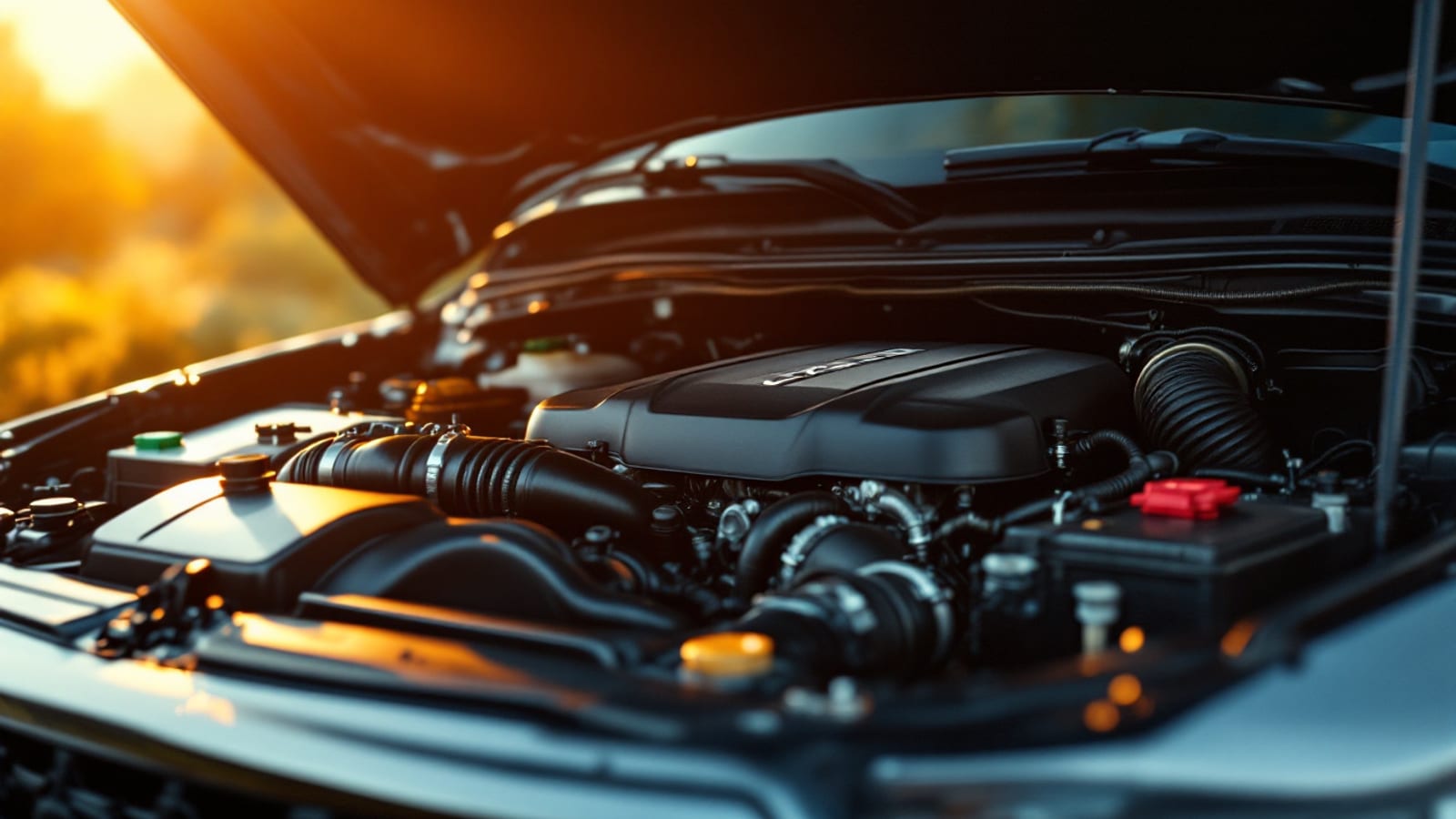
There are more tuned GM half-tons on the road than almost anything else, which means there is also more bad information about them than almost anything else. The claims run from "it does nothing" to numbers that would require hardware nobody mentioned.
As of September 2026 the honest version is: a calibration on a stock 5.3 or 6.2 buys you a noticeably more willing truck, mostly through throttle response, shift behaviour and the removal of factory conservatism, with a modest change in peak output. It becomes a genuinely different vehicle only when hardware changes too. What it costs is the easier half of the question, and this article covers both.
Which engine you actually have
Before any of this, identify the engine family properly, because the calibration landscape differs between generations and a forum answer written for one will mislead you about another.
GM's small-block V8 line runs through several generations with meaningfully different control strategies — the older iron-block families, the aluminium generations that brought variable valve timing and cylinder deactivation, and the direct-injected generation that changed the fuelling architecture substantially. The differences that matter for tuning, and how to tell which side of them you are on, are set out in GM LS versus LT tuning.
The practical significance: a direct-injected truck has a different fuelling system, different knock behaviour and different constraints from a port-injected one, and advice that does not distinguish them is not advice.
Where the gains actually come from
Four sources, in rough order of how much you will notice them on a stock truck.
Throttle and torque request mapping. Factory calibrations on modern trucks deliberately damp the relationship between your foot and the throttle plate, partly for smoothness, partly for economy and partly for driveline protection. Restoring a more direct relationship is the single change owners report most strongly, and it adds no power at all — it changes how quickly the engine delivers the power it already had. The mechanism is covered in throttle response tuning.
Transmission behaviour. Shift points, firmness, converter lockup and torque reduction during shifts. On an eight or ten-speed this is often the biggest real-world improvement, because a truck that decides quickly feels far stronger than one that hunts. It is also the area with the most genuine engineering behind the factory choices, which is why transmission tuning and torque management is worth reading before removing protections wholesale.
Spark and fuelling margin. The factory calibration is written to survive poor fuel, high altitude, extreme heat and neglected maintenance everywhere the truck is sold. A calibration written for your fuel and your climate does not need all of that margin. This is where actual power comes from on a stock engine, and it is genuinely real — it is also finite, and smaller than advertising implies.
Cam phasing and cylinder deactivation strategy. On engines that have them, how the calibration schedules variable valve timing affects torque across the range, and how it handles cylinder deactivation affects smoothness and consistency. Disabling deactivation in software is a popular drivability change rather than a power one — worth being precise about, because it is frequently sold as though it were the latter.
What the money actually looks like
Three routes, with what each includes and excludes.
| Route | Calibration cost | What else you must buy | Best suited to |
|---|---|---|---|
| Guided DIY audit | $39 per tune, or from $19/mo | Interface plus per-vehicle licensing, once | Owners who want to keep iterating and own their files |
| Remote e-tune | Typically low hundreds per revision set | Interface plus licensing, once | Owners who want an expert's file with minimal involvement |
| Custom dyno session | Roughly $300 to $600 | Nothing extra, usually | Cars with real hardware changes, or where measurement matters |
The line that surprises people is the second column. A calibration file cannot flash itself — writing to the vehicle requires an interface, and on most platforms a per-vehicle licence that is consumed when you first write to that truck. That is a one-time first-year cost that sits on top of whichever route you choose, and it is the number most commonly left out of "tuning costs $X" claims. The mechanics are in coverage, credits and VIN licensing, the interface decision is in MPVI3 versus MPVI2, and the full first-year picture is in the hidden costs of DIY tuning.
The broader landscape of what each route costs across the whole market, including how e-tune pricing varies, is mapped in our ECU tuning cost guide.
The arithmetic that follows from the table: DIY is the most expensive way to write one calibration and the cheapest way to write twenty. If this is a truck you will modify over years, the interface pays for itself. If it is one tune and done, paying someone is usually the rational choice — a comparison made properly in cheap ECU tuning: what to save on and what not to.
What this platform responds to, in order
If you are planning spend rather than just tuning, the order matters more than the parts.
First, make sure the truck is healthy. A calibration written over a tired coil, a small vacuum leak or a marginal fuel pump calibrates the fault in. The pre-tune mechanical checklist is the short version.
Then calibrate what you have. Throttle mapping, shift behaviour and spark margin, on the stock hardware. This is the cheapest improvement per dollar on the whole list and it establishes a baseline you can measure everything else against.
Then decide what the truck is for. A truck that tows wants an entirely different second calibration — conservative timing, earlier converter lockup, preserved torque management — and that work is covered in tuning a truck for towing. A truck that is a daily driver wants none of that and would rather have the throttle response.
Then hardware, if you still want more. And re-calibrate afterwards, because the parts change what the calibration should be doing — the reasoning is in do I need a tune after an intake, headers or exhaust.
Skipping the second step and going straight to parts is the most common way to spend a lot and feel very little.
What a calibration will not do
Worth stating plainly, because these come up constantly.
It will not make a half-ton into a performance vehicle. It will not increase the tow rating, which is a structural and thermal limit rather than a software one. It will not fix a mechanical problem, and a calibration applied over one usually makes diagnosis harder later. It will not survive a dealer visit invisibly — modern controllers keep a flash counter, as can a dealer tell your car is tuned explains — and the warranty implications of that are worth understanding in advance through tuning and your factory warranty.
And nothing on this site involves defeating emissions equipment. Removing or disabling emissions hardware is illegal under federal and state law regardless of what it does to a number, and the practical consequences for inspection and registration are covered in tuning and emissions inspection.
Verifying rather than assuming
The difference between a truck that is tuned and a truck that is tuned well is entirely in verification.
After any calibration change, drive it and log it. Check that long-term fuel trims are near zero, that knock retard is not appearing repeatably at the same load and engine speed, and that the mixture under full load is where the calibration intended. On a truck, also watch transmission temperature and converter lockup behaviour, because that is where a calibration change most often creates heat nobody was looking for.
If you do not know which channels answer which question, the lookup is in the datalog symptom index, and the mechanics of capturing a good pull are in reading your first wide-open-throttle datalog.
Where TuneVault fits on this platform
These trucks are squarely in what the copilot covers, because HP Tuners' coverage of GM truck controllers is deep and this is exactly the table set TuneVault reads. It audits your VCM Editor tables, flags changes that leave too little margin for the temperatures and fuel you actually run, gives you an ordered change list, and verifies the result against your datalog.
That is $39 per guided tune, or $19 a month for a garage of files if you are working on the truck over a season. Against a $300 to $600 dyno session it answers a different question — not "how much did it make" but "is this calibration safe and where is the rest of it" — and the honest comparison of the three routes is in copilot versus e-tuner versus dyno shop. The plans are on the pricing page.
Set expectations correctly and this is one of the better value modifications available to a truck owner. Set them from advertising and it will disappoint, not because the calibration did nothing, but because it was never going to do what the advertisement said.
Frequently asked questions
How much does it cost to tune a GM 5.3 or 6.2 truck?
Three realistic routes as of September 2026. A guided DIY calibration through this site is $39 per tune, on top of an interface and vehicle licensing you buy once. A remote e-tune from a shop typically lands in the low hundreds. A custom dyno session usually runs about $300 to $600 depending on region and how much tuning time is included. The DIY route is cheapest per revision and the most expensive to start.
What gains are realistic on a completely stock 5.3?
Modest on paper and more noticeable in feel than in peak numbers. Most of what a calibration gives a stock truck is throttle response, better shift behaviour and removal of some factory conservatism — the truck feels considerably more willing without the peak figure moving dramatically. Anyone promising a transformative power increase from a calibration alone on a stock engine is overselling.
Does turning off cylinder deactivation gain power?
Not really — it changes drivability and how the truck behaves, not peak output. Disabling it in the calibration keeps the engine running on all cylinders, which many owners prefer for smoothness and consistent throttle response. It is a calibration change on the software side and does not by itself address the mechanical hardware, which is a separate and much larger job.
Is a tune worth it on a 6.2 versus a 5.3?
Both respond, and the 6.2 usually responds more in absolute terms simply because it starts with more engine. The bigger difference is what you do with the truck. A 6.2 that tows benefits most from transmission and thermal calibration work; a 5.3 daily driver benefits most from throttle response and shift quality. Neither becomes a different vehicle.
What does the transmission side of a truck tune change?
Shift points, shift firmness, torque converter lockup behaviour and how much engine torque is reduced during a shift. On a modern eight or ten-speed this is frequently where owners notice the largest improvement, because the factory calibration prioritises smoothness and economy over decisiveness, and a truck that shifts confidently feels quicker than one that makes more power.
Do I need an interface and licences, or can I just buy a file?
You need a way to write the calibration to the vehicle, which means an interface and per-vehicle licensing on most platforms. A file on its own cannot flash itself. Budget for the hardware and the vehicle licence as a one-time first-year cost, then the calibration work separately — it is the part that surprises people most often.
Will a tune hurt fuel economy on a truck?
It can go either way and it depends far more on the driver than the file. A calibration that improves throttle response frequently results in more throttle being used. Where genuine economy gains appear, they usually come from reduced torque converter slip and less unnecessary shifting rather than from any change in fuelling.