HEMI Tuning Cost: What to Expect on a Charger, Challenger or Ram
The tune itself is rarely the surprise on a Mopar. The surprise is the step before it: confirming the controller can be accessed at all. What a HEMI tune costs by route, the access question that decides the budget on newer cars and trucks, and what the money actually changes.
By TuneVault
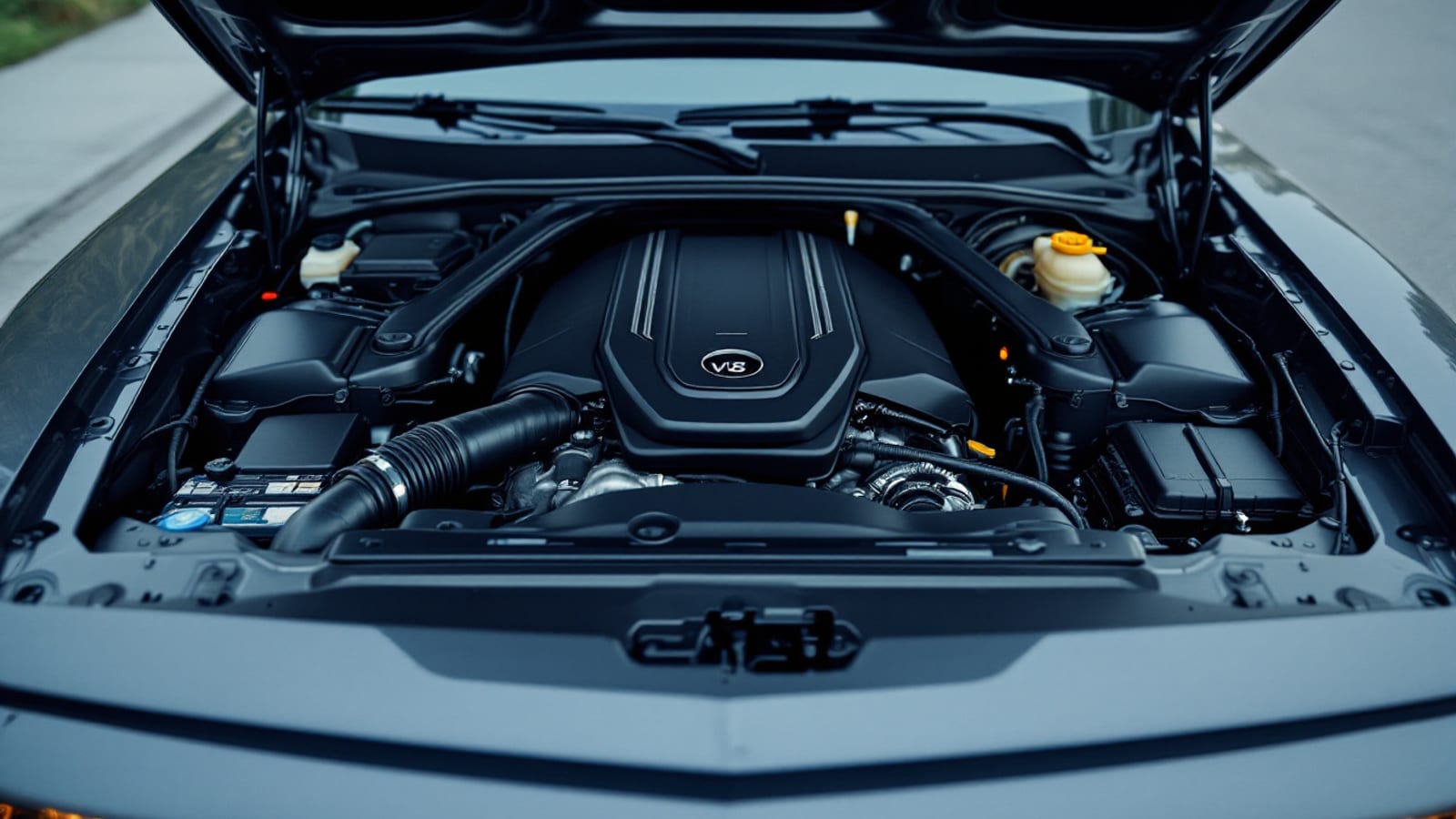
Ask what a HEMI tune costs and the first answers you get will be prices for the tune. On a lot of these cars and trucks that is the wrong line to look at first.
The tune is the predictable part. The part that moves the total is the step before it: whether the engine controller in your particular vehicle can be read and written as it stands, or needs something done to it first.
As of October 2026 a custom dyno tune commonly runs $300–600, a remote e-tune usually costs less, and a guided DIY tune on TuneVault is $39 on top of hardware you own. On newer Mopar vehicles, budget separately for controller access — an extra step, priced by whoever provides it, that a quoted tune price may or may not include.
Three cost layers
Think of the bill as three layers rather than one number.
Access. Can the calibration be read from and written to your controller? On older vehicles the answer is generally yes with the standard tools. On newer ones the controller carries stronger security and an additional step is required before any tuning can happen. This is the layer that surprises people.
Tools. The interface, vehicle licensing, and a wideband if the work goes beyond part throttle. Paid once if you do it yourself; included in the price if a shop does it.
Calibration. The actual tuning — someone's time, or your own.
A quote that covers only the third layer is not wrong. It is incomplete, and the gap is yours to find before you commit.
The access question
This article is about what tuning costs, not about how secured controllers are opened — that is a separate service discipline. What matters for a budget is knowing which side of the line your vehicle is on.
Coverage on these platforms is not decided by the model name or the engine size. It is decided by the controller fitted and the calibration it runs, and two vehicles that look identical can differ. The method for identifying yours is in HEMI tuning: what is supported, and the general approach to checking read, write and datalog support by model year is in vehicle coverage, credits and VIN licensing.
Three questions to settle before spending anything:
- Is my exact model year and controller supported for both read and write?
- If an additional step is needed for access, who provides it and what does it cost?
- Does that step involve sending my controller away, and for how long is the vehicle off the road?
The last one is a cost even when no invoice is attached. A daily driver that cannot move for a week is a real expense. Get all three answers in writing from whoever you are paying.
What each route costs
| Route | Tune price | Access step | Tools | Your time |
|---|---|---|---|---|
| Dyno shop | $300–600 is the common range | Ask whether the quote includes it | Shop's own | An appointment |
| Remote e-tune | Usually less than a dyno session | Often your responsibility | You buy the interface and licensing | Weeks of logging and flashing |
| Guided DIY with TuneVault | $39 per tune, or $19, $49 or $249 per month | Your responsibility | You buy the interface, licensing and wideband | The most |
The dyno figure is the general range for a custom tune. Supercharged cars, and anything needing extended work, sit toward the top or above. The comparison across all platforms is in the 2026 ECU tuning cost guide, and the parallel articles for other platforms are Mustang tuning cost and GM 5.3 and 6.2 truck tuning.
The DIY route only looks cheapest if you count the tune alone. The interface and licensing are the larger part, and they make sense when you will use them more than once — a point covered in the hidden costs of DIY tuning. What the TuneVault plans include is on the pricing page.
What the money changes
Expectations matter here, because a big naturally aspirated V8 does not respond to a tune the way a turbocharged engine does.
Peak power on an unmodified engine: modest. The factory calibration is not hiding a large reserve. What it leaves on the table is mostly margin for poor fuel and hot weather, and a sensible tune keeps much of that.
Throttle response: noticeable. How the pedal maps to torque is one of the most obvious changes, and it is why a tuned car feels livelier at ordinary speeds. See throttle response tuning.
Shift behaviour: often the biggest change. These vehicles pair a lot of low-end torque with a sophisticated automatic. Shift points, lockup and firmness are where much of the perceived improvement lives — and where an engine-only tune can make the vehicle feel worse, because the transmission is still working from the factory torque picture. Transmission tuning and torque management explains why.
Cylinder deactivation behaviour. Many owners want to change when, or whether, the engine drops to four cylinders. It is an ordinary adjustment, but it is a fuel-saving feature, and reducing its operation costs fuel. Decide that deliberately.
With modifications: correctness more than power. After a camshaft, headers or a supercharger, the tune is no longer optional, and what you are paying for is an engine that is described accurately to its own computer. Whether a given bolt-on needs one is answered in do I need a tune after intake, headers or exhaust.
Be wary of anyone quoting a horsepower figure before they have seen the vehicle. The honest general picture of gains and risks is in ECU tuning explained.
Charger and Challenger versus Ram
The engine family is shared. The priorities are not.
In a car, the purchase is usually about response and character: how the throttle feels, how the transmission behaves under hard acceleration, and getting a modified engine calibrated properly.
In a truck, the priorities shift to how it pulls a load. Shift scheduling under tow, converter lockup, and keeping temperatures in check matter more than a peak figure, and tire or gear changes need their own correction so that the speedometer and shift points remain right. Tuning a truck for towing and the speedometer and gear ratio calibration guide cover both.
Tell the tuner how the vehicle is used. A calibration written for a weekend car is the wrong one for a truck that tows every week, and the price is the same either way.
The lines people forget
A wideband. Needed for any wide-open-throttle tuning unless the vehicle has a trustworthy factory one. The reasoning is in do you need a wideband before tuning.
Fuel. A calibration written for premium needs premium, permanently. That is a running cost, not a one-off.
Plugs and a health check. Tuning an engine with a tired plug or a small leak wastes the session. The list is in the pre-tune mechanical checklist.
Revisions. Ask how many are included and what a later change costs.
Returning to stock. Before a dealer visit or a sale, you may want the factory file back in. Make sure you have it, and know whether writing it back costs anything.
Warranty and legality
Two points that belong in any cost discussion, because both can cost more than the tune.
A calibration change is detectable, and while a manufacturer cannot void a whole warranty merely because a vehicle is modified, a claim can be refused when the modification caused the failure. The detail is in tuning and your factory warranty.
Emissions equipment must stay present and working. A tune that disables it is illegal under federal and state law, will fail inspection where inspections exist, and is not something TuneVault assists with. What a compliant tune can and cannot change is in the tuning and emissions inspection guide.
Deciding
Stock or lightly modified, and you want it done: a reputable shop, with the access question answered in writing first. Use how to vet a tuner for the conversation.
Modified, and you want to understand it: the tools, a wideband and a guided approach. It costs the least in money and the most in time, and it pays back if the build keeps changing.
Supercharged or heavily modified: a tuner with experience on this platform, in person. The margin is smaller and the parts are expensive.
Whichever you choose, settle access before anything else. It is the line on a HEMI budget that can move the total more than any other, and the one that is least often volunteered.
Frequently asked questions
How much does it cost to tune a HEMI?
As of October 2026 a custom dyno tune commonly runs $300–600, a remote e-tune usually costs less than that, and a guided DIY tune on TuneVault is $39 on top of the HP Tuners interface and vehicle licensing. On newer Mopar vehicles, budget separately for whatever step is needed to access the engine controller, which is priced by the provider and can change the total considerably.
Why do newer HEMI vehicles cost more to tune?
Because newer engine controllers carry stronger security, and the calibration cannot be written until that is dealt with through an additional step or a replacement controller. That step is separate from the tune and is not always included in a quoted price, so ask whether a quote covers access or assumes it has already been done.
Is a HEMI tune worth it on a stock engine?
It can be, for drivability rather than headline power. Throttle response, shift behaviour and how the cylinder deactivation system operates are the changes most owners notice. Peak power gains on an unmodified, naturally aspirated engine are modest, and anyone promising a large number before seeing the car should be treated with caution.
Do I need a tune after an intake or exhaust on a HEMI?
Not always. A cat-back exhaust generally needs nothing. An intake that changes the airflow path can leave the engine relying on fuel trims to correct a model that is now slightly wrong. A datalog showing your trims before and after tells you whether the calibration needs attention.
Can I tune my own Charger, Challenger or Ram with HP Tuners?
If your exact controller is supported for both reading and writing, yes. Confirm that against HP Tuners' current support information for your model year before buying anything, because coverage is decided by the controller rather than by the badge. You will also need vehicle licensing and, for any wide-open-throttle work, a wideband.
Does the transmission need tuning too?
On most HEMI vehicles with an automatic, the transmission calibration is where a lot of the perceived improvement comes from, and where an engine-only tune can make the vehicle feel worse. Whether transmission tables are available depends on the platform, so check that before assuming a quote includes them.
Will a tune affect my warranty on a Ram or a Challenger?
A manufacturer cannot void an entire warranty simply because a vehicle was modified, but a claim can be denied when the modification caused the failure. A calibration change is detectable, so tune with that understanding and keep your stock file.